

The Bhagavad Gita and Detachment: Finding Inner Peace in a Material World
The Bhagavad Gita, an ancient Indian scripture, offers profound teachings on the nature of reality, the purpose of life, and the path to inner peace. One of the central themes in the Gita is the practice of detachment, which involves letting go of our attachments to material possessions, desires, and outcomes.

In the material world, we are constantly bombarded with stimuli that tempt us to indulge in our senses. We crave for wealth, power, pleasure, and recognition. However, the pursuit of these external objects often leads to suffering and dissatisfaction. When we attach ourselves to material possessions, we become dependent on them for our happiness. We fear losing them and we become anxious when we don’t have them.
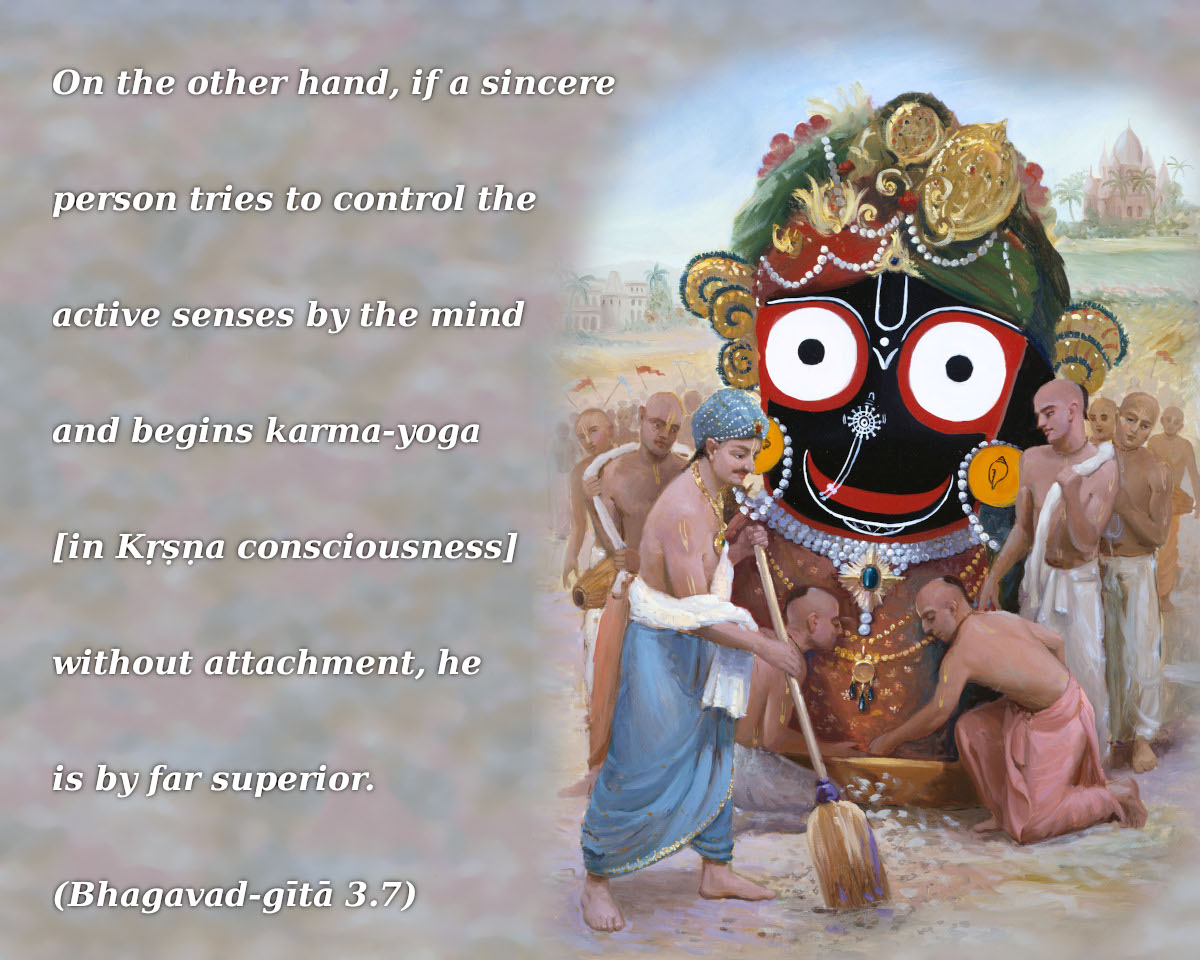
The Bhagavad Gita teaches us that true happiness and inner peace can only be found within ourselves. It encourages us to detach ourselves from the fruits of our labor and to focus on performing our duties without attachment to the outcome. When we are detached, we are not driven by our desires and we are not affected by success or failure.
Detachment does not mean that we should become indifferent to the world around us. Rather, it means that we should not allow our attachments to material possessions and desires to control our lives. We should be able to enjoy the pleasures of the world without becoming attached to them. We should be able to work hard and achieve our goals without being consumed by our ambitions.
The practice of detachment is not easy, but it is essential for finding inner peace and lasting happiness. When we detach ourselves from material possessions and desires, we become more free, more resilient, and more compassionate. We are able to live in the present moment and to appreciate the simple joys of life.
Here are some tips for practicing detachment:
- Identify your attachments. What are the things that you are most attached to? Once you know what your attachments are, you can start to work on letting go of them.
- Practice non-attachment. Try to observe your attachments without judgment. Notice how they make you feel. When you feel attached to something, ask yourself if it is really worth holding on to.
- Focus on the present moment. When you are attached to the past or the future, you are not living in the present moment. Bring your attention back to the present moment and focus on what you are doing right now.
- Practice gratitude. When you are grateful for what you have, you are less likely to be attached to it. Take some time each day to express gratitude for the good things in your life.
- Cultivate compassion. When you are compassionate towards others, you are less likely to be attached to your own possessions and desires. Put yourself in other people’s shoes and try to understand their needs.
The practice of detachment is a lifelong journey. There will be times when you will feel attached to things and people. However, if you keep practicing, you will eventually become more detached and you will find inner peace and lasting happiness.## The Bhagavad Gita and Detachment: Finding Inner Peace in a Material World
Executive Summary
The Bhagavad Gita, an ancient Indian scripture, offers profound insights into the nature of reality and the path to inner peace. It emphasizes the importance of detachment from the material world and the cultivation of a spiritual connection with the divine. This article explores the key teachings of the Gita on detachment and how they can guide us towards a more fulfilling and peaceful existence.
Introduction
In the materialistic world we inhabit, it’s easy to get caught up in the pursuit of possessions, status, and external validation. However, according to the Bhagavad Gita, true happiness and fulfillment lie in transcending our attachment to these worldly desires. The Gita teaches us to cultivate a sense of detachment, not as a form of asceticism but as a liberating path to inner peace and spiritual enlightenment.
FAQs
- What is detachment according to the Bhagavad Gita?
- Detachment is not about renouncing the world or denying our material needs. Rather, it’s about recognizing the temporary and ultimately unsatisfying nature of these things and not allowing them to control our minds and actions.
- Why is detachment important for finding inner peace?
- Attachment leads to desires, expectations, and ultimately frustrations. By detaching ourselves from these worldly concerns, we free ourselves from the cycle of suffering and open ourselves to the joy and tranquility that come from within.
- How can we practice detachment in daily life?
- Start by observing your thoughts and actions without judgment. Notice the attachments that cause you stress and unhappiness. Gradually, cultivate a sense of acceptance and non-attachment, recognizing that everything is subject to change and impermanence.
Key Subtopics
The Nature of Attachment
- Attachment arises from a false sense of identity with our possessions, relationships, and external circumstances.
- It leads to possessiveness, jealousy, and fear of loss.
- Detachment frees us from these negative emotions and allows us to experience life with greater clarity and detachment.
The Importance of Karma
- Karma is the law of cause and effect that governs our actions.
- Detachment from the fruits of our labor allows us to focus on doing our duty without expectation of reward.
- This selfless approach to karma leads to inner peace and spiritual growth.
The Power of Surrender
- Surrender is not about giving up or submitting to fate.
- It’s about releasing our ego and trusting in the divine plan.
- Detachment empowers us to surrender our attachments and embrace the unknown with faith and courage.
The Role of Meditation
- Meditation is a powerful tool for cultivating detachment.
- By practicing mindfulness and concentration, we can observe our attachments without judgment and gradually let go of them.
- Meditation brings us into the present moment, where we can experience the peace and tranquility that lies beyond our worldly desires.
The Ultimate Goal: Moksha
- Moksha, or liberation, is the ultimate goal of the spiritual journey.
- Detachment is a necessary prerequisite for moksha, as it frees us from the attachments that bind us to the material world.
- By cultivating detachment and embracing the teachings of the Gita, we can attain inner peace, spiritual enlightenment, and the ultimate freedom of moksha.
Conclusion
The Bhagavad Gita’s teachings on detachment offer a timeless path to inner peace and spiritual fulfillment. By embracing the principles of non-attachment, karma, surrender, meditation, and moksha, we can transcend the limitations of the material world and experience the true joy and tranquility that reside within us. The Gita reminds us that the pursuit of outer possessions and validation is ultimately futile and that true happiness lies in our ability to detach ourselves from these temporary and unsatisfying desires.
Keyword Tags
- Bhagavad Gita
- Detachment
- Inner Peace
- Spirituality
- Karma