
Moksha: Liberation from the Cycles of Time in Hinduism
Moksha, also known as liberation or enlightenment, is a fundamental concept in Hinduism that refers to the ultimate spiritual goal of breaking free from the cycle of birth, death, and rebirth (samsara). This cycle is driven by karma, the accumulated actions and consequences of past lives, and it perpetuates suffering and dissatisfaction.
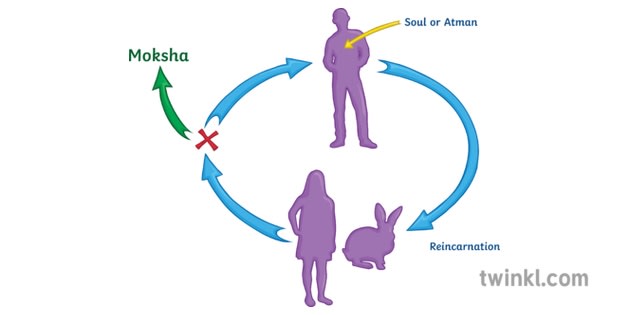
Understanding Moksha
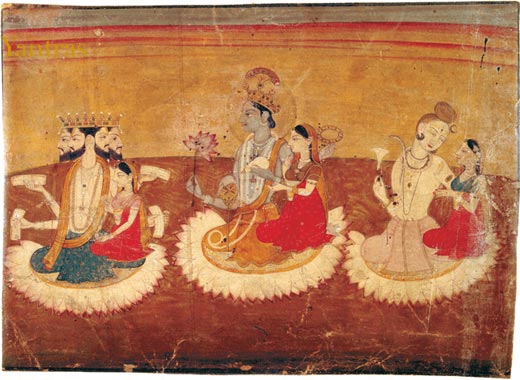
Moksha is not simply the cessation of existence or a state of nothingness, but rather a transcendental state of consciousness beyond the limitations of the physical world and the ego. It is a state of union with the divine, known as Brahman, where all duality and separation dissolve.
Paths to Moksha
Hinduism offers various paths to achieve moksha, including:
- Jnana Yoga (Path of Knowledge): This path emphasizes the pursuit of knowledge and wisdom through study, meditation, and self-inquiry. By understanding the nature of reality and the illusion of the ego, one can transcend the limitations of the mind and attain liberation.
- Bhakti Yoga (Path of Devotion): This path focuses on intense devotion to a particular deity or aspect of the divine. Through love, surrender, and selfless service, one can purify their heart and gradually evolve towards moksha.
- Karma Yoga (Path of Action): This path involves performing actions without attachment to the fruits of those actions. By dedicating one’s efforts to the welfare of others, without seeking personal rewards, one can gradually burn off their karma and move closer to liberation.
- Raja Yoga (Path of Meditation): This path emphasizes the practice of meditation and self-control. By calming the mind, focusing one’s attention, and cultivating inner peace, one can transcend the fluctuations of the material world and experience the true nature of the self.
Characteristics of Moksha
Moksha is characterized by:
- Freedom from the cycle of birth, death, and rebirth
- End of suffering and dissatisfaction
- Union with the divine
- Infinite bliss and fulfillment
- Permanent liberation from the constraints of time, space, and causality
Importance of Moksha
The pursuit of moksha is considered the ultimate goal of human existence in Hinduism. It represents the culmination of a spiritual journey aimed at breaking free from the limitations of the material world and realizing one’s true potential. By attaining moksha, individuals can achieve a state of lasting peace, happiness, and fulfillment.## Moksha: Liberation From The Cycles Of Time In Hinduism
Executive Summary
Moksha, the ultimate goal of Hinduism, is the state of final liberation from the cycle of birth, death, and rebirth. It is attained through the cultivation of knowledge, devotion, and right action, and leads to the experience of pure bliss and unity with the divine.
Introduction
In the intricate tapestry of Hindu philosophy, the concept of moksha holds a prominent position. It represents the ultimate aspiration of every soul, a state of liberation from the ceaseless cycle of existence and suffering. Encapsulating the essence of enlightenment, moksha signifies the realization of the true nature of reality and the attainment of permanent freedom.
FAQs
- What is the importance of moksha?
- How does one achieve moksha?
- What are the benefits of achieving moksha?
Top 5 Subtopics
The Concept of Rebirth
- Rebirth, or samsara, is a fundamental belief in Hinduism.
- It states that every living being undergoes a cycle of birth, death, and rebirth based on their karma.
- Good karma leads to favorable rebirth, while negative karma results in unfavorable rebirth.
The Nature of Brahman
- Brahman is the ultimate reality, the underlying essence of all existence.
- It is beyond time, space, and causation, and is infinite and eternal.
- The goal of moksha is to realize one’s true nature as Brahman.
Karma and Dharma
- Karma refers to the actions and their consequences.
- Dharma refers to the righteous path, the principles of morality and ethics.
- Understanding karma and dharma helps guide individuals towards moksha.
The Paths to Moksha
- There are three main paths to moksha: jnana yoga (path of knowledge), bhakti yoga (path of devotion), and karma yoga (path of action).
- Each path emphasizes a different approach to spiritual realization.
- The most suitable path depends on an individual’s temperament and inclinations.
The Experience of Moksha
- Moksha is a state of liberation from suffering and the cycle of rebirth.
- It is characterized by the experience of pure bliss, peace, and unity with the divine.
- It is the ultimate goal of every soul, the culmination of spiritual growth and evolution.
Conclusion
Moksha, the ultimate liberation in Hinduism, is a profound and transformative experience that transcends the limitations of the physical world. By cultivating knowledge, devotion, and right action, individuals can break free from the cycle of birth, death, and rebirth and attain the ultimate bliss of unity with the divine. It is a journey of self-discovery and liberation, a path that leads to the realization of our true nature and the fulfillment of our spiritual aspirations.
Relevant Keyword Tags
- Moksha
- Hinduism
- Liberation
- Rebirth
- Brahman