
The Bridge Builder: Philosophy in Poetic Form
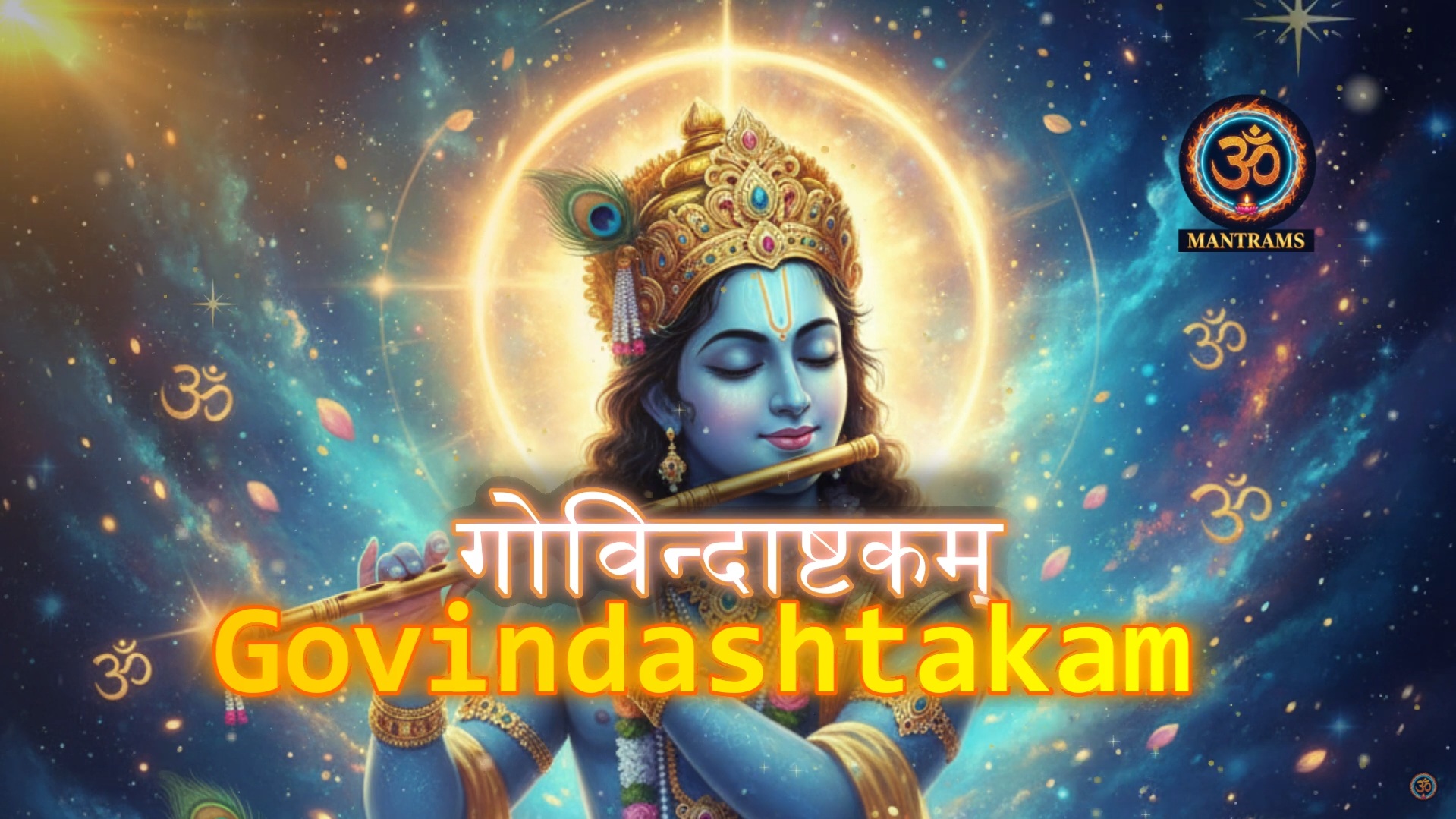
The name Adi Shankaracharya typically brings to mind the austere philosophy of Advaita Vedānta—the non-dual path of pure knowledge (Jñāna). Yet, this brilliant sage also composed exquisite devotional hymns (Stotras) like the Govindashtakam, dedicated to Lord Krishna in his form as Govinda.
The central purpose of this eight-verse hymn is to build a bridge between the seemingly opposing spiritual paths:
- The Nirguṇa (Formless): The ultimate reality—Brahman—which is without attributes, beyond space and time.
- The Saguṇa (Form with Attributes): The personal God, Kṛṣṇa, who engages in playful Līlā (divine sports) in the world.
The Govindashtakam reveals that the ultimate, unchangeable truth of the universe (Nirguṇa) is the very same truth that manifests as the most beautiful, lovable, and accessible form (Saguṇa)—the eternal bliss of Govinda.
Verse 1: The Synthesis of Brahman and the Child
The hymn immediately establishes this profound unity in its first verse:
satyaṁ jñānam-anantaṁ nityaṁ-anākāśaṁ paramākāśam । goṣṭha-prāṅgaṇa-riṅkhaṇa-lolaṁ anāyāsaṁ paramāyāsam…
The first half describes the Nirguṇa Brahman: Truth (Satyaṁ), Knowledge (Jñānaṁ), Infinite (Anantam), Eternal (Nityaṁ), beyond space (Anākāśam). The second half describes the Saguṇa Kṛṣṇa: He who is happily crawling (riṅkhaṇa-lolaṁ) in the courtyard of the cow pen.
Shankaracharya juxtaposes the absolute truth with the image of a playful child to teach us that the source of all cosmic power is effortlessly found in the simple, loving reality of devotion. The Lord who creates and sustains the universe without exertion (anāyāsaṁ) is the same one who appears to exert greatly (paramāyāsam) while crawling across the earth.
The Līlā as Ultimate Truth
The successive verses continue to weave philosophical concepts into the enchanting stories of Krishna’s life (Līlā):
- The Universe in a Mouth (Verse 2): It praises Govinda who, as a child, showed the entire fourteen worlds (caturdaśa-lokālim) inside his opened mouth to mother Yaśodā. This is the truth of cosmic containment revealed through a simple, playful act.
- The Master of Consciousness (Verse 3): Govinda is called the remover of the disease of Saṁsāra (bhava-roga-ghnam) and the one who shines in a clear mind (vaimalya-sphuṭa-ceto-vṛtti). This confirms that Govinda is the purity of consciousness required for liberation (Kaivalyaṁ).
- The Lord of the Now (Verse 7): The hymn praises Govinda who danced on the head of the serpent Kāliya (kāliya-śirasi nṛtyantaṁ). By calling him Kāla-traya-gati-hetum (the cause of the movement of the three times—past, present, and future), the Stotra reminds us that Govinda is the master of time, and true devotion anchors us in the eternal Now.
The Supreme Fruit of the Govindashtakam
The concluding verse details the astounding result of reciting this powerful hymn. It states that the one who chants this Govindashtakam with a mind devoted to Govinda, using the various names like Govinda, Achyuta, Mādhava, and Kṛṣṇa:
- Washes away all sins (dhauta-samastāghaḥ).
- Is drenched in the nectar of meditation on Govinda’s lotus feet (dhyāna-sudhā-jala).
- Attains the indwelling Govinda, the nectar of Supreme Bliss (paramānandāmṛtam).
The Govindashtakam is more than just a hymn for the morning; it is a profound declaration that the journey to the highest truth is not dry or difficult, but an immersion in the eternal, accessible bliss of the Divine.
Govindashtakam Mantram Sankirt Lyrics
गोविन्दाष्टकम्
सत्यं ज्ञानमनन्तं नित्यमनाकाशं परमाकाशम् ।
गोष्ठप्राङ्गणरिङ्खणलोलमनायासं परमायासम् ।
मायाकल्पितनानाकारमनाकारं भुवनाकारम् ।
क्ष्मामानाथमनाथं प्रणमत गोविन्दं परमानन्दम् ॥ 1 ॥
मृत्स्नामत्सीहेति यशोदाताडनशैशव सन्त्रासम् ।
व्यादितवक्त्रालोकितलोकालोकचतुर्दशलोकालिम् ।
लोकत्रयपुरमूलस्तम्भं लोकालोकमनालोकम् ।
लोकेशं परमेशं प्रणमत गोविन्दं परमानन्दम् ॥ 2 ॥
त्रैविष्टपरिपुवीरघ्नं क्षितिभारघ्नं भवरोगघ्नम् ।
कैवल्यं नवनीताहारमनाहारं भुवनाहारम् ।
वैमल्यस्फुटचेतोवृत्तिविशेषाभासमनाभासम् ।
शैवं केवलशान्तं प्रणमत गोविन्दं परमानन्दम् ॥ 3 ॥
गोपालं प्रभुलीलाविग्रहगोपालं कुलगोपालम् ।
गोपीखेलनगोवर्धनधृतिलीलालालितगोपालम् ।
गोभिर्निगदित गोविन्दस्फुटनामानं बहुनामानम् ।
गोपीगोचरदूरं प्रणमत गोविन्दं परमानन्दम् ॥ 4 ॥
गोपीमण्डलगोष्ठीभेदं भेदावस्थमभेदाभम् ।
शश्वद्गोखुरनिर्धूतोद्गत धूलीधूसरसौभाग्यम् ।
श्रद्धाभक्तिगृहीतानन्दमचिन्त्यं चिन्तितसद्भावम् ।
चिन्तामणिमहिमानं प्रणमत गोविन्दं परमानन्दम् ॥ 5 ॥
स्नानव्याकुलयोषिद्वस्त्रमुपादायागमुपारूढम् ।
व्यादित्सन्तीरथ दिग्वस्त्रा दातुमुपाकर्षन्तं ताः
निर्धूतद्वयशोकविमोहं बुद्धं बुद्धेरन्तस्थम् ।
सत्तामात्रशरीरं प्रणमत गोविन्दं परमानन्दम् ॥ 6 ॥
कान्तं कारणकारणमादिमनादिं कालधनाभासम् ।
कालिन्दीगतकालियशिरसि सुनृत्यन्तं मुहुरत्यन्तम् ।
कालं कालकलातीतं कलिताशेषं कलिदोषघ्नम् ।
कालत्रयगतिहेतुं प्रणमत गोविन्दं परमानन्दम् ॥ 7 ॥
बृन्दावनभुवि बृन्दारकगणबृन्दाराधितवन्देहम् ।
कुन्दाभामलमन्दस्मेरसुधानन्दं सुहृदानन्दम् ।
वन्द्याशेष महामुनि मानस वन्द्यानन्दपदद्वन्द्वम् ।
वन्द्याशेषगुणाब्धिं प्रणमत गोविन्दं परमानन्दम् ॥ 8 ॥
गोविन्दाष्टकमेतदधीते गोविन्दार्पितचेता यः ।
गोविन्दाच्युत माधव विष्णो गोकुलनायक कृष्णेति ।
गोविन्दाङ्घ्रि सरोजध्यानसुधाजलधौतसमस्ताघः ।
गोविन्दं परमानन्दामृतमन्तस्थं स तमभ्येति ॥
इति श्री शङ्कराचार्य विरचित श्रीगोविन्दाष्टकं समाप्तं
Govindashtakam Mantram English Lyrics
satyaṃ jñānamanantaṃ nityamanākāśaṃ paramākāśam ।
gōṣṭhaprāṅgaṇariṅkhaṇalōlamanāyāsaṃ paramāyāsam ।
māyākalpitanānākāramanākāraṃ bhuvanākāram ।
kṣmāmānāthamanāthaṃ praṇamata gōvindaṃ paramānandam ॥ 1 ॥
mṛtsnāmatsīhēti yaśōdātāḍanaśaiśava santrāsam ।
vyāditavaktrālōkitalōkālōkachaturdaśalōkālim ।
lōkatrayapuramūlastambhaṃ lōkālōkamanālōkam ।
lōkēśaṃ paramēśaṃ praṇamata gōvindaṃ paramānandam ॥ 2 ॥
traiviṣṭaparipuvīraghnaṃ kṣitibhāraghnaṃ bhavarōgaghnam ।
kaivalyaṃ navanītāhāramanāhāraṃ bhuvanāhāram ।
vaimalyasphuṭachētōvṛttiviśēṣābhāsamanābhāsam ।
śaivaṃ kēvalaśāntaṃ praṇamata gōvindaṃ paramānandam ॥ 3 ॥
gōpālaṃ prabhulīlāvigrahagōpālaṃ kulagōpālam ।
gōpīkhēlanagōvardhanadhṛtilīlālālitagōpālam ।
gōbhirnigadita gōvindasphuṭanāmānaṃ bahunāmānam ।
gōpīgōcharadūraṃ praṇamata gōvindaṃ paramānandam ॥ 4 ॥
gōpīmaṇḍalagōṣṭhībhēdaṃ bhēdāvasthamabhēdābham ।
śaśvadgōkhuranirdhūtōdgata dhūḻīdhūsarasaubhāgyam ।
śraddhābhaktigṛhītānandamachintyaṃ chintitasadbhāvam ।
chintāmaṇimahimānaṃ praṇamata gōvindaṃ paramānandam ॥ 5 ॥
snānavyākulayōṣidvastramupādāyāgamupārūḍham ।
vyāditsantīratha digvastrā dātumupākarṣantaṃ tāḥ
nirdhūtadvayaśōkavimōhaṃ buddhaṃ buddhērantastham ।
sattāmātraśarīraṃ praṇamata gōvindaṃ paramānandam ॥ 6 ॥
kāntaṃ kāraṇakāraṇamādimanādiṃ kāladhanābhāsam ।
kāḻindīgatakāliyaśirasi sunṛtyantaṃ muhuratyantam ।
kālaṃ kālakalātītaṃ kalitāśēṣaṃ kalidōṣaghnam ।
kālatrayagatihētuṃ praṇamata gōvindaṃ paramānandam ॥ 7 ॥
bṛndāvanabhuvi bṛndārakagaṇabṛndārādhitavandēham ।
kundābhāmalamandasmērasudhānandaṃ suhṛdānandam ।
vandyāśēṣa mahāmuni mānasa vandyānandapadadvandvam ।
vandyāśēṣaguṇābdhiṃ praṇamata gōvindaṃ paramānandam ॥ 8 ॥
gōvindāṣṭakamētadadhītē gōvindārpitachētā yaḥ ।
gōvindāchyuta mādhava viṣṇō gōkulanāyaka kṛṣṇēti ।
gōvindāṅghri sarōjadhyānasudhājaladhautasamastāghaḥ ।
gōvindaṃ paramānandāmṛtamantasthaṃ sa tamabhyēti ॥
iti śrī śaṅkarāchārya virachita śrīgōvindāṣṭakaṃ samāptaṃ
Govindashtakam Mantram Video
https://youtu.be/qmEiHIPVyNk


 truth of Vedanta with the beauty of Krishna's Līlā. Chant this for supreme bliss, wisdom, and liberation (Mokṣa).)