
The Core Contradiction of the Spiritual Path
Every serious spiritual aspirant faces the same dilemma: How do I cultivate fierce ambition for liberation (Mokṣa) while simultaneously cultivating the gentle humility (Vinaya) required to receive the grace of the Divine? How do I reconcile my small, limited self (Jīva) with the vastness of the Supreme (Paramātman)?
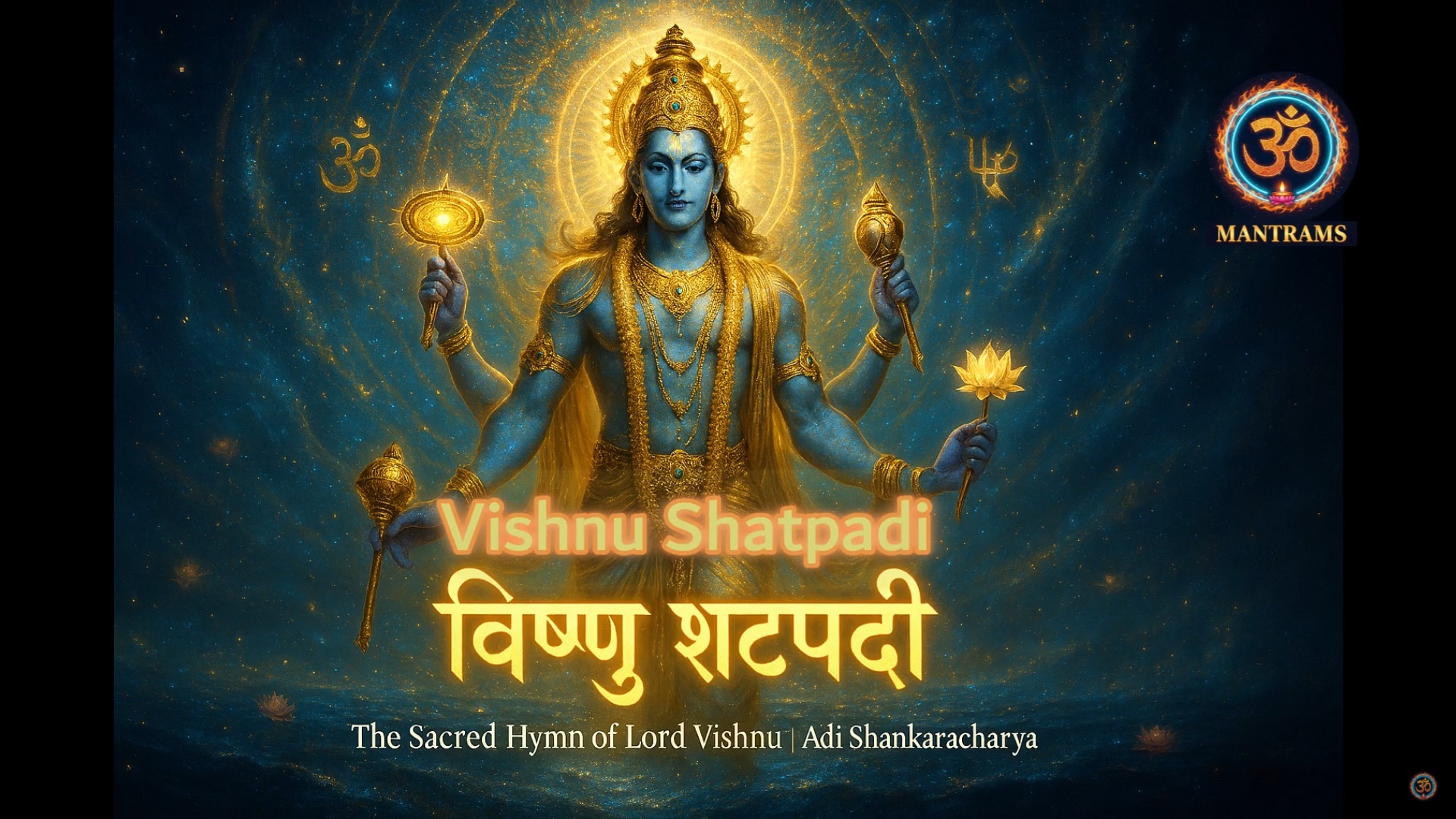
The Viṣṇu Ṣaṭpadī Stotram (The Hymn of Six Verses to Vishnu), a jewel from Adi Shankaracharya, is a complete answer to this query. It is a highly compressed teaching that blends Vaishnava devotion with the lofty principles of Advaita Vedanta. The hymn’s very title hints at its nature: Ṣaṭpadī can mean “six verses” or a “six-footed honeybee,” suggesting a mind that seeks the nectar of Vishnu’s lotus feet with devoted single-mindedness.
Verse 1: Humility and the Mirage of Desire
The Stotram begins not with praise of Vishnu’s glory, but with a confession of the seeker’s limitations—a desperate plea for inner cleansing:
avinayam apanaya viṣṇo damaya manaḥ śamaya viṣaya-mṛga-tṛṣṇām । bhūtadayāṁ vistāraya tāraya saṁsāra-sāgarataḥ ॥
This translates to: “O Vishnu, remove my arrogance (Avinaya), subdue my mind, and quench the thirst for worldly desires (the mirage-like thirst, mṛga-tṛṣṇām). Expand my compassion for all beings, and guide me across the ocean of Saṁsāra.”
Shankaracharya highlights that Arrogance (Avinaya) is the first barrier to knowledge. True learning, he implies, begins when we admit our ignorance. We ask Vishnu to subdue the mind’s relentless chase after fleeting objects (viṣaya), which are nothing more than mirages in the desert of life.
The Central Metaphor: Wave and Ocean
Perhaps the most famous and philosophically stunning verse in the Stotram clarifies the eternal relationship between the soul and God:
satyapi bhedāpagame nātha tavā’haṁ na māmakīnastvam । sāmudro hi taraṅgaḥ kvacana samudro na tāraṅgaḥ ॥
In simple terms, this means: “O Lord, even though the difference between us dissolves upon realization, I am yours, but you are not mine. For a wave belongs to the ocean, but the ocean never belongs to the wave.”
– The Wave (Jīva): The wave is a temporary, individualized form. It has an identity, but that identity is entirely dependent on the ocean. We, the individual souls (Jīvas), are waves—we are real, but our existence is dependent on the Supreme Reality.
– The Ocean (Paramātman): The ocean is the eternal, ultimate source. It is the substance of the wave, but it remains vast even if the wave vanishes. This analogy captures the core of Advaita: the substance is the same (we are Divine), but the form is different (we are not the Supreme). This humility is the key to surrendering the individual ego.
The Assurance of Grace and Liberation
The final verses shift to praising Vishnu’s manifestations (Avatāras)—lifting the mountain (Govardhana), protecting the Earth, and destroying demons—affirming his compassionate intervention in the world. The power of the Ṣaṭpadī is revealed in its promise:
- It is a plea to Vishnu to act as the Mandara Mountain in the cosmic churning of the ocean of Saṁsāra, removing the paramaṁ daram (immense fear) from the seeker.
- The closing verse is a humble request: “O Nārāyaṇa, full of compassion, I seek refuge at your two feet. May these six verses, the Ṣaṭpadī, always reside in my lotus-like mouth.”
To chant the Vishnu Ṣaṭpadī Stotram is to engage in a concise, daily spiritual therapy. It is a practice that removes the corrosive pride of the ego, quenches the mind’s endless thirst, and—using the profound imagery of the ocean—shows the path home to the eternal, all-encompassing Vishnu.
Vishnu Shatpadi Stotram Sanskirt Lyrics
विष्णु षट्पदि
अविनयमपनय विष्णो दमय मनः शमय विषयमृगतृष्णाम् ।
भूतदयां विस्तारय तारय संसारसागरतः ॥ 1 ॥
दिव्यधुनीमकरन्दे परिमलपरिभोगसच्चिदानन्दे ।
श्रीपतिपदारविन्दे भवभयखेदच्छिदे वन्दे ॥ 2 ॥
सत्यपि भेदापगमे नाथ तवाऽहं न मामकीनस्त्वम् ।
सामुद्रो हि तरङ्गः क्वचन समुद्रो न तारङ्गः ॥ 3 ॥
उद्धृतनग नगभिदनुज दनुजकुलामित्र मित्रशशिदृष्टे ।
दृष्टे भवति प्रभवति न भवति किं भवतिरस्कारः ॥ 4 ॥
मत्स्यादिभिरवतारैरवतारवताऽवता सदा वसुधाम् ।
परमेश्वर परिपाल्यो भवता भवतापभीतोऽहम् ॥ 5 ॥
दामोदर गुणमन्दिर सुन्दरवदनारविन्द गोविन्द ।
भवजलधिमथनमन्दर परमं दरमपनय त्वं मे ॥ 6 ॥
नारायण करुणामय शरणं करवाणि तावकौ चरणौ ।
इति षट्पदी मदीये वदनसरोजे सदा वसतु ॥
इति श्रीमच्चङ्कराचार्य विरचितं श्री विष्णु षट्पदी स्तोत्रं सम्पूर्णम्
Vishnu Shatpadi Stotram English Lyrics
avinayamapanaya viṣṇō damaya manaḥ śamaya viṣayamṛgatṛṣṇām ।
bhūtadayāṃ vistāraya tāraya saṃsārasāgarataḥ ॥ 1 ॥
divyadhunīmakarandē parimaḻaparibhōgasachchidānandē ।
śrīpatipadāravindē bhavabhayakhēdachChidē vandē ॥ 2 ॥
satyapi bhēdāpagamē nātha tavā’haṃ na māmakīnastvam ।
sāmudrō hi taraṅgaḥ kvachana samudrō na tāraṅgaḥ ॥ 3 ॥
uddhṛtanaga nagabhidanuja danujakulāmitra mitraśaśidṛṣṭē ।
dṛṣṭē bhavati prabhavati na bhavati kiṃ bhavatiraskāraḥ ॥ 4 ॥
matsyādibhiravatārairavatāravatā’vatā sadā vasudhām ।
paramēśvara paripālyō bhavatā bhavatāpabhītō’ham ॥ 5 ॥
dāmōdara guṇamandira sundaravadanāravinda gōvinda ।
bhavajaladhimathanamandara paramaṃ daramapanaya tvaṃ mē ॥ 6 ॥
nārāyaṇa karuṇāmaya śaraṇaṃ karavāṇi tāvakau charaṇau ।
iti ṣaṭpadī madīyē vadanasarōjē sadā vasatu ॥
iti śrīmachchaṅkarāchārya virachitaṃ śrī viṣṇu ṣaṭpadī stōtraṃ sampūrṇam
Vishnu Shatpadi Stotram Video
https://youtu.be/sXpFn3EoWIQ





.)