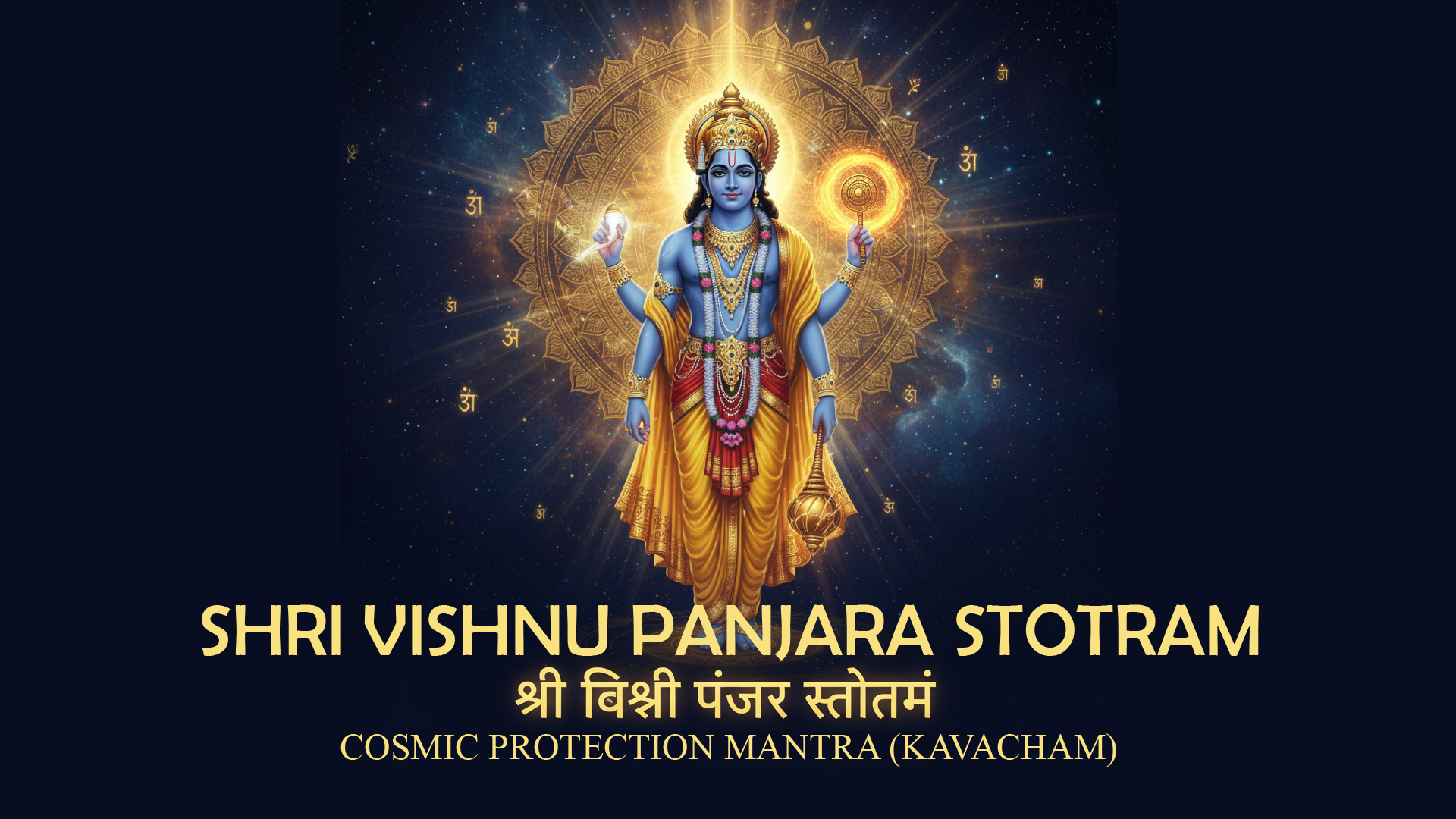
A Shield for the Soul: Why We Need Vishnu’s Armor
In a world full of unpredictable dangers—from subtle energetic attacks to unforeseen worldly calamities—the spiritual seeker is constantly looking for an assurance of safety. The Vedas and Puranas offer many hymns for protection, but few are as meticulously detailed and comprehensive as the Sri Vishnu Panjara Stotram.
The name is deeply symbolic: Vishnu is the omnipresent Preserver, and Panjara means “cage,” “framework,” or “enclosure.” This stotram is literally an invocation to weave a protective cage of Vishnu’s divine energy around oneself, warding off every conceivable threat.
This text is highly revered and can be found in several ancient sources, including the Brahmāṇḍa Purāṇa. It’s a hymn so powerful that it was revealed by Lord Shiva to Lord Brahma to ensure safety during the battle against the formidable Tripurāsura, and later gifted to great sages like Nārada and Parashu Rāma to shield humanity. If the gods themselves relied on this hymn, its power is undeniable.
The Meticulous Design: A Body-by-Body Guard
What sets the Vishnu Panjara Stotram apart from other general protection hymns (Kavacham) is its incredible precision. It systematically assigns a specific name or form of Lord Vishnu to guard every single part of the devotee’s body and every direction of space. This detailed nyāsa (ritual placement) is what makes the protection so comprehensive.
- Protecting the Physical Core: The stotram moves from foot to head. Govinda is invoked to protect the feet (pādau), Trivikrama guards the knees (jaṅghē), Keśava shields the thighs (ūrū), and Janārdana guards the hips (kaṭiṃ). The vital stomach (udaraṁ) is secured by Padmanābha, and the back (pṛṣṭhaṁ) by Mādhava.
- Guarding the Senses: Even the most sensitive parts of the body are covered: Nārāyaṇa protects the eyes (nētrē), the nose (nāsikā) is shielded by Hṛṣīkeśa (Master of the Senses), and the forehead (lalāṭaṁ) by the powerful Garuḍadhvaja (He whose flag bears Garuda).
- The Multidirectional Shield: Beyond the body, the stotram extends Vishnu’s protection to the ten directions. It calls upon the Lord’s different weapons and Avatāras to stand sentinel:
- East: Chakradhāri Viṣṇu (Vishnu holding the disc).
- South: Gadādhāri Hari (Hari holding the mace).
- The corners (like the southeast and southwest) are also meticulously guarded by forms like Śrīdhara and Narasiṁha. Even the sky (ākāśa) and the netherworld (pātāle) are protected by the Gadā (Mace) and the Sudarśana Chakra.
The Supreme Assurance: Beyond Just Safety
The benefits promised in the Phalaśruti (conclusion) of the Vishnu Panjara Stotram are immense, touching every dimension of life:
- Complete Victory and Fulfillment: Reciting this stotram is equated with performing thousands of great sacrifices (Aśvamedha and Vājapeya). It grants the fulfillment of all wishes (Sarva Kāmān Labhēta).
- Destruction of Misfortune: It acts as a defense against black magic, evil spirits, and the fear of natural dangers like thieves, wild animals, and floods.
- Karmic Purification: The text assures that chanting this hymn purifies the devotee of all sins (sarva pāpēbhyō mucyatē), including the gravest ones, thereby paving the path for spiritual liberation (Mōkṣa).
- Boon for the Family: It bestows children upon the childless (aputrō labhatē putraṁ), wealth upon the poor, and knowledge upon the students. The Kavacham ensures a holistic flourishing of the devotee’s life and family.
To step into the grace of the Sri Vishnu Panjara Stotram is to place your entire being—body, mind, and environment—into the eternal care of the Preserver. It is a commitment to fearlessness, knowing that the names of the Supreme Lord are your eternal fortress.
Sri Vishnu Panjara Stotram Sanskirt Mantram
श्री विष्णु पञ्जर स्तोत्रम्
ॐ अस्य श्रीविष्णुपञ्जरस्तोत्र महामन्त्रस्य नारद ऋषिः । अनुष्टुप् छन्दः । श्रीविष्णुः परमात्मा देवता । अहं बीजम् । सोहं शक्तिः । ॐ ह्रीं कीलकम् । मम सर्वदेहरक्षणार्थं जपे विनियोगः ।
नारद ऋषये नमः मुखे । श्रीविष्णुपरमात्मदेवतायै नमः हृदये । अहं बीजं गुह्ये । सोहं शक्तिः पादयोः । ॐ ह्रीं कीलकं पादाग्रे । ॐ ह्रां ह्रीं ह्रूं ह्रैं ह्रौं ह्रः इति मन्त्रः ।
ॐ ह्रां अङ्गुष्ठाभ्यां नमः ।
ॐ ह्रीं तर्जनीभ्यां नमः ।
ॐ ह्रूं मध्यमाभ्यां नमः ।
ॐ ह्रैं अनामिकाभ्यां नमः ।
ॐ ह्रौं कनिष्ठिकाभ्यां नमः ।
ॐ ह्रः करतलकरपृष्ठाभ्यां नमः ।
इति करन्यासः ।
ॐ ह्रां हृदयाय नमः ।
ॐ ह्रीं शिरसे स्वाहा ।
ॐ ह्रूं शिखायै वषट् ।
ॐ ह्रैं कवचाय हुम् ।
ॐ ह्रौं नेत्रत्रयाय वौषट् ।
ॐ ह्रः अस्त्राय फट् ।
इति अङ्गन्यासः ।
अहं बीजं प्राणायामं मन्त्रत्रयेण कुर्यात् ।
ध्यानम् ।
परं परस्मात्प्रकृतेरनादिमेकं निविष्टं बहुधा गुहायाम् ।
सर्वालयं सर्वचराचरस्थं नमामि विष्णुं जगदेकनाथम् ॥ 1 ॥
ॐ विष्णुपञ्जरकं दिव्यं सर्वदुष्टनिवारणम् ।
उग्रतेजो महावीर्यं सर्वशत्रुनिकृन्तनम् ॥ 2 ॥
त्रिपुरं दहमानस्य हरस्य ब्रह्मणो हितम् ।
तदहं सम्प्रवक्ष्यामि आत्मरक्षाकरं नृणाम् ॥ 3 ॥
पादौ रक्षतु गोविन्दो जङ्घे चैव त्रिविक्रमः ।
ऊरू मे केशवः पातु कटिं चैव जनार्दनः ॥ 4 ॥
नाभिं चैवाच्युतः पातु गुह्यं चैव तु वामनः ।
उदरं पद्मनाभश्च पृष्ठं चैव तु माधवः ॥ 5 ॥
वामपार्श्वं तथा विष्णुर्दक्षिणं मधुसूदनः ।
बाहू वै वासुदेवश्च हृदि दामोदरस्तथा ॥ 6 ॥
कण्ठं रक्षतु वाराहः कृष्णश्च मुखमण्डलम् ।
माधवः कर्णमूले तु हृषीकेशश्च नासिके ॥ 7 ॥
नेत्रे नारायणो रक्षेल्ललाटं गरुडध्वजः ।
कपोलौ केशवो रक्षेद्वैकुण्ठः सर्वतोदिशम् ॥ 8 ॥
श्रीवत्साङ्कश्च सर्वेषामङ्गानां रक्षको भवेत् ।
पूर्वस्यां पुण्डरीकाक्ष आग्नेय्यां श्रीधरस्तथा ॥ 9 ॥
दक्षिणे नारसिंहश्च नैरृत्यां माधवोऽवतु ।
पुरुषोत्तमो वारुण्यां वायव्यां च जनार्दनः ॥ 10 ॥
गदाधरस्तु कौबेर्यामीशान्यां पातु केशवः ।
आकाशे च गदा पातु पाताले च सुदर्शनम् ॥ 11 ॥
सन्नद्धः सर्वगात्रेषु प्रविष्टो विष्णुपञ्जरः ।
विष्णुपञ्जरविष्टोऽहं विचरामि महीतले ॥ 12 ॥
राजद्वारेऽपथे घोरे सङ्ग्रामे शत्रुसङ्कटे ।
नदीषु च रणे चैव चोरव्याघ्रभयेषु च ॥ 13 ॥
डाकिनीप्रेतभूतेषु भयं तस्य न जायते ।
रक्ष रक्ष महादेव रक्ष रक्ष जनेश्वर ॥ 14 ॥
रक्षन्तु देवताः सर्वा ब्रह्मविष्णुमहेश्वराः ।
जले रक्षतु वाराहः स्थले रक्षतु वामनः ॥ 15 ॥
अटव्यां नारसिंहश्च सर्वतः पातु केशवः ॥
दिवा रक्षतु मां सूर्यो रात्रौ रक्षतु चन्द्रमाः ॥ 16 ॥
पन्थानं दुर्गमं रक्षेत्सर्वमेव जनार्दनः ।
रोगविघ्नहतश्चैव ब्रह्महा गुरुतल्पगः ॥ 17 ॥
स्त्रीहन्ता बालघाती च सुरापो वृषलीपतिः ।
मुच्यते सर्वपापेभ्यो यः पठेन्नात्र संशयः ॥ 18 ॥
अपुत्रो लभते पुत्रं धनार्थी लभते धनम् ।
विद्यार्थी लभते विद्यां मोक्षार्थी लभते गतिम् ॥ 19 ॥
आपदो हरते नित्यं विष्णुस्तोत्रार्थसम्पदा ।
यस्त्विदं पठते स्तोत्रं विष्णुपञ्जरमुत्तमम् ॥ 20 ॥
मुच्यते सर्वपापेभ्यो विष्णुलोकं स गच्छति ।
गोसहस्रफलं तस्य वाजपेयशतस्य च ॥ 21 ॥
अश्वमेधसहस्रस्य फलं प्राप्नोति मानवः ।
सर्वकामं लभेदस्य पठनान्नात्र संशयः ॥ 22 ॥
जले विष्णुः स्थले विष्णुर्विष्णुः पर्वतमस्तके ।
ज्वालामालाकुले विष्णुः सर्वं विष्णुमयं जगत् ॥ 23 ॥
इति श्रीब्रह्माण्डपुराणे इन्द्रनारदसंवादे श्रीविष्णुपञ्जरस्तोत्रम् ॥
Sri Vishnu Panjara Stotram English Mantram Lyrics
ōṃ asya śrīviṣṇupañjarastōtra mahāmantrasya nārada ṛṣiḥ । anuṣṭup Chandaḥ । śrīviṣṇuḥ paramātmā dēvatā । ahaṃ bījam । sōhaṃ śaktiḥ । ōṃ hrīṃ kīlakam । mama sarvadēharakṣaṇārthaṃ japē viniyōgaḥ ।
nārada ṛṣayē namaḥ mukhē । śrīviṣṇuparamātmadēvatāyai namaḥ hṛdayē । ahaṃ bījaṃ guhyē । sōhaṃ śaktiḥ pādayōḥ । ōṃ hrīṃ kīlakaṃ pādāgrē । ōṃ hrāṃ hrīṃ hrūṃ hraiṃ hrauṃ hraḥ iti mantraḥ ।
ōṃ hrāṃ aṅguṣṭhābhyāṃ namaḥ ।
ōṃ hrīṃ tarjanībhyāṃ namaḥ ।
ōṃ hrūṃ madhyamābhyāṃ namaḥ ।
ōṃ hraiṃ anāmikābhyāṃ namaḥ ।
ōṃ hrauṃ kaniṣṭhikābhyāṃ namaḥ ।
ōṃ hraḥ karatalakarapṛṣṭhābhyāṃ namaḥ ।
iti karanyāsaḥ ।
ōṃ hrāṃ hṛdayāya namaḥ ।
ōṃ hrīṃ śirasē svāhā ।
ōṃ hrūṃ śikhāyai vaṣaṭ ।
ōṃ hraiṃ kavachāya hum ।
ōṃ hrauṃ nētratrayāya vauṣaṭ ।
ōṃ hraḥ astrāya phaṭ ।
iti aṅganyāsaḥ ।
ahaṃ bījaṃ prāṇāyāmaṃ mantratrayēṇa kuryāt ।
dhyānam ।
paraṃ parasmātprakṛtēranādimēkaṃ niviṣṭaṃ bahudhā guhāyām ।
sarvālayaṃ sarvacharācharasthaṃ namāmi viṣṇuṃ jagadēkanātham ॥ 1 ॥
ōṃ viṣṇupañjarakaṃ divyaṃ sarvaduṣṭanivāraṇam ।
ugratējō mahāvīryaṃ sarvaśatrunikṛntanam ॥ 2 ॥
tripuraṃ dahamānasya harasya brahmaṇō hitam ।
tadahaṃ sampravakṣyāmi ātmarakṣākaraṃ nṛṇām ॥ 3 ॥
pādau rakṣatu gōvindō jaṅghē chaiva trivikramaḥ ।
ūrū mē kēśavaḥ pātu kaṭiṃ chaiva janārdanaḥ ॥ 4 ॥
nābhiṃ chaivāchyutaḥ pātu guhyaṃ chaiva tu vāmanaḥ ।
udaraṃ padmanābhaścha pṛṣṭhaṃ chaiva tu mādhavaḥ ॥ 5 ॥
vāmapārśvaṃ tathā viṣṇurdakṣiṇaṃ madhusūdanaḥ ।
bāhū vai vāsudēvaścha hṛdi dāmōdarastathā ॥ 6 ॥
kaṇṭhaṃ rakṣatu vārāhaḥ kṛṣṇaścha mukhamaṇḍalam ।
mādhavaḥ karṇamūlē tu hṛṣīkēśaścha nāsikē ॥ 7 ॥
nētrē nārāyaṇō rakṣēllalāṭaṃ garuḍadhvajaḥ ।
kapōlau kēśavō rakṣēdvaikuṇṭhaḥ sarvatōdiśam ॥ 8 ॥
śrīvatsāṅkaścha sarvēṣāmaṅgānāṃ rakṣakō bhavēt ।
pūrvasyāṃ puṇḍarīkākṣa āgnēyyāṃ śrīdharastathā ॥ 9 ॥
dakṣiṇē nārasiṃhaścha nairṛtyāṃ mādhavō’vatu ।
puruṣōttamō vāruṇyāṃ vāyavyāṃ cha janārdanaḥ ॥ 10 ॥
gadādharastu kaubēryāmīśānyāṃ pātu kēśavaḥ ।
ākāśē cha gadā pātu pātāḻē cha sudarśanam ॥ 11 ॥
sannaddhaḥ sarvagātrēṣu praviṣṭō viṣṇupañjaraḥ ।
viṣṇupañjaraviṣṭō’haṃ vicharāmi mahītalē ॥ 12 ॥
rājadvārē’pathē ghōrē saṅgrāmē śatrusaṅkaṭē ।
nadīṣu cha raṇē chaiva chōravyāghrabhayēṣu cha ॥ 13 ॥
ḍākinīprētabhūtēṣu bhayaṃ tasya na jāyatē ।
rakṣa rakṣa mahādēva rakṣa rakṣa janēśvara ॥ 14 ॥
rakṣantu dēvatāḥ sarvā brahmaviṣṇumahēśvarāḥ ।
jalē rakṣatu vārāhaḥ sthalē rakṣatu vāmanaḥ ॥ 15 ॥
aṭavyāṃ nārasiṃhaścha sarvataḥ pātu kēśavaḥ ॥
divā rakṣatu māṃ sūryō rātrau rakṣatu chandramāḥ ॥ 16 ॥
panthānaṃ durgamaṃ rakṣētsarvamēva janārdanaḥ ।
rōgavighnahataśchaiva brahmahā gurutalpagaḥ ॥ 17 ॥
strīhantā bālaghātī cha surāpō vṛṣalīpatiḥ ।
muchyatē sarvapāpēbhyō yaḥ paṭhēnnātra saṃśayaḥ ॥ 18 ॥
aputrō labhatē putraṃ dhanārthī labhatē dhanam ।
vidyārthī labhatē vidyāṃ mōkṣārthī labhatē gatim ॥ 19 ॥
āpadō haratē nityaṃ viṣṇustōtrārthasampadā ।
yastvidaṃ paṭhatē stōtraṃ viṣṇupañjaramuttamam ॥ 20 ॥
muchyatē sarvapāpēbhyō viṣṇulōkaṃ sa gachChati ।
gōsahasraphalaṃ tasya vājapēyaśatasya cha ॥ 21 ॥
aśvamēdhasahasrasya phalaṃ prāpnōti mānavaḥ ।
sarvakāmaṃ labhēdasya paṭhanānnātra saṃśayaḥ ॥ 22 ॥
jalē viṣṇuḥ sthalē viṣṇurviṣṇuḥ parvatamastakē ।
jvālāmālākulē viṣṇuḥ sarvaṃ viṣṇumayaṃ jagat ॥ 23 ॥
iti śrībrahmāṇḍapurāṇē indranāradasaṃvādē śrīviṣṇupañjarastōtram ॥