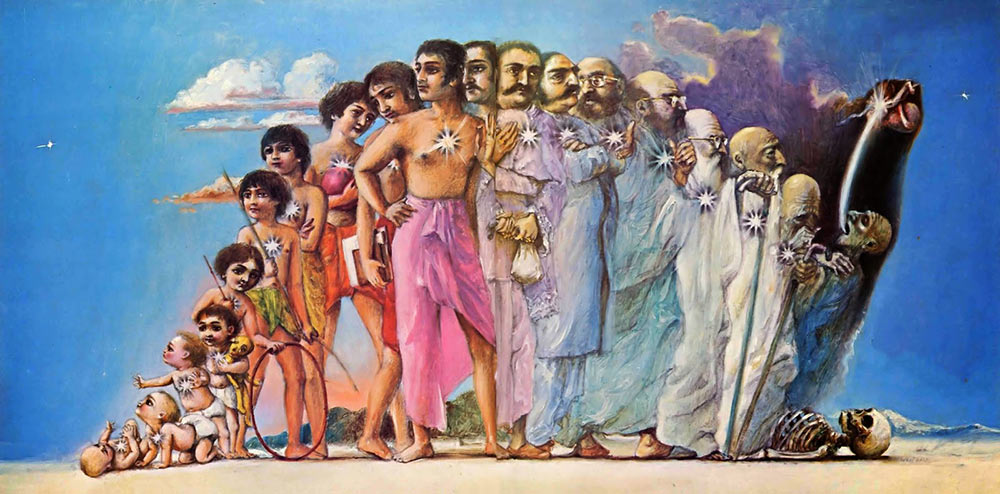
eGod – The Concept of Reincarnation in Hinduism: Exploring Past Lives and Future Possibilities. Reincarnation is a concept that is deeply ingrained in Hinduism, one of the world’s oldest religions. It is the belief that the soul is eternal and takes birth in different forms or bodies, based on the actions and karma of the previous life. In Hinduism, the ultimate goal of life is to attain moksha or liberation from the cycle of birth and death. Reincarnation plays a crucial role in this process, as it allows the soul to learn and evolve over multiple lifetimes.
The concept of reincarnation, or punarjanma, is rooted in the belief that everything in the universe is interconnected, and that our actions have consequences that extend beyond this lifetime. According to Hinduism, the soul is not created or destroyed, but rather, it moves from one body to another in a continuous cycle of birth and death. This cycle is known as samsara.
Also Read: The Hindu Concept of Dharma: Living a Life of Righteousness and Duty
The idea of reincarnation is not unique to Hinduism. It is also present in other religions and belief systems, such as Buddhism, Jainism, and Sikhism.
According to Hinduism, the quality of one’s actions in the previous life determines the form that the soul takes in the next life. Good actions lead to a higher birth, while bad actions lead to a lower birth. The ultimate goal is to break free from this cycle of birth and death by attaining moksha or liberation.
The concept of reincarnation has several implications for Hindus. Firstly, it provides a sense of continuity and purpose in life. It allows individuals to see their current life as part of a larger cycle and to understand that their actions have consequences that extend beyond this lifetime. Secondly, it provides a framework for understanding the inequalities and injustices in society. According to the caste system, individuals are born into different classes based on their past actions. This system has been criticized for perpetuating inequality and discrimination, but it also provides a sense of order and structure in society.
Also Read: The Hindu Moksha: Attaining Liberation from the Cycle of Rebirth
The concept of reincarnation has also been explored in popular culture, such as movies and books. One example is the book “Many Lives, Many Masters” by Dr. Brian Weiss, which recounts his experiences with a patient who underwent past life regression therapy. This therapy involves accessing past lives through hypnosis and can be used as a tool for healing and personal growth.
In conclusion, the concept of reincarnation is a fundamental aspect of Hinduism that provides a framework for understanding the cycle of birth and death. It has implications for both individual and societal life and has been explored in popular culture as well. As Hindus strive to attain moksha and break free from the cycle of birth and death, the concept of reincarnation remains a central focus of their spiritual journey.
Also Read: The Four Main Paths of Hinduism: Karma, Bhakti, Jnana, and Raja Yoga
#Hinduism #Reincarnation #PastLives #Spirituality #Philosophy #Samsara #Karma #Moksha #EternalSoul #InnerJourney