Understanding Karma: The Hindu Perspective
Introduction
Karma is a central concept in Hinduism, representing the cycle of cause and effect that shapes our actions, experiences, and destiny. According to the Hindu scriptures, every action we perform, whether good or bad, creates an imprint on our soul, determining our future experiences. By understanding the principles of karma, we can cultivate positive actions, leading to a more fulfilling and enlightened life.
The Nature of Karma
The word “karma” comes from the Sanskrit root “kri,” meaning “to do” or “to act.” Karma refers to the sum total of our actions and their consequences, both in this life and in previous lives. Hindus believe that we are all responsible for our own actions and that the choices we make shape our destiny.
Karma is not a form of punishment or reward; rather, it is a natural law that governs the universe. As we sow, so shall we reap. Good actions (karma) lead to positive experiences, while negative actions (karma) lead to negative experiences. The goal of karma is to learn from our mistakes, evolve spiritually, and ultimately attain liberation from the cycle of rebirth.
The Three Types of Karma
Hinduism categorizes karma into three types:
1. Sanchita Karma
This is the sum total of all the karma we have accumulated in our past lives. It is like a bank account of our actions, both positive and negative. Our current life is shaped by the balance of sanchita karma.
2. Prarabdha Karma
This is the portion of sanchita karma that we are experiencing in our present life. It determines our current circumstances, our body, our relationships, and our experiences. We cannot change prarabdha karma, but we can mitigate its effects through good actions.
3. Kriyamana Karma
This is the karma we are creating in the present moment. Our actions, choices, and intentions determine our kriyamana karma. We have the power to shape our future by making positive choices and performing good deeds.
The Cycle of Rebirth
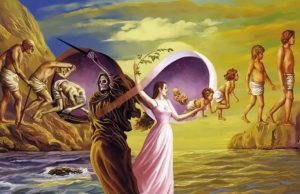
According to Hinduism, we are all caught in a cycle of rebirth, known as samsara. Our actions in this life determine our next birth. If we accumulate good karma, we may be born into a higher social class, with better health and more opportunities. If we accumulate bad karma, we may be born into a lower social class, with fewer opportunities.
The goal of Hinduism is to break free from the cycle of rebirth and achieve moksha, or liberation. Moksha is a state of enlightenment and unity with the divine. It is achieved through spiritual practices, such as meditation, yoga, and selfless service.
How to Improve Our Karma
We can improve our karma by practicing the following principles:
- Non-violence (ahimsa): Avoid harming others, both physically and emotionally.
- Truthfulness (satya): Be honest in your words and actions.
- Non-stealing (asteya): Respect the property of others.
- Purity (brahmacharya): Control your senses and avoid excessive indulgence.
- Equanimity (sama): Treat all beings with kindness and compassion, regardless of their background.
By cultivating these virtues, we can accumulate good karma and shape our destiny in a positive direction.
Conclusion
Karma is a powerful concept that governs the Hindu understanding of life, death, and rebirth. By understanding the principles of karma, we can cultivate positive actions and lead a more fulfilling and enlightened life. The ultimate goal of Hinduism is to break free from the cycle of rebirth and achieve moksha, a state of liberation and unity with the divine.
Secondary Keywords
- Hindu reincarnation
- Hindu afterlife
- Hindu liberation
- Tri Hita Karana
- Samsara