
The Hindu Concept of Dharma: Understanding Righteousness and Duty in Life
Introduction
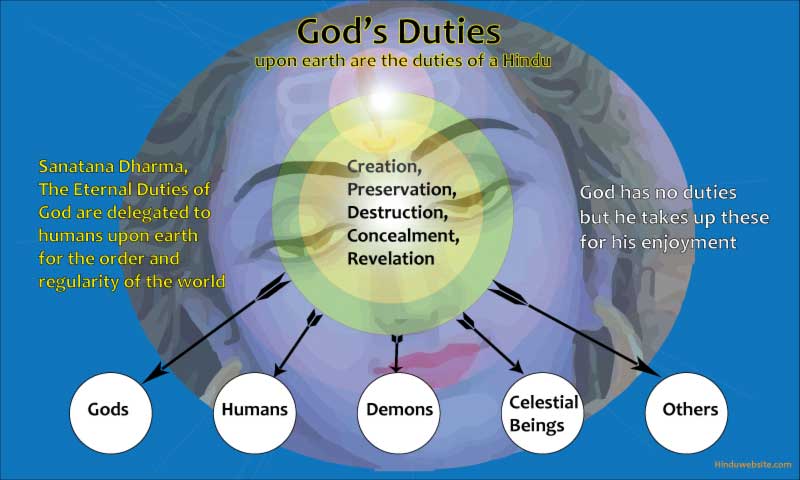
Dharma, a central concept in Hinduism, encompasses a vast and multifaceted understanding of righteousness, duty, and ethical conduct. It forms the foundation of Hindu beliefs and practices, guiding individuals in their daily lives and shaping their relationship with the world. This article explores the intricate nature of dharma, its principles, and its significance in the Hindu worldview.

Meaning and Etymology
The Sanskrit term “dharma” derives from the root “dhri,” meaning “to uphold” or “to support.” It encompasses a wide range of meanings, including:
- Righteousness
- Duty
- Obligation
- Moral law
- Truth
- Justice
- Harmony
Dharma is not merely a set of rules or commandments, but rather a dynamic principle that governs the proper conduct of individuals and societies.
Types of Dharma
Hinduism recognizes various types of dharma, each with its specific sphere of influence:
- Personal Dharma (Svadharma): The duties and responsibilities of an individual based on their social status, age, and circumstances.
- Vedic Dharma: The teachings and practices prescribed in the Vedas, the ancient Hindu scriptures.
- Social Dharma (Rajadharma): The duties and responsibilities of rulers and leaders to ensure the well-being of their subjects.
- Universal Dharma (Sanatana Dharma): The eternal principles of righteousness and truth that apply to all beings.
Principles of Dharma
Dharma is guided by several fundamental principles:
- Righteousness: Acting in accordance with the laws of morality and ethics.
- Duty: Fulfilling one’s obligations and responsibilities.
- Intention: Not only the action itself but also the intention behind it determines the morality of an act.
- Harmony: Dharma promotes the maintenance of harmony and balance in the physical, social, and spiritual realms.
- Non-injury (Ahimsa): Avoiding causing harm or suffering to others.
- Truthfulness (Satya): Speaking and acting in accordance with the truth.
Dharma in Practice
Dharma manifests itself in numerous aspects of Hindu life:
- Daily Rituals: Hindus perform daily rituals, such as prayer, meditation, and charity, as forms of dharma.
- Caste System: While controversial, the caste system in Hinduism was traditionally seen as a way of organizing society according to dharmic principles, with each caste having its specific duties.
- Religious Practices: Dharma guides Hindus in their worship of deities, their participation in festivals, and their adherence to religious texts.
- Social and Political Life: Dharma influences ethical conduct in all spheres of life, from business dealings to political decision-making.
Significance of Dharma
Dharma plays a profound role in Hindu belief and practice:
- Foundation of Morality: It provides the basis for ethical behavior and guides individuals toward a virtuous life.
- Path to Liberation: By following dharma, Hindus believe they can accumulate good karma and progress toward spiritual liberation or moksha.
- Social Cohesion: Dharma promotes social harmony and cooperation by defining the roles and responsibilities of different individuals and groups.
- Cosmic Order: Dharma is seen as the underlying principle that maintains order and balance in the universe.
Conclusion
The Hindu concept of dharma is a multifaceted and dynamic principle that encompasses righteousness, duty, and ethical conduct. It guides Hindus in their daily lives, shapes their relationships with others, and serves as a foundation for social and spiritual well-being. By adhering to dharma, Hindus strive to live in harmony with themselves, the world, and the divine.## [The Hindu Concept Of Dharma: Understanding Righteousness And Duty In Life]
Executive Summary
Dharma, a Sanskrit term rooted in the ancient Hindu tradition, signifies a profound concept that encompasses moral duty, ethical conduct, and the cosmic order. Understanding Dharma requires delving into its multifaceted aspects, including its origins, principles, and implications for individual and collective well-being.
Introduction
In the tapestry of human existence, ethical and moral dilemmas often confront individuals. The Hindu concept of Dharma provides a comprehensive framework for navigating these complex situations and navigating life with purpose and righteousness. Dharma transcends mere legal obligations, extending into a realm of spiritual duty and cosmic harmony. This article explores the multifaceted nature of Dharma, its historical roots, and its relevance in shaping ethical conduct and personal well-being.
FAQs
1. What is the origin of the concept of Dharma?
Answer: The concept of Dharma can be traced back to the ancient Hindu scriptures, such as the Vedas and Upanishads. It holds a central position in Indian philosophy and religious thought, providing a moral compass for individuals and society.
2. How is Dharma different from religion?
Answer: While Dharma is often closely associated with religion, it encompasses a broader perspective that transcends specific religious affiliations. Dharma represents universal moral principles and ethical conduct, which are applicable to individuals regardless of their religious beliefs.
3. What are the key principles of Dharma?
Answer: The core principles of Dharma include truth (Satya), non-violence (Ahimsa), non-stealing (Asteya), purification (Saucha), and contentment (Santosha). These principles provide a framework for ethical behavior and personal growth.
Subtopics
1. The Nature of Dharma
Dharma is not a static concept but rather a dynamic one that evolves with the changing circumstances and contexts. It is based on the idea of cosmic harmony and balance, where each individual has a role to play in maintaining the equilibrium of the universe.
Key Aspects:
- Universal Laws: Dharma represents universal laws and principles that govern the cosmos and human behavior.
- Individual Duty: It emphasizes the importance of fulfilling one’s duties and responsibilities according to their nature and circumstances.
- Karmic Consequences: Dharma acknowledges the principle of karma, where actions have consequences and influence an individual’s future destiny.
2. Dharma and the Four Ashramas
The Hindu tradition divides life into four stages, or ashramas: Brahmacharya (student), Grihastha (householder), Vanaprastha (retired), and Sannyasa (renounced). Dharma varies according to each stage, with specific duties and responsibilities associated with each.
Key Aspects:
- Brahmacharya: Focus on education, self-discipline, and spiritual development.
- Grihastha: Emphasis on family life, fulfilling responsibilities to society and raising children.
- Vanaprastha: Transition towards a more reflective and spiritual life, while still engaging in some worldly duties.
- Sannyasa: Renunciation of worldly possessions and attachments, dedicating life to spiritual pursuits.
3. Dharma and the Caste System
The traditional Hindu caste system, known as Varna, divides society into four main groups: Brahmins (priests and scholars), Kshatriyas (warriors and rulers), Vaishyas (merchants and traders), and Shudras (laborers and service providers). Dharma assigns specific duties and responsibilities to each caste, maintaining societal harmony.
Key Aspects:
- Birth-Based Classification: Individuals are assigned to a particular caste based on their birth, determining their prescribed duties.
- Social Order: The caste system establishes a hierarchical social structure, with each caste having its own rights and obligations.
- Limitations and Criticism: The caste system has faced criticism for its potential to perpetuate inequality and discrimination, leading to ongoing social debates.
4. Dharma in the Bhagavad Gita
The Bhagavad Gita, a revered Hindu scripture, presents a comprehensive discourse on Dharma. It emphasizes the importance of selfless action (karma yoga), devotion to God (bhakti yoga), and knowledge (jnana yoga) as paths to spiritual liberation.
Key Aspects:
- Nishkama Karma: The concept of performing actions without attachment to the fruits of labor, focusing on duty and service.
- Duty Over Self-Interest: Emphasizes the importance of fulfilling one’s obligations, even in challenging situations.
- Universal Love and Compassion: Promotes the idea of extending love and compassion to all beings, transcending social divisions.
5. Dharma in Modern Society
The concept of Dharma remains relevant in modern society, providing a framework for ethical decision-making and personal growth. It encourages individuals to live in harmony with themselves, others, and the environment, contributing to a just and compassionate society.
Key Aspects:
- Ethical Dilemmas: Dharma provides guidance for navigating complex ethical dilemmas, promoting integrity, honesty, and fairness.
- Social Responsibility: Emphasizes the importance of contributing to the well-being of society, engaging in acts of charity and social service.
- Environmental Conservation: Encourages individuals to respect and protect the environment, recognizing the interconnectedness of all living beings.
Conclusion
The Hindu concept of Dharma is a profound and multifaceted philosophy that provides a roadmap for ethical living and personal growth. It transcends religious boundaries, offering universal principles that guide individuals in fulfilling their duties and responsibilities while maintaining harmony with the cosmic order. Dharma has played a pivotal role in shaping Indian culture and society, and its teachings continue to resonate in contemporary times, inspiring individuals to lead meaningful and virtuous lives.
Keyword Tags
- Hindu Dharma
- Ethical Conduct
- Moral Duty
- Cosmic Order
- Universal Principles