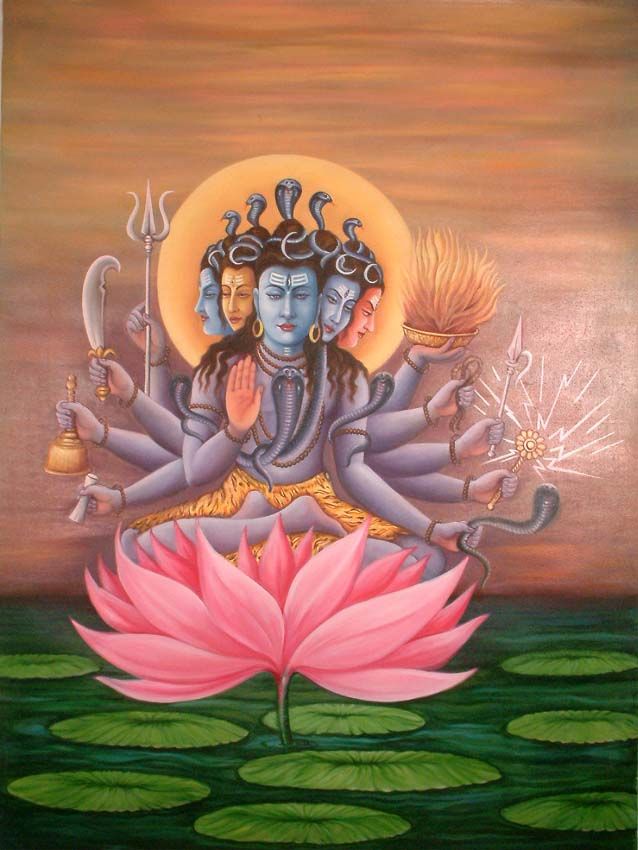
Shiva, one of the primary deities of the Hindu pantheon, is a multifaceted god with numerous forms and aspects. He is revered as the destroyer of evil, the lord of meditation, and the embodiment of cosmic consciousness. Here are some of the many forms of Shiva:
-
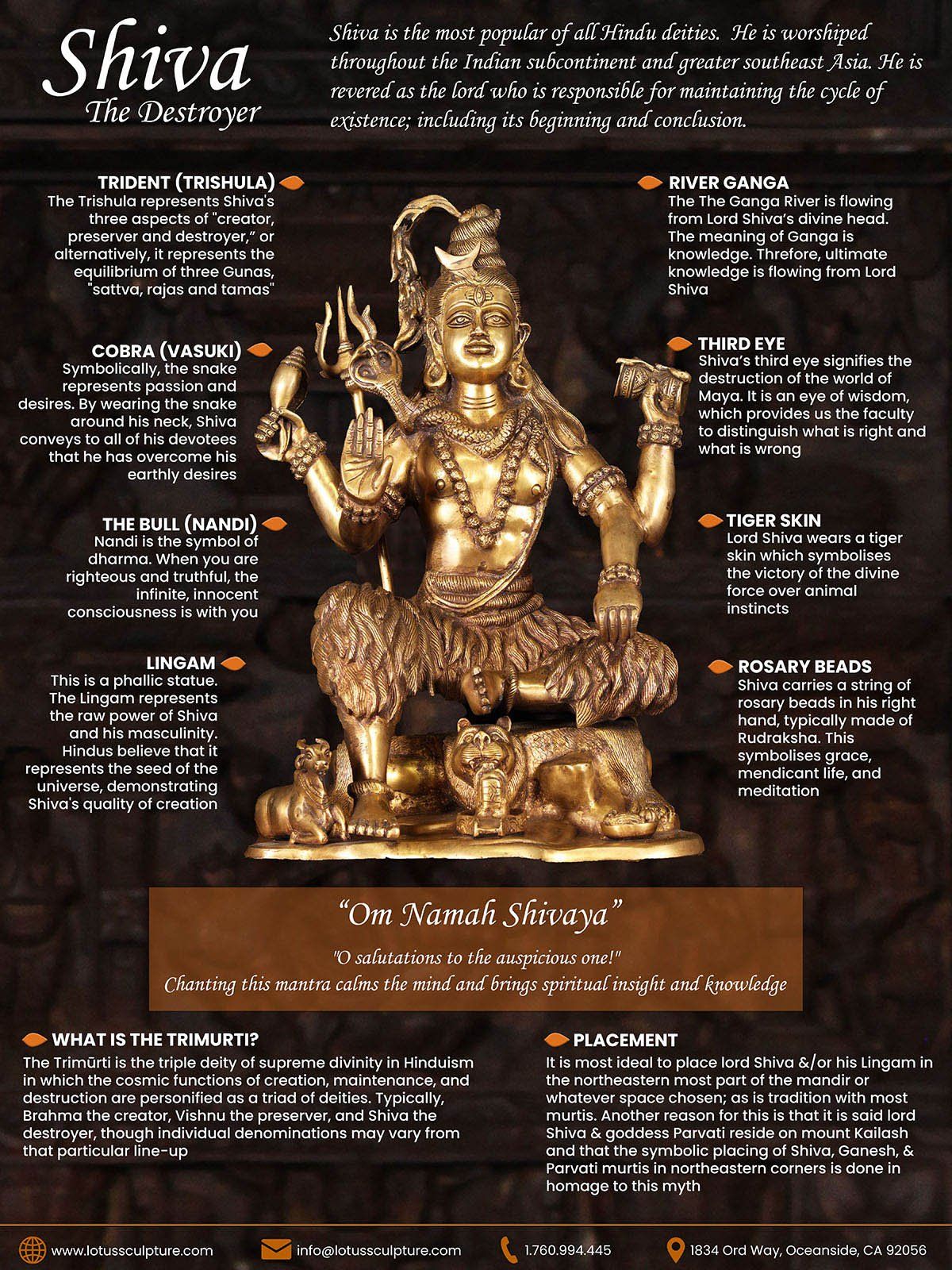
Mahadeva: The Great God – Mahadeva is the supreme form of Shiva, representing his omnipotence and transcendence over all other beings. He is often depicted as a majestic figure seated on a tiger skin, adorned with serpents and a crescent moon on his forehead.

-
Maheshwara: The Great Lord – Maheshwara is another name for Shiva, signifying his supreme dominion over the universe. He is often portrayed as a powerful deity with a third eye on his forehead, symbolizing his ability to see beyond illusions and perceive the true nature of reality.
-
Nataraja: The Lord of Dance – Nataraja is one of the most iconic forms of Shiva, representing his cosmic dance of creation and destruction. He is depicted as a graceful figure dancing within a ring of fire, symbolizing the cyclical nature of the universe.
-
Ardhanarishvara: The Half-Woman Lord – Ardhanarishvara is a unique form of Shiva, where he is depicted as half male and half female. This form represents the unity of masculine and feminine energies, symbolizing the harmonious balance of opposites in the universe.
-
Bhairava: The Terrible One – Bhairava is a fierce form of Shiva, representing his destructive and wrathful aspect. He is often depicted with a fearsome appearance, adorned with skulls and serpents, and wielding weapons of destruction.
-
Pashupati: The Lord of Animals – Pashupati is a form of Shiva associated with animals and the wild. He is often depicted seated on a bull, surrounded by various animals, symbolizing his dominion over the natural world.
-
Mahakala: The Great Time – Mahakala is a form of Shiva representing time and its inexorable power. He is often depicted as a fearsome deity with a skull-cup in his hand, symbolizing the cyclical nature of birth, death, and rebirth.
-
Sadashiva: The Eternal Lord – Sadashiva is the transcendental form of Shiva, representing his absolute and unchanging nature. He is often depicted as a radiant being, surrounded by a halo of light, symbolizing his boundless consciousness.
These are just a few of the many forms and aspects of Shiva, each representing a different facet of his multifaceted nature. Through these various forms, Shiva embodies the diverse and complex realities of the universe, guiding his devotees towards spiritual liberation and self-realization.## The Many Forms Of The Hindu God Shiva: The Destroyer Of Evil And Lord Of Meditation
Executive Summary
This comprehensive guide explores the multifaceted nature of Shiva, one of the most revered gods in the Hindu pantheon. From his destructive power to his meditative tranquility, Shiva’s diverse forms embody the complexities of the universe, providing insights into the divine and our own spiritual journeys.
Introduction
Shiva, known as the “Destroyer of Evil” and “Lord of Meditation,” is a central deity in Hinduism. His iconography, symbolism, and stories have captivated devotees for centuries, inspiring awe and devotion. This article delves into the many forms of Shiva, shedding light on his multifaceted nature and the profound teachings he imparts.
FAQ
-
Who is Shiva?
Shiva is one of the three main deities of the Hindu Trinity, along with Brahma, the creator, and Vishnu, the preserver. He is known as the destroyer, but his destruction is not annihilation but the dissolution of illusions and darkness. -
What are the main forms of Shiva?
Shiva manifests in numerous forms, each embodying a different aspect of his divine power. Some of his most prominent forms include Bhairava, the fierce destroyer; Nataraja, the cosmic dancer; and Mahadeva, the great god. -
Why is Shiva worshipped?
Devotees worship Shiva for various reasons, including seeking protection, overcoming obstacles, enhancing meditation, and attaining spiritual liberation. His diverse forms offer guidance and support for individuals on different spiritual paths.
Top 5 Forms of Shiva
Bhairava: The Fierce Destroyer
- Description: Bhairava is the wrathful manifestation of Shiva. He is often depicted with a terrifying countenance, wielding weapons and adorned with skulls.
- Importance: Bhairava represents Shiva’s power to destroy evil and negative forces.
- Symbolism: His weapons symbolize his ability to cut through ignorance and delusion.
- Worship: Bhairava is invoked for protection and warding off negativity.
- Mantra: “Om Bhairavaya Namah”
Nataraja: The Cosmic Dancer
- Description: Nataraja is Shiva’s embodiment as the cosmic dancer, performing the “dance of destruction and creation.” He is depicted with multiple arms, each representing different aspects of the universe.
- Importance: Nataraja symbolizes the rhythmic cycles of the cosmos, the balance between order and chaos.
- Symbolism: His drum represents the primal rhythm of the universe, while his fire symbolizes the transformative power of destruction.
- Worship: Nataraja is worshipped for inspiration, creativity, and spiritual liberation.
- Mantra: “Om Namah Shivaya”
Mahadeva: The Great God
- Description: Mahadeva is the supreme form of Shiva, encompassing all his other manifestations. He is often depicted as a peaceful ascetic, seated in meditation.
- Importance: Mahadeva represents the transcendental aspect of Shiva, the source of all creation and existence.
- Symbolism: His third eye represents his omniscience, while the crescent moon adorning his head symbolizes the waxing and waning of the universe.
- Worship: Mahadeva is worshipped for spiritual enlightenment, liberation from the cycle of rebirth, and communion with the divine.
- Mantra: “Om Tryambakam Yajamahe”
Sadashiva: The Eternal One
- Description: Sadashiva is the primordial form of Shiva, the formless and eternal being from which all other manifestations arise.
- Importance: Sadashiva represents the unmanifest, unchanging aspect of Shiva, the source of all potential and possibilities.
- Symbolism: He is often depicted as a lingam, a phallic symbol representing the creative force of the universe.
- Worship: Sadashiva is worshipped for spiritual realization, understanding the nature of consciousness, and connecting with the divine essence.
- Mantra: “Om Namah Shivaya”
Ardhanarishvara: The Half-Female Shiva
- Description: Ardhanarishvara is the androgynous form of Shiva, where he is depicted as half male, half female.
- Importance: Ardhanarishvara represents the unity of opposites, the balance between masculine and feminine energies.
- Symbolism: His male side symbolizes consciousness and reason, while his female side represents nature and intuition.
- Worship: Ardhanarishvara is worshipped for harmony in relationships, spiritual union, and the transcendence of duality.
- Mantra: “Om Ardhanarishvaraya Namah”
Conclusion
Shiva, the multifaceted god of Hinduism, embodies the paradoxical nature of existence. Through his destructive power, he dissolves ignorance and negative forces. Through his meditative grace, he guides devotees towards spiritual liberation. The many forms of Shiva provide a profound insight into the divine and inspire us to embrace the complexities of life with courage, wisdom, and a sense of the sacred.
Keyword Tags
- Hindu God
- Shiva
- Destroyer of Evil
- Lord of Meditation
- Hinduism