
Varuna, the Vedic God of Water and Cosmic Law
Varuna, one of the most ancient and prominent gods in the Hindu pantheon, holds a position of great significance, embodying the cosmic order and the waters of life. His multifaceted nature has led to a rich tapestry of mythological representations and philosophical interpretations.
1. The God of Waters:
- As the god of waters, Varuna is associated with the vast expanse of the ocean and all bodies of water.
- He is believed to control the flow of rivers, the ebb and flow of tides, and the distribution of rain.
- In Rigvedic hymns, Varuna is invoked as the guardian of the Cosmic Waters, the primordial source from which all life emerges.
2. The Lord of Cosmic Law (Ṛta):
- Varuna is primarily known as the upholder of the cosmic law, Ṛta.
- Ṛta represents the harmonious order of the universe, the moral and ethical principles that govern the world.
- Varuna ensures the maintenance of Ṛta, punishing those who deviate from it and rewarding those who adhere to it.
3. The Knower of Truth (Prajapati):
- As Varuna oversees the cosmic order, he has the ability to perceive all actions and intentions in the world.
- He is known as Prajapati, the Lord of Creatures, as he is the creator and sustainer of all living beings.
- Varuna’s knowledge and omnipresence make him a formidable witness and judge.
4. The Sky God:
- In some Vedic texts, Varuna is associated with the sky.
- He is sometimes referred to as the “lord of the broad firmament” and is connected with the celestial realm.
- This celestial aspect of Varuna is linked to his role as the omniscient overseer of the world.
5. The Father of the Gods:
- In later Hindu mythology, Varuna evolved into the father of the gods, occupying a prominent position in the celestial hierarchy.
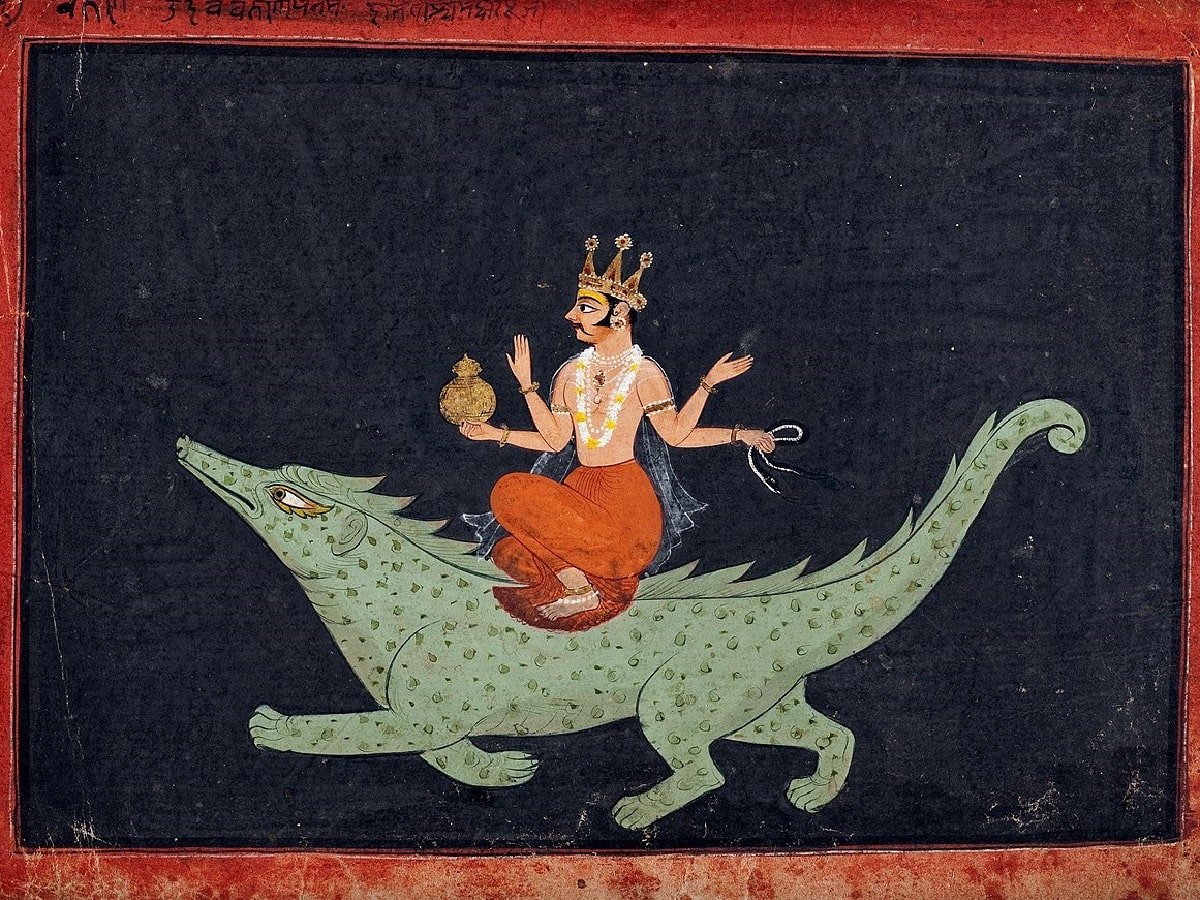
- He is often depicted as a majestic figure, adorned with golden ornaments and holding a noose, symbolizing his power to bind and control.
6. The God of Death:
- In some Puranic texts, Varuna is associated with the god of death, Yama.
- This aspect of his personality may reflect his role as the upholder of cosmic law and his ability to punish those who violate it.
- Varuna is said to divide the dead between heaven and hell based on their deeds.
7. The God of the West:
- Varuna is the guardian of the western direction, representing the setting sun and the realm of night.
- He is often associated with the planet Saturn (Shani) and the constellation of Makara (Capricorn).
Varuna’s multifaceted nature and profound influence on Hindu theology and mythology make him a complex and enigmatic figure. His role as the custodian of cosmic order, the guardian of waters, and the knower of all secrets has cemented his place as one of the most revered and important deities in Hinduism.## [The Many Forms Of The Hindu God Varuna: The God Of Water And Cosmic Law]
Executive Summary
In the vast and complex tapestry of Hindu mythology, the enigmatic figure of Varuna stands as a central deity, embodying the awe-inspiring forces of water and the unyielding principles of cosmic law. This article delves into the multifaceted nature of Varuna, exploring the various forms he assumes and the profound significance he holds within the Hindu pantheon.
Introduction
As the lord of the oceans, Varuna commands the boundless depths, his sovereignty extending over all bodies of water, from the mighty oceans to the humble rivers and streams. His celestial abode lies in the watery expanse, where he presides over the celestial order and ensures the harmony of creation.
FAQ
Q: What is Varuna’s primary role in Hinduism?
A: Varuna is the guardian of the cosmic law, known as Rita, the sacred order that governs the universe. He is the upholder of justice, the arbiter of truth, and the dispenser of punishment for those who transgress divine laws.
Q: Why is Varuna associated with water?
A: Water is a symbol of purity, renewal, and the life-giving essence that sustains all existence. Varuna’s dominion over water reflects his role as the protector of life, the one who nourishes and sustains the world through the gentle flow of rivers and the vast expanse of oceans.
Q: What are the different forms that Varuna takes?
A: Varuna manifests in various forms, each embodying a distinct aspect of his divine nature. These forms include:
Varuna as Aditya
-
Description: As one of the Adityas, Varuna represents the radiant sun, the source of light and life. He is associated with the power of knowledge and enlightenment.
-
Key Points:
- Guardian of the Sun: Varuna is the protector of the celestial body that sustains life on earth.
- Dispeller of Darkness: He dispels ignorance and brings forth wisdom and understanding.
- Lord of Justice: As the sun illuminates the world, Varuna’s justice shines upon all, revealing the truth and exposing wrongdoing.
- Arbiter of Karma: Varuna is said to control the consequences of one’s actions, ensuring that the laws of cause and effect are upheld.
Varuna as Asura
-
Description: In his Asura form, Varuna represents the more formidable aspects of water, including its potential for destruction and chaos.
-
Key Points:
- Lord of the Sky: Varuna is said to control the expanse of the sky, including the clouds, lightning, and storms.
- Bringer of Rain: He is responsible for the life-giving rain that nourishes the earth.
- Guardian of the Cosmos: As the protector of the sky, Varuna ensures the balance and stability of the universe.
- Punisher of Sin: Varuna’s destructive power is invoked upon those who transgress cosmic laws, bringing forth floods, droughts, and other calamities.
Varuna as Mitra
-
Description: Varuna’s bond with Mitra represents the harmonious union of water and light. Together, they embody the principles of friendship, loyalty, and cooperation.
-
Key Points:
- Guardian of Relationships: Varuna and Mitra are the protectors of oaths, covenants, and promises made between individuals.
- Promoters of Harmony: They foster unity and cooperation, both on earth and in the heavens.
- Sustainers of the World: Their combined power sustains the balance of nature and ensures the well-being of all creatures.
- Enforcers of Law: As the guardians of friendship and loyalty, Varuna and Mitra punish those who betray trust and violate the bonds of unity.
Varuna as Prajapati
-
Description: In his role as Prajapati, Varuna represents the paternal aspect of the divine, overseeing the creation and preservation of the world.
-
Key Points:
- Creator of the Universe: Varuna is said to have played a vital role in the genesis of the universe.
- Protector of the Earth: He sustains the earth and ensures its fertility and abundance.
- Lord of the Dead: As the guardian of the underworld, Varuna controls the cycle of death and rebirth.
- Guide to the Afterlife: He guides the souls of the departed to their rightful place in the afterlife.
Varuna as Yaksha
-
Description: Varuna’s Yaksha form represents the mystical and enigmatic aspects of water, including its ability to conceal secrets and reveal hidden knowledge.
-
Key Points:
- Guardian of Treasures: Varuna is said to guard the hidden treasures of the earth, including precious gems and minerals.
- Revealer of Secrets: He can unravel mysteries and expose the hidden truths that lie beneath the surface.
- Master of Illusions: Varuna’s Yaksha form is known for its ability to create illusions and confound the senses.
- Protector of the Forest: As the guardian of water sources, Varuna protects the forests and their inhabitants.
Conclusion
The multifaceted nature of the Hindu god Varuna reflects the vastness and complexity of the divine. As the lord of water and cosmic law, he embodies both the life-giving and destructive forces of nature, while his diverse forms represent the various aspects of human existence, from the mundane to the mystical. By understanding the many forms and roles of Varuna, we gain a deeper appreciation for the intricate tapestry of the Hindu pantheon and the profound significance of this enigmatic deity.
Keyword Tags
- Varuna
- Hindu God
- Water
- Cosmic Law
- Adityas
- Asura
- Mitra
- Prajapati
- Yaksha