Raja Yoga: The Path of Meditation to Attain Moksha
Raja Yoga, also known as Classical Yoga or Ashtanga Yoga, is one of the six traditional schools of yoga. It is a systematic and scientific approach to spiritual development that emphasizes meditation and concentration as the primary means to attain moksha, or liberation.

Origin and History
Raja Yoga originated in ancient India and is attributed to sage Patanjali, who compiled its principles in the Yoga Sutras, an influential text written around the 2nd century BCE. Patanjali’s system of yoga is based on the Samkhya philosophy, which posits that the universe is composed of two fundamental principles: Purusha (conscious self) and Prakriti (material nature).
Eight Limbs of Raja Yoga
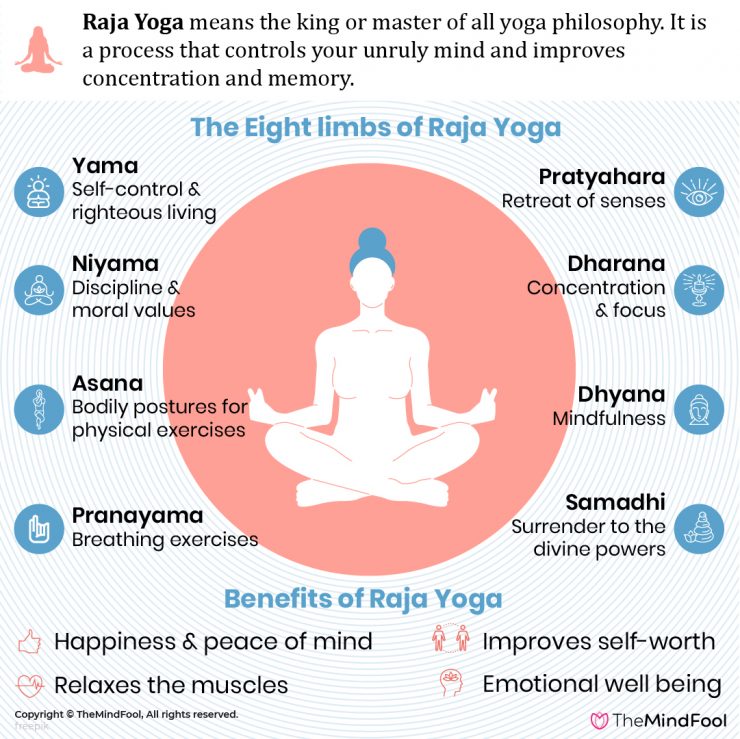
Raja Yoga consists of eight limbs, known as the “ashtanga,” which provide a comprehensive framework for spiritual development:
- Yama (Moral Restraints): Adherence to ethical principles such as non-violence, truthfulness, and non-stealing.
- Niyama (Positive Duties): Cultivating virtues such as cleanliness, contentment, and self-study.
- Asana (Physical Postures): Practicing specific physical postures to prepare the body for meditation.
- Pranayama (Breath Control): Regulating the breath to calm the mind and increase energy.
- Pratyahara (Sense Withdrawal): Turning the senses inward and detaching from external distractions.
- Dharana (Concentration): Focusing the mind on a single object or point.
- Dhyana (Meditation): Prolonged and sustained concentration, leading to a state of profound stillness.
- Samadhi (Enlightenment): The ultimate goal of yoga, where the mind merges with the Self and experiences pure consciousness.
Benefits of Raja Yoga
Practicing Raja Yoga has numerous benefits, including:
- Enhanced mental clarity and focus
- Reduced stress and anxiety
- Improved physical and emotional health
- Increased self-awareness and spiritual growth
- Potential for ultimate liberation and self-realization
Practice
Raja Yoga is a demanding practice that requires dedication and perseverance. It typically involves daily meditation sessions, as well as a disciplined lifestyle that incorporates the other limbs of yoga. Practitioners strive to cultivate a harmonious balance between their physical, mental, and spiritual aspects.
Conclusion
Raja Yoga is a profound and transformative path that offers a practical and systematic approach to spiritual development. Through meditation, concentration, and adherence to ethical principles, practitioners seek to transcend the limitations of the mind and attain the ultimate goal of moksha, or liberation.## Raja Yoga: The Path Of Meditation To Attain Moksha
Executive Summary
Raja Yoga, often known as the “royal path” of Yoga, emphasizes meditation as a primary tool for self-realization and liberation from the cycle of rebirth. The practice involves training and controlling the mind through various techniques, leading to a state of deep concentration and spiritual enlightenment.
Introduction
Yoga is an ancient Indian philosophy and practice that encompasses physical, mental, and spiritual disciplines aimed at achieving physical, mental, and spiritual well-being. Raja Yoga, one of the main branches of Yoga, places particular emphasis on meditation as a means to reach spiritual enlightenment and liberation from the cycle of rebirth, known as Moksha.
FAQs
1. What is the main goal of Raja Yoga?
- To achieve spiritual enlightenment and liberation (Moksha) through meditation and self-realization.
2. Who is Raja Yoga suitable for?
- Raja Yoga is suitable for individuals seeking spiritual growth and self-mastery, regardless of age, background, or physical ability.
3. How long does it take to master Raja Yoga?
- The time frame for mastering Raja Yoga varies greatly depending on factors such as dedication, consistency of practice, and individual aptitude.
Top 5 Subtopics
1. Ashtanga Yoga
- Ashtanga Yoga is the eight-limbed path of Raja Yoga outlined by the sage Patanjali in the Yoga Sutras. It provides a comprehensive framework for physical, mental, and spiritual purification and self-realization.
- Four Important Pillars:
- Yama: Ethical guidelines for social behavior
- Niyama: Personal observances and disciplines
- Asana: Physical postures
- Pranayama: Breath control
2. Meditation Techniques
- Raja Yoga involves various meditation techniques, ranging from simple concentration practices to advanced forms of contemplation. These techniques aim to train and control the mind, leading to a state of deep focus and inner awareness.
- Four Important Techniques:
- Dharana: Focused concentration on a single object
- Dhyana: Uninterrupted flow of concentration
- Samadhi: Absorption and union with the object of meditation
- Vipassana: Insight meditation
3. Samadhi
- Samadhi, also known as enlightenment, is the ultimate goal of Raja Yoga. It is a state of profound concentration and bliss in which the practitioner transcends the limitations of the ego and experiences the unity of all things.
- Four Important Characteristics:
- Unwavering focus: The mind is completely absorbed in the object of meditation.
- Loss of self: The sense of individuality dissolves, and the practitioner feels connected to the universe.
- Tranquility: The mind becomes calm and peaceful, free from distractions.
- Bliss: The practitioner experiences a profound sense of joy and contentment.
4. Mind Control
- Raja Yoga places great importance on mind control. Through meditation and other practices, practitioners learn to subdue their thoughts and emotions, developing clarity, focus, and inner strength.
- Four Important Aspects:
- Thought Management: Cultivating positive thoughts and controlling the flow of negative ones.
- Emotional Regulation: Managing emotions effectively, avoiding extremes and finding balance.
- Desire Detachment: Letting go of material attachments and desires that lead to mental agitation.
- Sense Withdrawal: Training the senses to become less distracted and focused on the present moment.
5. Self-Realization
- Raja Yoga leads to a gradual process of self-realization. Through meditation and introspection, practitioners gain a deeper understanding of their true self, their purpose, and their place in the universe.
- Four Important Steps:
- Self-Inquiry: Questioning one’s beliefs, values, and motives.
- Authenticity: Living in alignment with one’s true nature and values.
- Purpose Discovery: Identifying one’s unique purpose and path in life.
- Self-Acceptance: Embracing oneself fully, including both strengths and weaknesses.
Conclusion
Raja Yoga provides a profound path to spiritual liberation and enlightenment. By cultivating self-control, meditation, and introspection, practitioners can purify their minds, overcome the limitations of the ego, and experience the ultimate state of bliss and unity with the Divine. Raja Yoga remains a transformative practice that has guided countless seekers on their journey towards self-realization and Moksha.
Keyword Tags
- Raja Yoga
- Meditation
- Enlightenment
- Moksha
- Ashtanga Yoga