
The Duality of the Destroyer: A Source of Strength
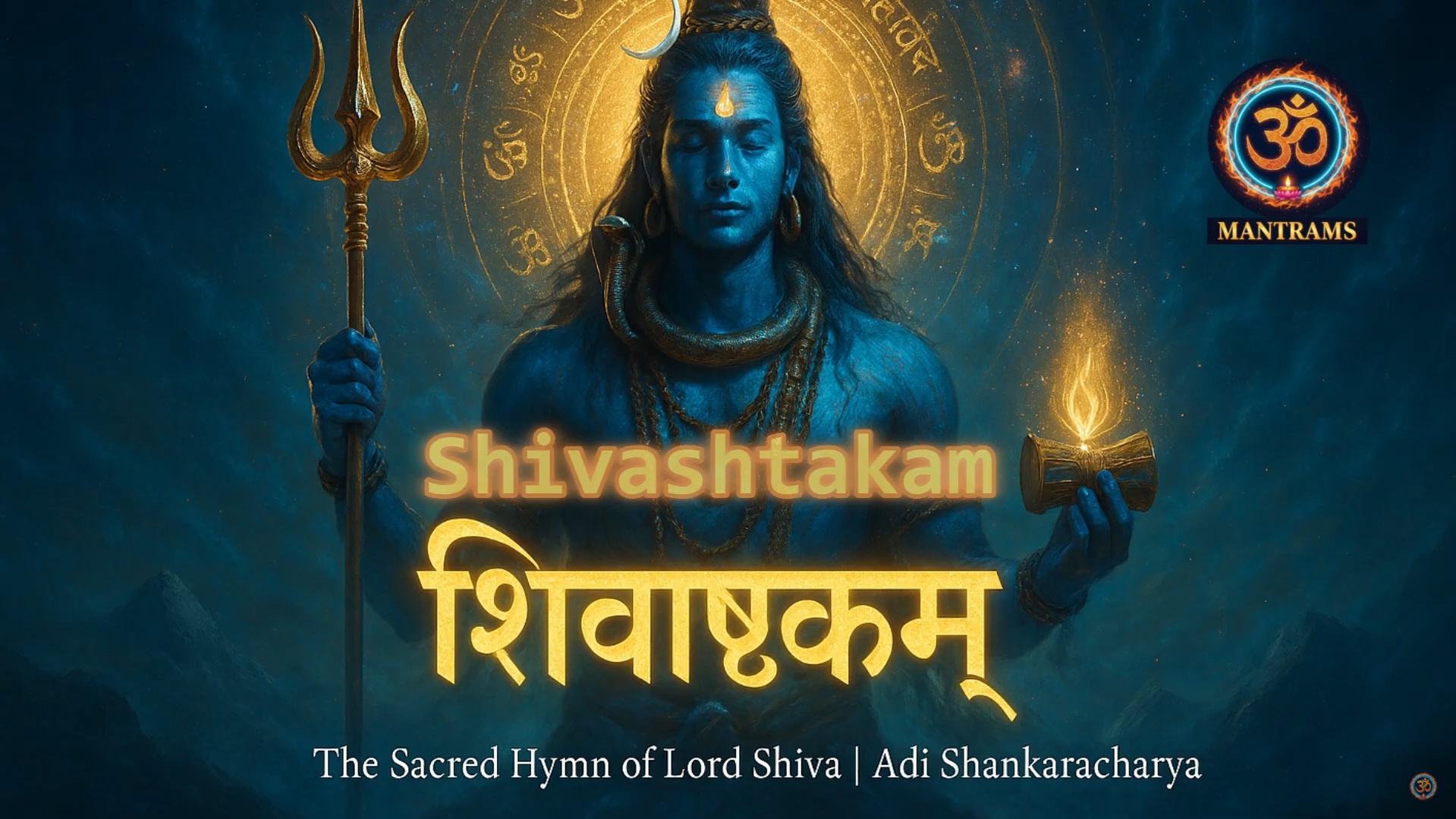
Lord Shiva is the ultimate paradox. He is the fearsome Destroyer (Rudra) who wears a garland of skulls and smears his body with ashes from the cremation ground. Yet, he is also Śambhu and Śaṅkara—the benevolent, peaceful ascetic, lost in eternal meditation, the source of all auspiciousness.
This beautiful tension is the core subject of the Shivashtakam, a powerful eight-verse hymn dedicated to Mahadeva. Often attributed to the great unifying philosopher Adi Shankaracharya, the hymn serves as a profound tool for the seeker to reconcile the dualities of life: creation and destruction, joy and sorrow, fear and fearlessness.
The Shivashtakam is revered not only for its poetic beauty but for its intense vibrational power. It is a humble, yet powerful, call to the Lord to grant the willpower and wisdom necessary to navigate our own internal contradictions and external struggles.
Painting the Picture: Meditation on the Form
The Shivashtakam guides the devotee through a vivid, verse-by-verse meditation on Shiva’s iconic form, ensuring that the devotion is anchored in clear imagery (Saguna):
– The Garland of Skulls and Serpents: The verses praise the Lord who wears the ruṇḍamālaṁ (garland of skulls) and whose body is adorned with serpents (sarpajālaṁ). This fierce imagery reminds us that Shiva is the master of death and time (Mahākāla-Kālam). By meditating on this, the devotee conquers the fear of impermanence and death.
– The Mark of Detachment: Shiva is lauded for his body laden with sacred ash (Bhasmāṅga Rāga). The ashes symbolize the ultimate impermanence of the material world and Shiva’s absolute detachment. When we invoke this form, we ask for a purification of our own ego-driven attachments.
– The Serenity of Kailash: The hymn celebrates Shiva as the resident of Kailash, Mandāra, and Mahendra mountains, whose mesmerizing eyes reflect Goddess Pārvatī (Śailendra Jā Vadana Chumbita Locana). This image of serenity and eternal bliss is the state of mind the devotee seeks to achieve.
– The Supreme Cause: The Stotram continuously praises Shiva as the Paramakāraṇa-Kāraṇa—the ultimate cause of all causes. This philosophical anchor helps the chanter connect to the eternal, formless truth (Nirguṇa) that underlies the changing universe.
The Blessings of Surrender and Willpower
The Phala Śruti (conclusion) attached to the Shivashtakam makes powerful promises that reflect Shiva’s dual nature as the Destroyer of Evil and the Giver of Auspiciousness:
– Destruction of Sins and Afflictions: Chanting this Stotram is believed to remove the lokatraya-ārti (the sorrows of the three worlds) and dissolve pāpa (sins), leading to purification of the mind and body.
– Gaining Inner Strength: The rhythmic recitation helps the devotee tap into Shiva’s legendary will power (icchā-śakti). This makes it easier to overcome negative habits, procrastination, and mental obstacles.
– Holistic Prosperity: The conclusion often states that the one who chants this hymn with sincerity achieves not only Mokṣa (liberation) but also wealth, health, good progeny, and a fulfilling life.
– A Place in Śiva-Loka: The final reward is the promise that the devotee, having purified the mind and surrendered the ego, will attain the world of Shiva and “rejoice with him.”
The Shivashtakam is a call to integrate the transformative power of destruction into our lives, ensuring that our ego is purified and our consciousness is anchored in the serene, eternal bliss of Mahadeva.
Shivashtakam Mantram Sanskirt Lyrics
शिवाष्टकम्
प्रभुं प्राणनाथं विभुं विश्वनाथं जगन्नाथ नाथं सदानन्द भाजाम् ।
भवद्भव्य भूतेश्वरं भूतनाथं, शिवं शङ्करं शम्भु मीशानमीडे ॥ 1 ॥
गले रुण्डमालं तनौ सर्पजालं महाकाल कालं गणेशादि पालम् ।
जटाजूट गङ्गोत्तरङ्गैर्विशालं, शिवं शङ्करं शम्भु मीशानमीडे ॥ 2॥
मुदामाकरं मण्डनं मण्डयन्तं महा मण्डलं भस्म भूषाधरं तम् ।
अनादिं ह्यपारं महा मोहमारं, शिवं शङ्करं शम्भु मीशानमीडे ॥ 3 ॥
वटाधो निवासं महाट्टाट्टहासं महापाप नाशं सदा सुप्रकाशम् ।
गिरीशं गणेशं सुरेशं महेशं, शिवं शङ्करं शम्भु मीशानमीडे ॥ 4 ॥
गिरीन्द्रात्मजा सङ्गृहीतार्धदेहं गिरौ संस्थितं सर्वदापन्न गेहम् ।
परब्रह्म ब्रह्मादिभिर्-वन्द्यमानं, शिवं शङ्करं शम्भु मीशानमीडे ॥ 5 ॥
कपालं त्रिशूलं कराभ्यां दधानं पदाम्भोज नम्राय कामं ददानम् ।
बलीवर्धमानं सुराणां प्रधानं, शिवं शङ्करं शम्भु मीशानमीडे ॥ 6 ॥
शरच्चन्द्र गात्रं गणानन्दपात्रं त्रिनेत्रं पवित्रं धनेशस्य मित्रम् ।
अपर्णा कलत्रं सदा सच्चरित्रं, शिवं शङ्करं शम्भु मीशानमीडे ॥ 7 ॥
हरं सर्पहारं चिता भूविहारं भवं वेदसारं सदा निर्विकारं।
श्मशाने वसन्तं मनोजं दहन्तं, शिवं शङ्करं शम्भु मीशानमीडे ॥ 8 ॥
स्वयं यः प्रभाते नरश्शूल पाणे पठेत् स्तोत्ररत्नं त्विहप्राप्यरत्नम् ।
सुपुत्रं सुधान्यं सुमित्रं कलत्रं विचित्रैस्समाराध्य मोक्षं प्रयाति ॥
Shivashtakam Mantram English Lyrics
prabhuṃ prāṇanāthaṃ vibhuṃ viśvanāthaṃ jagannātha nāthaṃ sadānanda bhājām ।
bhavadbhavya bhūtēśvaraṃ bhūtanāthaṃ, śivaṃ śaṅkaraṃ śambhu mīśānamīḍē ॥ 1 ॥
gaḻē ruṇḍamālaṃ tanau sarpajālaṃ mahākāla kālaṃ gaṇēśādi pālam ।
jaṭājūṭa gaṅgōttaraṅgairviśālaṃ, śivaṃ śaṅkaraṃ śambhu mīśānamīḍē ॥ 2॥
mudāmākaraṃ maṇḍanaṃ maṇḍayantaṃ mahā maṇḍalaṃ bhasma bhūṣādharaṃ tam ।
anādiṃ hyapāraṃ mahā mōhamāraṃ, śivaṃ śaṅkaraṃ śambhu mīśānamīḍē ॥ 3 ॥
vaṭādhō nivāsaṃ mahāṭṭāṭṭahāsaṃ mahāpāpa nāśaṃ sadā suprakāśam ।
girīśaṃ gaṇēśaṃ surēśaṃ mahēśaṃ, śivaṃ śaṅkaraṃ śambhu mīśānamīḍē ॥ 4 ॥
girīndrātmajā saṅgṛhītārdhadēhaṃ girau saṃsthitaṃ sarvadāpanna gēham ।
parabrahma brahmādibhir-vandyamānaṃ, śivaṃ śaṅkaraṃ śambhu mīśānamīḍē ॥ 5 ॥
kapālaṃ triśūlaṃ karābhyāṃ dadhānaṃ padāmbhōja namrāya kāmaṃ dadānam ।
balīvardhamānaṃ surāṇāṃ pradhānaṃ, śivaṃ śaṅkaraṃ śambhu mīśānamīḍē ॥ 6 ॥
śarachchandra gātraṃ gaṇānandapātraṃ trinētraṃ pavitraṃ dhanēśasya mitram ।
aparṇā kaḻatraṃ sadā sachcharitraṃ, śivaṃ śaṅkaraṃ śambhu mīśānamīḍē ॥ 7 ॥
haraṃ sarpahāraṃ chitā bhūvihāraṃ bhavaṃ vēdasāraṃ sadā nirvikāraṃ।
śmaśānē vasantaṃ manōjaṃ dahantaṃ, śivaṃ śaṅkaraṃ śambhu mīśānamīḍē ॥ 8 ॥
svayaṃ yaḥ prabhātē naraśśūla pāṇē paṭhēt stōtraratnaṃ tvihaprāpyaratnam ।
suputraṃ sudhānyaṃ sumitraṃ kaḻatraṃ vichitraissamārādhya mōkṣaṃ prayāti ॥
Shivashtakam Mantram Video
https://youtu.be/aZIw570mI9k



.)