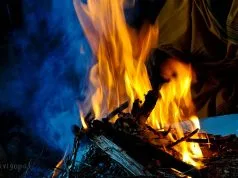
Another client dropped out of our resilience coaching program yesterday because the morning routine required waking up at 5:00 AM. They wanted a 60-second mindfulness hack that fit between checking Instagram and making espresso. Not quite. If you want genuine internal grit, you have to stoke the furnace yourself. That brings us directly to the Agni mantra for inner strength—an ancient technology for mental hardening that demands actual discipline.
Let’s look past the new-age fluff often attached to Sanskrit chants. Agni translates to fire. In Vedic mechanics, this isn’t just about glowing embers; it is the digestive fire, the mental processing speed, and the raw capacity to burn through hesitation, fatigue, and self-doubt. When we audit daily habits of high-performers who maintain composure under high-stakes pressure, you rarely find passive relaxation techniques. You find aggressive, structured focus routines.
Field Takeaways: The Hard Truth About Mantra Practice
- Zero Shortcuts: Chanting casually while multitasking yields exactly zero mental fortitude.
- The Math of Repetition: 108 repetitions take roughly 7 to 10 minutes of uninterrupted focus.
- Physiological Anchor: The vibration in the chest cavity forces breath control, lowering cortisol immediately.
The Core Agni Mantra and Pronunciation
Stop overcomplicating the syllables. The primary mantra for invoking internal fire and mental clarity is straightforward:
“Omagnaye Svaha” (pronounced: Om Ag-na-yay Sva-ha)
Here is the cold math of how this works. When you chant audibly, your vagus nerve gets stimulated by the vocal cord vibrations. You aren’t just reciting words to please an unseen force; you are mechanically shifting your autonomic nervous system out of a scattered, sympathetic fight-or-flight loop into a locked-in, parasympathetic focus. Big mistake if you try to whisper it when you are a beginner. Use your voice. Let the room vibrate.
Structuring Your Daily Practice Protocol
Theory is cheap. Implementation is where everyone fails. If you want actual results, treat this like physical training. You wouldn’t lift weights once a month and expect a physique change. Do not expect mental iron without a schedule.
| Phase | Action Item | Time Commitment |
|---|---|---|
| Phase 1: Setup | Sit upright, spine locked, eyes fixed on a single point or closed. | 2 Minutes |
| Phase 2: Chanting | Cycle through 108 repetitions of ‘Omagnaye Svaha’ using a mala. | 8 Minutes |
| Phase 3: Integration | Total silence. Notice the internal heat and breath rate. | 3 Minutes |
Walk away from the cushion the second you finish. Do not check your phone for at least ten minutes after completing the sequence. Protect the state you just built.
📊 Real-World Monthly Payment & True Cost Calculator
LIVE INTERACTIVE UTILITYCommon Pitfalls and Why Practitioners Quit
Let’s talk about the friction points. Week one feels novel. By week three, your brain will invent fifty excuses to skip the session. “I’m too tired,” or “My schedule is too packed.” That is precisely when the Agni mantra is most necessary. Fatigue is a symptom of a weak inner flame, not a valid reason to skip stoking it.
Another frequent error: rushing the count. Speed-chanting to check a box defeats the entire physiological mechanism. Each repetition must have a deliberate beginning, middle, and end. If your mind wanders to your inbox, restart the count. Brutal honesty with yourself is the only metric that matters here.
Frequently Asked Questions
What is the primary benefit of chanting the Agni mantra?
The primary benefit is building psychological and metabolic resilience. By focusing on the fire element through precise vocal vibration, practitioners train their nervous system to handle acute stress without collapsing.
How many repetitions of the Agni mantra should I do daily?
Start with a baseline of 108 repetitions using a mala bead strand. Consistency matters far more than volume; doing 108 cleanly every morning beats doing 500 erratically once a week.
Do I need to perform a fire ritual to use this mantra?
No fire ritual is required. While external fire offers a powerful focal point, the inner visualization of heat and focus is entirely sufficient for daily mental conditioning.
What time of day is best for Agni mantra practice?
Dawn is the traditional and practical choice. The mind is quietest before the noise of the day hits, making it easier to sustain the required single-pointed focus.