The Evolution of Dharma in Hinduism: A Historical Perspective
Introduction
Dharma, a Sanskrit term meaning “duty,” “righteousness,” and “law,” is a fundamental concept in Hinduism, shaping its beliefs, practices, and societal norms. Its evolution over time has left an indelible mark on Hindu thought and culture.
Vedic Origins (c. 1500-500 BCE)
- Dharma emerged in the Vedas, the oldest Hindu texts, as an abstract principle related to cosmic order and harmony.
- It was believed that adhering to dharma ensured the proper functioning of the universe.
- The four Vedas emphasized specific duties for different social classes, known as varnas (priests, warriors, merchants, laborers).
Epic and Puranic Periods (c. 500 BCE – 500 CE)
- The epics Ramayana and Mahabharata expanded the concept of dharma to include individual ethics and morality.
- Dharma became synonymous with righteous conduct, fair play, and compassion.
- The Bhagavad Gita, a key text of the Mahabharata, emphasized the importance of fulfilling one’s duties (svadharma) regardless of personal desires.
Classical Hinduism (c. 500 – 1200 CE)
- The Dharma Shastras, legal and social treatises, codified and systematized dharma, outlining the specific duties and obligations of individuals based on their caste and station in life.
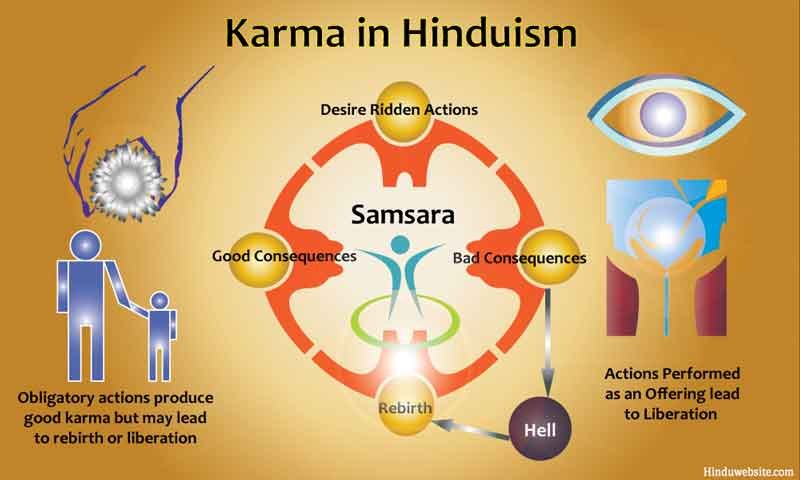
- The concept of karma, the law of cause and effect, became integral to dharma, connecting present actions to future consequences.
- Adhering to dharma was seen as a means of achieving liberation (moksha) from the cycle of rebirth.
Medieval and Modern Periods (c. 1200 – Present)
- The Bhakti movement emphasized personal devotion and love as the path to dharma.
- Reform movements in the 19th and 20th centuries challenged the rigid caste system and advocated for social equality based on dharma.
- Modern interpretations of dharma include an emphasis on universal principles of compassion, tolerance, and respect for all living beings.
Contemporary Understanding
In contemporary Hinduism, dharma encompasses a broad spectrum of meanings:
- Social and ethical obligations
- Universal principles of morality
- Cosmic order and harmony
- The path to liberation
It continues to be a guiding principle in Hindu life, influencing personal behavior, societal norms, and the pursuit of spiritual fulfillment.
Conclusion
The evolution of dharma in Hinduism has been a dynamic and continuous process, reflecting the changing social, cultural, and religious landscapes over centuries. From its Vedic roots to its modern interpretations, dharma remains a fundamental concept that shapes the religious, ethical, and social fabric of Hindu societies.## The Evolution Of Dharma In Hinduism: A Historical Perspective
Executive Summary
Dharma is a central concept in Hinduism, referring to the righteous path or duty that individuals must follow to achieve spiritual liberation (moksha). Over the centuries, the concept of dharma has evolved and adapted to changing societal norms and religious beliefs. This article provides a historical perspective on the evolution of dharma in Hinduism, exploring its origins, key subtopics, and its continued relevance in contemporary society.
Introduction
The concept of dharma is deeply rooted in the ancient Indian scriptures, particularly the Vedas, which are believed to be the revealed texts of Hinduism. The word “dharma” originates from the Sanskrit root “dhri,” meaning “to hold” or “to sustain.” In the context of Hinduism, dharma refers to the ethical and moral principles that govern human conduct and guide individuals towards spiritual enlightenment.
Frequently Asked Questions (FAQs)
-
What is the origin of dharma in Hinduism?
Dharma finds its roots in the ancient Vedic scriptures, particularly the Rig Veda, where it is mentioned as the cosmic law that sustains the universe. -
How has the concept of dharma changed over time?
The concept of dharma has evolved throughout history, influenced by various philosophical and social movements within Hinduism. It has transitioned from a primarily ritualistic and social code to a more individualized and internalized moral compass. -
Is dharma relevant in contemporary society?
Yes, dharma remains a vital concept in Hinduism today. It provides guidance for ethical living, promotes social harmony, and serves as a foundation for spiritual practices and self-realization.
Key Subtopics of Dharma
1. Vedic Dharma
- Ritualistic Practices: Emphasis on performing sacrifices, rituals, and observances prescribed by the Vedas.
- Social Order: Adherence to the caste system and social hierarchies.
- Cosmic Order: Belief in a universal law that governs the universe and ensures its balance.
- Karma and Reincarnation: The law of cause and effect (karma) and the cycle of rebirth.
2. Upanishadic Dharma
- Internalized Morality: Shift towards a more internalized understanding of dharma, emphasizing personal ethics and intentions.
- Self-Realization: The pursuit of spiritual knowledge and realization of the true nature of the self (atman).
- Universality: Recognition of the unity of all beings and the importance of compassion.
3. Bhagavad Gita Dharma
- Duty to Action: Emphasis on fulfilling one’s duties (karma) without attachment to the results.
- Renunciation: The practice of non-attachment and detachment from material possessions and desires.
- Devotion: The cultivation of love and devotion towards God.
4. Classical Dharma
- Social Responsibilities: Focus on fulfilling one’s social and familial obligations.
- Ethics and Justice: Elaboration of ethical principles, including non-violence (ahimsa) and truthfulness (satya).
- Dharma Shastras: Codification of dharma into legal texts, providing detailed guidance for different aspects of life.
5. Contemporary Dharma
- Individualized Expression: Recognition of the diversity of dharma interpretations and its adaptability to individual experiences and contexts.
- Social Activism: Application of dharma principles to promote social justice and environmental protection.
- Interfaith Dialogue: Engagement with other religions and spiritual traditions, fostering mutual understanding and respect.
Conclusion
The concept of dharma has undergone a continuous evolution throughout the history of Hinduism, reflecting the changing philosophical, social, and spiritual needs of its adherents. From its origins in the Vedic rituals to its contemporary manifestations, dharma remains a fundamental pillar of Hindu thought and practice, providing guidance for ethical living, spiritual growth, and the realization of moksha. Its adaptability and relevance in the face of societal transformations demonstrate the enduring power and significance of dharma in Hinduism.
Relevant Keyword Tags
- Dharma in Hinduism
- Evolution of Dharma
- Vedic Dharma
- Upanishadic Dharma
- Contemporary Dharma