
The Hindu Concept of Jnana: Pursuing Knowledge and Wisdom for Spiritual Growth
In the profound tapestry of Hindu philosophy, Jnana occupies a central place as the pursuit of knowledge and wisdom, a path towards spiritual liberation and enlightenment. Jnana, derived from the Sanskrit root “jña,” meaning “to know,” encompasses the acquisition and cultivation of true understanding and discerning insight.
Epistemology of Jnana

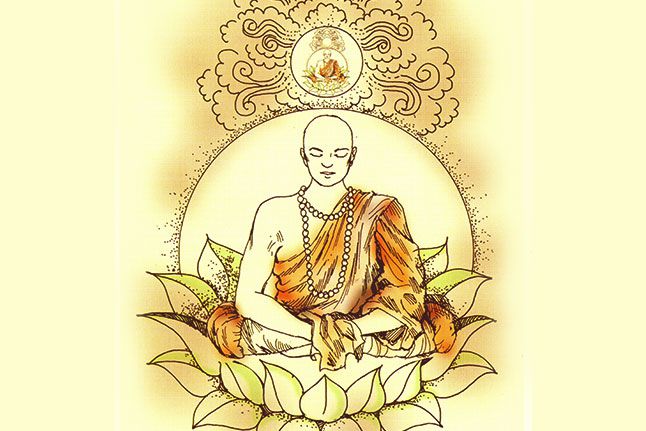
Jnana is grounded in the belief that reality is fundamentally unknowable through ordinary perception and reason alone. It recognizes the limitations of the senses and intellect and emphasizes the need for a deeper, intuitive understanding. This understanding can be attained through various practices, including:
- Sravana: Listening to the teachings of realized masters.
- Manana: Reflecting upon and contemplating these teachings.
- Nididhyasana: Meditating deeply on the nature of reality.
Types of Knowledge
Jnana distinguishes between different types of knowledge:
- Paroksha Jnana: Indirect knowledge gained through books, hearsay, or reasoning.
- Aparoksha Jnana: Direct knowledge obtained through personal experience and realization.
- Brahma Jnana: The highest form of knowledge, which is the realization of the true nature of Brahman, the ultimate reality.
The Path to Spiritual Liberation
Pursuing Jnana is not merely an academic endeavor; it is a transformative journey that aims to dissolve ignorance and lead to spiritual liberation (moksha). By cultivating true knowledge and wisdom, individuals can:
- Dispel Illusion: Jnana helps shatter the illusion of the individual self (ego) and the separation from the divine.
- Cultivate Discrimination: It develops the ability to distinguish between the real and unreal, the eternal and transient.
- Experience Reality: Jnana leads to the direct experience of the true nature of existence, which transcends the duality of the physical and spiritual realms.
Jnana Yoga
Jnana Yoga is one of the four main paths within Hinduism that emphasizes the pursuit of knowledge and wisdom as the means to spiritual realization. Practitioners of Jnana Yoga engage in rigorous study, contemplation, and meditation, seeking to attain Brahma Jnana.
Conclusion
The Hindu concept of Jnana is a profound and enduring exploration of the nature of reality and the human quest for knowledge. By pursuing Jnana, individuals embark on a transformative journey that can lead to spiritual liberation, self-realization, and a profound understanding of the interconnectedness of all existence.## The Hindu Concept Of Jnana: Pursuing Knowledge And Wisdom For Spiritual Growth
Executive Summary
Jnana, a central concept in Hinduism, emphasizes the pursuit of knowledge and wisdom as a path to spiritual liberation and self-realization. This article delves into the significance of Jnana, exploring its multifaceted nature, methods, and ultimate goal. Through an in-depth analysis of Jnana’s subtopics, we uncover the profound insights and practices that guide seekers on the journey of spiritual awakening.
Introduction
In the vast tapestry of Hindu philosophy, Jnana stands as a towering pillar, illuminating the path to enlightenment. It is the pursuit of knowledge, not merely intellectual understanding but a profound comprehension of reality and the nature of existence. Jnana is a transformative force that liberates the soul from ignorance and empowers it to attain the ultimate goal of spiritual realization.
FAQs
1. What is the significance of Jnana in Hinduism?
Jnana is considered the highest form of knowledge, leading to moksha (liberation) by dispelling ignorance and revealing the true nature of reality.
2. How does one attain Jnana?
Jnana is acquired through various paths, including self-inquiry, meditation, and the study of scriptures under the guidance of a qualified teacher.
3. What are the obstacles to achieving Jnana?
Attachments, ego, and misconceptions can hinder the attainment of Jnana, making it essential to practice detachment and cultivate humility.
Subtopics of Jnana
Scriptures and Philosophical Texts
- Vedas: Ancient texts considered the foundation of Hindu knowledge, containing hymns, rituals, and philosophical insights.
- Upanishads: Esoteric teachings that explore the nature of Brahman (the ultimate reality) and the soul.
- Bhagavad Gita: A dialogue between Krishna and Arjuna, offering profound wisdom on karma, dharma, and the path to enlightenment.
Meditation and Self-Inquiry
- Meditation: A practice that stills the mind and facilitates communion with the divine within.
- Self-Inquiry: A systematic process of questioning and introspection to uncover one’s true nature and purpose.
- Ashtanga Yoga: An eight-limbed path involving physical postures, breathing exercises, and meditation to purify the body and mind.
The Nature of Brahman
- Nirguna Brahman: Brahman as an abstract, formless, and transcendent reality beyond all attributes.
- Saguna Brahman: Brahman as a personal, immanent deity with specific qualities and manifestations.
- Maya: The illusory power of Brahman that creates the perceived world of duality and separation.
The Self
- Atman: The true Self, an eternal, unchanging, and blissful consciousness identical with Brahman.
- Ego: A construct of the mind that identifies with the body, thoughts, and possessions, creating a false sense of self.
- Reincarnation: The cycle of birth, death, and rebirth driven by karma, providing opportunities for spiritual evolution.
Methods of Jnana
- Shravana: Listening attentively to the teachings of scriptures and realized masters.
- Manana: Reflecting and contemplating the knowledge gained from scriptures.
- Nididhyasana: Meditating and internalizing the teachings to gain intuitive understanding.
Conclusion
Jnana, the pursuit of knowledge and wisdom, is the cornerstone of spiritual growth in Hinduism. Through the study of scriptures, meditation, self-inquiry, and the understanding of Brahman and the Self, seekers embark on a profound journey of self-discovery and liberation. Jnana empowers individuals to transcend ignorance, dissolve their ego, and attain the ultimate realization of their true nature as divine, eternal, and blissful.
Keyword Tags
- Hinduism
- Jnana
- Spiritual Growth
- Self-Realization
- Knowledge and Wisdom