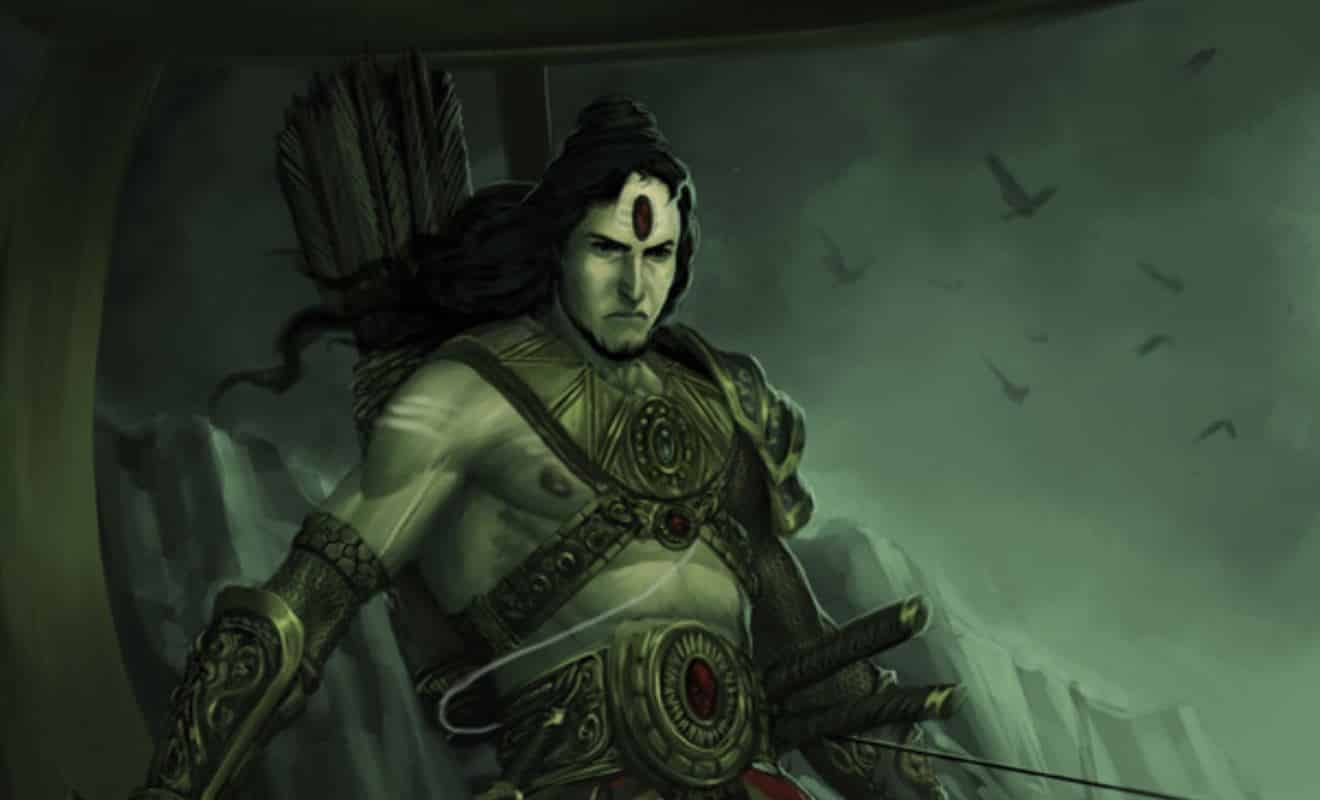
eGod.eu – The Eternal Wanderer: Exploring the Myth of Ashwatthama’s Immortality. The ancient Indian epic Mahabharata is replete with stories of heroes and villains, gods and demons, and magical creatures. Among its many characters, the figure of Ashwatthama stands out as one of the most enigmatic and fascinating. He was a fierce warrior, a loyal friend, and a devoted son, but he also committed terrible crimes that earned him a curse that would haunt him for eternity. In this article, we will delve into the myth of Ashwatthama’s immortality and try to understand what it means for us today.
Who was Ashwatthama?
Ashwatthama was the son of Dronacharya, a renowned warrior and teacher who trained the princes of the Kuru dynasty, including the legendary Arjuna. Ashwatthama grew up in a privileged environment, surrounded by the best teachers and warriors of his time. He inherited his father’s skill with weapons and became a formidable fighter himself. He was also a loyal friend of the Kaurava prince Duryodhana and fought on his side in the Kurukshetra War, which was the central conflict of the Mahabharata.
Also Read: Is Ashwathama Still Alive? 9 Facts Ashwathama Still Alive
The Curse of Ashwatthama:
During the war, Ashwatthama committed several heinous crimes, including the killing of sleeping warriors and the use of forbidden weapons. He also tried to kill the unborn child of the Pandava queen Draupadi, who was the wife of five brothers. These acts of treachery and cruelty enraged the Pandavas and their allies, and they demanded justice. Lord Krishna, who was a close friend and advisor of the Pandavas, confronted Ashwatthama and punished him severely. He took away his divine gemstone, which gave him eternal life and protected him from harm. He also cursed him to wander the earth with his head hanging down, without any peace or rest.
The Myth of Ashwatthama’s Immortality:
According to some versions of the story, Ashwatthama is still alive and wandering the earth, carrying his curse like a burden. He is said to be living in the dense forests of the Himalayas, where he survives on roots and berries and avoids human contact. Some people believe that he is waiting for the arrival of the next avatar of Lord Vishnu, Kalki, who will end the Kali Yuga, the current age of darkness and decay, and usher in a new era of enlightenment and harmony. They believe that Ashwatthama will play a crucial role in the final battle between good and evil, and will redeem himself by fighting on the side of righteousness.
Also Read: Why Hindu Gods Have Now Stopped Incarnation?
The Significance of Ashwatthama’s Myth:
The myth of Ashwatthama’s immortality has many layers of meaning and symbolism. On one level, it represents the consequences of unchecked anger and pride, which can lead even the most talented and privileged individuals to ruin. Ashwatthama was a victim of his own arrogance and ignorance, which blinded him to the value of life and the importance of moral principles. His curse reminds us of the fragility and impermanence of human existence, and the need to cultivate compassion and wisdom.
On another level, the myth of Ashwatthama’s immortality reflects the Hindu concept of cyclic time and the idea of eternal recurrence. The Kali Yuga, which is the age we are living in, is believed to be a time of moral decline and spiritual degeneration when people are prone to vice and sin. However, it is also a time of opportunity, when the seeds of virtue and righteousness can be sown and nurtured. Ashwatthama’s presence in the Himalayas is a symbol of the eternal struggle between good and evil, which repeats itself in every cycle of time. His fate is a reminder that the consequences of our actions ripple through time and affect the course of history.
Also Read: Who is Narayana, Why Hindu Worship Narayana?
The myth of Ashwatthama’s immortality also touches on the themes of redemption and forgiveness. Although he committed terrible crimes, he is not beyond redemption or salvation. His curse is a form of punishment, but it is also a means of purification and transformation. It is a way for him to atone for his sins and to learn from his mistakes. His eventual role in the final battle is a sign of hope and renewal, a reminder that even the darkest moments of history can lead to a brighter future.
Conclusion: The myth of Ashwatthama’s immortality is a fascinating and complex story that raises many questions about the human condition and the nature of time and existence. It is a reminder that our actions have consequences, and that our choices shape our destiny. It is also a call to reflect on the values that guide us and the principles that we live by. Whether Ashwatthama is still alive or not is a matter of belief and faith, but his story has endured for thousands of years and continues to inspire and challenge us.
Also Read: Samba, The Son of Krishna