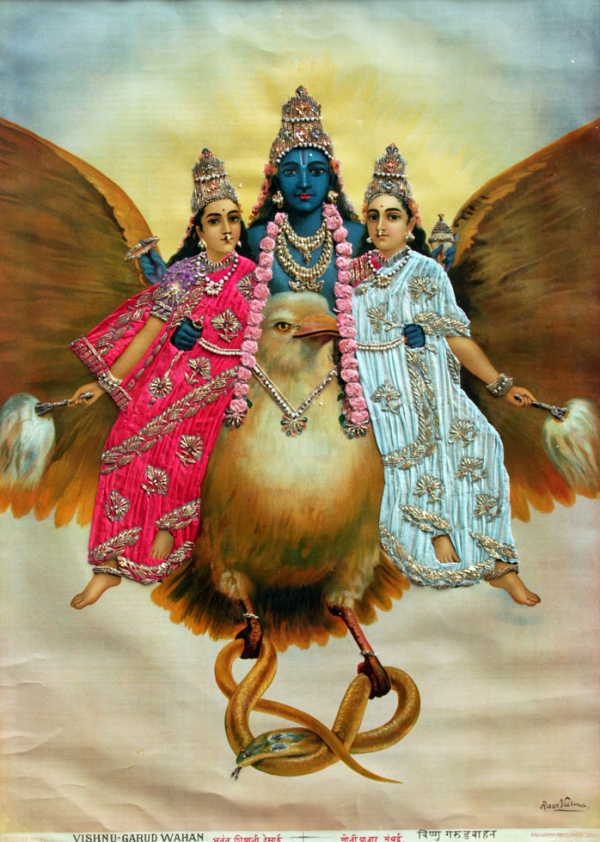
Chapter 1: Introducing the Hindu Pantheon
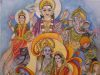
Hinduism is a polytheistic religion with a vast array of gods and goddesses. These deities represent different aspects of the divine, and they play a significant role in the lives of Hindu devotees. This chapter will provide a comprehensive overview of the Hindu pantheon, including the major gods and goddesses, their attributes, and their relationships to each other.

Chapter 2: Brahma the Creator

Brahma is the creator god in the Hindu pantheon. He is responsible for creating the universe and all that is within it. Brahma is typically depicted as a four-headed, four-armed god with a white beard. He holds a lotus flower in one hand, a water pot in another, a book of knowledge in a third, and a sacrificial spoon in a fourth.
Chapter 3: Vishnu the Preserver
Vishnu is the preserver god in the Hindu pantheon. He is responsible for maintaining the universe and protecting it from destruction. Vishnu is typically depicted as a blue-skinned god with four arms. He holds a conch shell in one hand, a discus in another, a lotus flower in a third, and a gada (a club) in a fourth.
Chapter 4: Shiva the Destroyer
Shiva is the destroyer god in the Hindu pantheon. He is responsible for destroying the universe at the end of each cosmic cycle. Shiva is typically depicted as a wild and fearsome god with a blue face and a third eye on his forehead. He holds a trident in one hand, a drum in another, and a noose in a third.
Chapter 5: Lakshmi the Goddess of Wealth
Lakshmi is the goddess of wealth and prosperity in the Hindu pantheon. She is typically depicted as a beautiful woman with four arms. She holds a lotus flower in one hand, a gold coin in another, a pot of gold in a third, and a book of knowledge in a fourth.
Chapter 6: Saraswati the Goddess of Knowledge
Saraswati is the goddess of knowledge and music in the Hindu pantheon. She is typically depicted as a beautiful woman with four arms. She holds a book of knowledge in one hand, a veena (a stringed instrument) in another, a rosary in a third, and a water pot in a fourth.
Chapter 7: Durga the Goddess of War
Durga is the goddess of war and protection in the Hindu pantheon. She is typically depicted as a fierce and powerful woman with ten arms. She holds a sword in one hand, a trident in another, a discus in a third, a bow and arrow in a fourth, and a shield in a fifth.
Chapter 8: Kali the Goddess of Time
Kali is the goddess of time and death in the Hindu pantheon. She is typically depicted as a black-skinned woman with four arms. She holds a sword in one hand, a skull in another, a severed head in a third, and a noose in a fourth.
Chapter 9: Ganesha the God of Wisdom
Ganesha is the god of wisdom and obstacles in the Hindu pantheon. He is typically depicted as a pot-bellied man with an elephant’s head. He holds a broken tusk in one hand, a lotus flower in another, a bowl of sweets in a third, and a noose in a fourth.
Chapter 10: Hanuman the Monkey God
Hanuman is the monkey god in the Hindu pantheon. He is known for his strength, courage, and devotion to Rama. Hanuman is typically depicted as a red-skinned monkey with a white face. He holds a gada (a club) in one hand and a flag in another.
Conclusion
This comprehensive guide to the Hindu pantheon has provided an overview of the major gods and goddesses, their attributes, and their relationships to each other. By understanding these deities, we can gain a deeper appreciation for the rich and complex tradition of Hinduism.# Demystifying Hindu Deities: A Comprehensive Guide To The Gods And Goddesses
Executive Summary
Hinduism is a vibrant and polytheistic religion with a vast pantheon of deities. These deities embody various aspects of the divine and play significant roles in Hindu mythology, rituals, and daily life. This guide aims to provide a comprehensive understanding of the major Hindu deities, their attributes, and their significance in the religion. By delving into the depths of Hindu mythology and beliefs, we hope to dispel common misconceptions and foster a deeper appreciation for the rich tapestry of Hindu deities.
Introduction
Hinduism is one of the world’s oldest and most diverse religions, with a history spanning thousands of years. At the heart of Hindu beliefs lies a complex pantheon of deities, each representing a specific aspect of the divine. These deities are not mere abstract concepts but are actively involved in the lives of their devotees, offering guidance, protection, and blessings. Understanding the nature and significance of these deities is crucial to gaining a comprehensive grasp of Hinduism.
FAQs
-
How many gods are there in Hinduism?
Hinduism has countless deities, with different estimates ranging from 330 million to 330,000. The most prominent deities include Brahma, Vishnu, Shiva, Lakshmi, and Saraswati.
-
Are Hindu deities male or female?
Hindu deities can be both male and female. The divine is often seen as possessing both masculine and feminine aspects, and many deities have both male and female forms.
-
What is the role of these deities in Hindu mythology?
Hindu deities play central roles in Hindu mythology. They are responsible for creating, preserving, and destroying the universe, as well as intervening in human affairs. They are also the subjects of numerous stories and legends that shape Hindu beliefs and practices.
Major Hindu Deities
Brahma: The Creator
- Attributes: Four heads, four arms, white complexion, holds a book of knowledge, a rosary, and a water pot.
- Significance: Brahma is the creator god in the Hindu trinity. He is responsible for creating the universe and all living beings.
- Symbolism: His four heads represent the four Vedas, the sacred Hindu scriptures.
- Consort: Saraswati, the goddess of knowledge and music.
Vishnu: The Preserver
- Attributes: Blue complexion, four arms, holds a conch shell, a discus, a lotus flower, and a mace.
- Significance: Vishnu is the preserver god in the Hindu trinity. He is responsible for maintaining the balance of the universe and protecting it from evil.
- Symbolism: His blue complexion represents the vastness of the cosmic ocean.
- Consort: Lakshmi, the goddess of wealth and prosperity.
Shiva: The Destroyer
- Attributes: Third eye on the forehead, matted hair, holds a trident, a drum, and a skull.
- Significance: Shiva is the destroyer god in the Hindu trinity. He is responsible for destroying the universe at the end of each cosmic cycle to make way for a new creation.
- Symbolism: His third eye represents his ability to see beyond the illusions of the world.
- Consort: Parvati, the goddess of love and fertility.
Lakshmi: The Goddess of Wealth and Prosperity
- Attributes: Four arms, holds a lotus flower, a gold coin, a conch shell, and a book.
- Significance: Lakshmi is the goddess of wealth, prosperity, and good fortune. She is often worshipped during Diwali, the festival of lights.
- Symbolism: Her lotus flower represents purity and beauty.
- Consort: Vishnu, the preserver god.
Saraswati: The Goddess of Knowledge and Music
- Attributes: Four arms, holds a book, a rosary, a musical instrument, and a water pot.
- Significance: Saraswati is the goddess of knowledge, music, and the arts. She is worshipped by students and scholars.
- Symbolism: Her musical instrument represents the power of sound and creativity.
- Consort: Brahma, the creator god.
Conclusion
The Hindu pantheon of deities is a vast and intricate tapestry of divine beings. Each deity represents a specific aspect of the divine and plays a vital role in Hindu mythology, rituals, and daily life. By understanding the nature and significance of these deities, we gain a deeper appreciation for the rich tapestry of Hinduism and the complex spiritual beliefs that have shaped Indian culture for centuries.
Keyword Tags
- Hindu Deities
- Brahma
- Vishnu
- Shiva
- Lakshmi
- Saraswati