Open up any standard commentary on Hindu cosmology, and people immediately default to the Dashavatara—the ten famous earthly descents of Vishnu. But when you pull the actual Sanskrit manuscripts of the Garuda Purana off the shelf, the scope widens. We are looking at twenty-one distinct manifestations. Not all of them are sword-wielding warriors or animal incarnations saving the physical earth. Some are cosmic administrators, ancient sages, and structural pillars of reality.
In our textual audits and philosophical deep dives, we frequently see people misinterpret these lists as mere mythology. Big mistake. These aren’t fairy tales; they are systematic frameworks mapping out how cosmic order operates under extreme pressure. Let’s break down the actual Garuda Purana 21 avatars list, strip away the poetic varnish, and look at the functional meaning behind each one.
- Expands far beyond the standard 10 earthly incarnations to include cosmic forces and foundational sages.
- Each manifestation targets a specific structural failure or evolutionary milestone in the universe.
- Combines physical descents with psychological and metaphysical principles of maintenance.
The Complete Garuda Purana 21 Avatars Breakdown
Here is the cold math of the text: Vishnu doesn’t just show up when a demon causes trouble. The Garuda Purana categorizes these twenty-one forms to show how sustenance works at every tier of existence—from subatomic chaos to universal governance. Let’s walk through the sequence.
1. Sanaka, Sanandana, Sanatana, and Sanatkumara (The Four Kumaras)
Technically counted as separate entities or grouped as a collective primal manifestation, these four mind-born sons of Brahma are Vishnu’s early intellectual expressions. They chose perpetual childhood, symbolizing pure, untainted knowledge and the absolute supremacy of spiritual wisdom over material entanglement.
2. Varaha (The Boar)
The cosmic boar diving into the primordial ocean to haul the earth out of gravitational and literal sludge. When systems collapse into total chaos—whether an ecosystem or a failing enterprise—you need brute-force structural realignment. Varaha is that heavy-lifting engineering phase.
3. Narada (The Divine Sage)
The ultimate cosmic agitator and information broker. Narada moves across worlds stirring the pot, but his underlying function is educational. He tests loyalties, exposes hidden hypocrisies, and forces characters to confront hard truths. Information is currency; Narada manages the ledger.
4. Nara-Narayana
The dual sages performing supreme austerities in the Himalayas. This form represents the ultimate balance of human striving (Nara) and divine partnership (Narayana). It is the blueprint for focused, ego-free execution.
5. Kapila
The founder of the Samkhya school of philosophy. Kapila cuts through illusion with cold, analytical categorization of matter and spirit. If you want to understand how the material universe breaks down into its component parts, Kapila provides the analytical spreadsheet.
6. Dattatreya
The syncretic guru holding the combined essence of the Trimurti (Brahma, Vishnu, Shiva). Dattatreya teaches that wisdom isn’t locked in a single textbook; he famously learned from twenty-four different masters in nature, from the wind to a spider.
7. Yajna
The Lord of Sacrifice. Yajna represents the universal principle of reciprocal exchange. You cannot extract value from the cosmos without inputting effort, discipline, and resources. Transactional equilibrium at a cosmic scale.
8. Rishabha
The king who renounced his empire to wander as an ascetic, demonstrating the absolute detachment from material luxury. Rishabha embodies supreme self-control and the ultimate internal sovereignty that overrides political power.
9. Prithu
The sovereign who leveled the earth, shaped agriculture, and milked the earth like a cow to extract civilization’s resources. Prithu is the master administrator—turning raw, untamed wilderness into a structured, sustainable economy.
10. Matsya (The Fish)
The first physical rescue operation during the universal deluge. Matsya preserves the seeds of life, the Vedas, and righteous souls inside a boat tied to a serpent. When total liquidation hits, preservation of core intellectual assets is priority one.
11. Kurma (The Tortoise)
The bedrock of the churning of the cosmic ocean (Samudra Manthana). When gods and demons fought over nectar, Kurma served as the literal pivot point on the ocean floor to prevent Mount Mandara from sinking. Stability under pressure. Without a firm base, your operations capsize.
12. Dhanvantari
Emerging from the churning ocean holding the pot of nectar (Amrita) and medicinal herbs, Dhanvantari is the divine physician. Healthcare isn’t an afterthought in this cosmology; systemic preservation requires functional biology and healing.
13. Mohini
The supreme enchantress. Mohini operates through tactical deception, using psychological distraction to strip the demons of the nectar of immortality and restore cosmic balance. Not every battle is won with a sword; sometimes you win through tactical framing.
14. Narasimha (The Man-Lion)
The ferocious hybrid breaking every rule of traditional combat to neutralize a loophole-exploiting tyrant. Narasimha operates outside standard operational parameters to solve a seemingly impossible security threat.
15. Vamana (The Dwarf)
The master strategist who outnegotiated Emperor Bali by asking for just three paces of land, only to expand cosmically and reclaim the universe. Vamana proves that asymmetric positioning beats raw force every single day.
16. Parashurama
The axe-wielding ascetic who systematically dismantled corrupt, tyrannical rulers who abused military power. Parashurama represents aggressive corporate restructuring when an organization’s leadership becomes hopelessly toxic.
17. Rama
The ideal king, son, and husband who strictly adhered to duty (dharma) despite devastating personal costs. Rama is the operational standard for institutional integrity and rule-following.
18. Balarama
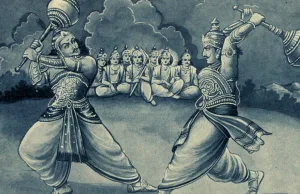
The agrarian powerhouse wielding the plow and the mace. Balarama represents raw physical labor, agricultural foundations, and unyielding strength that backs up statecraft.
19. Krishna
The statesman, philosopher, and tactician of the Mahabharata. Krishna dismantles dogmatic thinking, delivers the Bhagavad Gita on a battlefield, and engineers a massive political reset. Pragmatism meets absolute divinity.
20. Buddha
Listed in various Puranic texts as an avatar focused on reforming ritualistic excess, emphasizing internal compassion, ethical clarity, and the cessation of suffering caused by blind dogmatism.
21. Kalki
The future-facing terminal avatar. Kalki rides a white horse with a drawn sword at the end of the Kali Yuga to wipe the slate clean of terminal corruption and reboot the cosmic cycle.
| Category | Key Avatars | Core Function |
|---|---|---|
| Cosmic & Philosophical | Kumaras, Kapila, Dattatreya | Knowledge, logic, and spiritual foundations. |
| Rescue & Preservation | Matsya, Kurma, Varaha | Systemic reboot, stability, and physical recovery. |
| Strategy & Governance | Vamana, Krishna, Mohini | Negotiation, tactical leverage, and diplomacy. |
| Terminal Restructuring | Narasimha, Parashurama, Kalki | Eliminating terminal corruption and resetting cycles. |
The Practical Takeaway from the 21 Avatars
Stop treating ancient texts like flat storybooks. The Garuda Purana 21 avatars list is a masterclass in risk management, structural engineering, crisis response, and philosophical positioning. Whether you look at it through a metaphysical lens or a psychological one, the message remains identical: maintenance requires diverse tools. You don’t use a plow when you need a scalpel, and you don’t send a philosopher when you need a Varaha.
Frequently Asked Questions
What is the Garuda Purana 21 avatars list?
The Garuda Purana outlines twenty-one primary manifestations (avatars) of Lord Vishnu, detailing cosmic incarnations that go beyond the famous Dashavatara to explain creation, preservation, and dissolution.
How do the 21 avatars differ from the Dashavatara?
While the Dashavatara focuses on the ten most prominent earthly descents for specific historical crises, the 21-avatar list includes cosmic beings, sages, and conceptual manifestations vital to universal order.
Why is studying these avatars important in traditional texts?
Each avatar in the Garuda Purana represents a specific divine attribute or cosmic function required to maintain balance, offering a psychological and metaphysical roadmap for practitioners.