Ancient India: A Journey Through Time
In the heart of South Asia, where the mighty Himalayas stand tall and the sacred Ganges River flows, there existed a civilization that shaped the course of history – Ancient India. Its rich cultural heritage, profound spiritual traditions, and scientific advancements have left an enduring legacy that continues to inspire and captivate the world.
Unlocking the Treasures of Ancient India
To fully appreciate the grandeur of Ancient India, we must embark on a journey that explores its diverse facets:
Religion and Spirituality
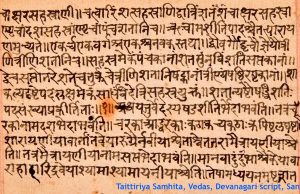
Ancient India was a cradle of spirituality, giving birth to Hinduism, Buddhism, Jainism, and Sikhism. The sacred texts of Hinduism – the Vedas, Upanishads, and Puranas – provide a glimpse into the beliefs and practices of this ancient faith. These texts explore the nature of the universe, the soul, and the path to liberation.
Art and Architecture
India’s artistic heritage is a testament to the skill and creativity of its artisans. From the intricate carvings of the Ajanta and Ellora caves to the majestic temples of Khajuraho, Indian art reflects a deep connection to nature and the divine. The iconic Taj Mahal, built by Emperor Shah Jahan in memory of his beloved wife, stands as a symbol of eternal love and architectural brilliance.
Science and Mathematics
Ancient India made significant contributions to the fields of science and mathematics. The decimal system, algebra, and trigonometry all originated in India. Indian scholars also excelled in astronomy, medicine, and metallurgy. The ancient text, the Sushruta Samhita, contains detailed descriptions of surgical procedures.
Literature and Philosophy
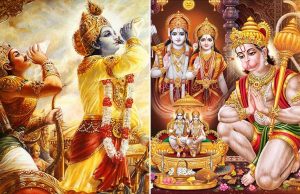
India’s rich literary tradition includes epic poems like the Ramayana and the Mahabharata. These texts explore themes of dharma (righteousness), karma (action), and reincarnation. Indian philosophers such as Gautama Buddha, Mahavira, and Adi Shankara propounded profound ideas about the nature of reality, ethics, and spirituality.
Empire and Governance
Ancient India witnessed the rise and fall of powerful empires, including the Mauryan Empire under Ashoka the Great. These empires established sophisticated systems of law, administration, and taxation. The concept of ahimsa (non-violence) played a central role in the governance of Emperor Ashoka.
Insights into Ancient India
Vedas, Upanishads, and Puranas: The Sacred Texts of Hinduism
The Vedas, Upanishads, and Puranas are the foundational texts of Hinduism. The Vedas are the oldest, containing hymns and rituals dating back to the 2nd millennium BCE. The Upanishads, composed later, delve into philosophical and spiritual concepts. The Puranas are a vast collection of mythological stories and historical accounts.
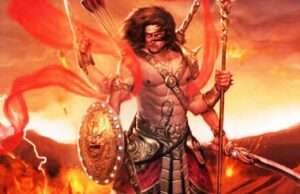
Is Ashwathama Still Alive?
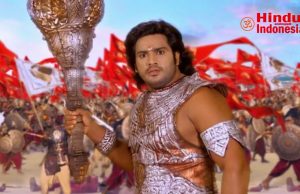
According to Hindu mythology, Ashwathama is a cursed warrior who is said to be immortal. The Mahabharata narrates how he was cursed to roam the earth until the end of the Kali Yuga. Some believe that he still exists today, disguised as a wandering ascetic.
9 Facts About Ancient India
- The Indus Valley Civilization, one of the earliest urban civilizations, flourished in India around 2600 BCE.
- India is the birthplace of yoga, an ancient practice that combines physical, mental, and spiritual disciplines.
- The game of chess originated in India during the Gupta Empire.
- India was ruled by various dynasties over the centuries, including the Mughals, who left behind a legacy of magnificent architecture.
- The Indian independence movement, led by Mahatma Gandhi, was instrumental in India gaining independence from British rule in 1947.
- India is home to the second largest population in the world.
- Hindi is the official language of India, but there are over 20 other recognized regional languages.
- The traditional Indian garment, the saree, is a symbol of grace and elegance.
- India is a land of festivals, with Diwali, Holi, and Eid being some of the most celebrated.
Secondary Keywords:
Ancient India, Hinduism, Sacred Texts, Vedas, Upanishads, Puranas, Ashwathama, Mahabharata, Mythology, Immortal, Civilization, History, Culture, Religion, Spirituality, Architecture, Art, Science, Mathematics, Literature, Philosophy, Empire, Governance, Traditions, Customs, Beliefs, Practices