Eastern Religions: A Comprehensive Guide
Introduction
Eastern religions encompass a diverse range of spiritual and philosophical traditions that originated in the East, primarily in India, China, and Japan. These religions have profoundly influenced the cultures and societies of the East for centuries, shaping their beliefs, values, and ways of life. In this article, we will explore the rich tapestry of Eastern religions, focusing on two prominent traditions: Hinduism and Buddhism.
Hinduism: The Oldest Religion in the World
Hinduism is considered the oldest organized religion in the world, with its roots dating back to the Indus Valley Civilization around 3300 BCE. It is a complex and diverse religion with no single founder or central authority. Hindus believe in the existence of multiple gods and goddesses, each representing different aspects of the divine. The core principles of Hinduism include:
- Karma: The belief that one’s actions have consequences, both in this life and future lives.
- Dharma: The path of righteousness and ethical living.
- Reincarnation: The cycle of birth, death, and rebirth, based on one’s karma.
- Moksha: The ultimate goal of liberation from the cycle of reincarnation and union with the divine.
Buddhism: The Path of Enlightenment
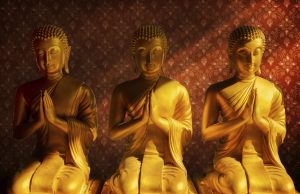
Buddhism emerged in India around the 6th century BCE, founded by Siddhartha Gautama, who later became known as the Buddha, meaning “the awakened one.” Buddhism is a non-theistic religion that focuses on the path to enlightenment and the end of suffering. The key teachings of Buddhism include:
- The Four Noble Truths: That suffering exists, suffering has a cause, suffering can be ended, and there is a path to end suffering.
- The Eightfold Path: A set of guidelines for ethical and spiritual practices leading to enlightenment.
- Nirvana: The state of complete liberation from suffering and the cycle of rebirth.
Similarities and Differences between Hinduism and Buddhism
While Hinduism and Buddhism share some commonalities, they also have significant differences.
Similarities:
- Both religions originated in India and have influenced Asian cultures for centuries.
- They emphasize spiritual practices such as meditation and yoga.
- They share concepts such as karma and reincarnation, although Buddhism rejects the notion of a permanent self.
Differences:
- Hinduism is a polytheistic religion with multiple gods and goddesses, while Buddhism is non-theistic.
- Hinduism focuses on the path of dharma and liberation through rituals and devotion, while Buddhism emphasizes the path of self-discovery and enlightenment.
- Hinduism believes in the cycle of reincarnation, while Buddhism teaches that the individual self is impermanent.
Other Eastern Religions
In addition to Hinduism and Buddhism, Eastern religions include:
- Jainism: An ancient Indian religion that emphasizes non-violence and self-realization.
- Sikhism: A monotheistic religion founded in the 15th century in India.
- Taoism: A Chinese philosophy and religion that emphasizes the balance between yin and yang.
Conclusion
Eastern religions encompass a rich and diverse collection of spiritual and philosophical traditions that have shaped the lives of billions of people for millennia. By understanding the similarities and differences between religions such as Hinduism and Buddhism, we gain a deeper appreciation for the tapestry of human beliefs and the ongoing search for meaning and purpose in life.
Secondary Keywords
- Eastern philosophies
- Hinduism and Buddhism
- Karma and reincarnation
- Moksha and Nirvana
- Eastern religions comparison