Hinduism and Women: Balancing Tradition and Change for a More Equitable Future
Introduction:
Hinduism, one of the oldest and most diverse religions in the world, has had a profound impact on the lives of women throughout history. While Hindu scriptures and traditions have provided a framework for women’s roles and responsibilities, the interpretation and application of these principles have varied widely over time and across different regions. In the 21st century, the question of whether Hinduism can offer a more equitable future for women remains a complex and ongoing debate.
Historical Perspectives:
In ancient Vedic texts, women were recognized as having spiritual and intellectual potential equal to men. They were actively involved in religious rituals, education, and even political life. However, over time, patriarchal influences and social norms led to a gradual decline in women’s status. By the medieval period, women were largely confined to domestic roles and their rights were restricted in various ways.
Contemporary Challenges:
Despite significant progress in recent decades, women in Hindu societies continue to face challenges related to gender inequality. These include:
- Access to education and employment: In many parts of the world, girls still have less access to education and job opportunities than boys.
- Early marriage: In some rural areas, girls are married off at a young age, limiting their opportunities for education and personal development.
- Domestic violence: Women in Hindu societies are often victims of domestic violence, with limited legal recourse or social support.
- Caste discrimination: Women from lower castes face additional barriers to education, employment, and social status.
Reform Movements:
In response to these challenges, there have been significant efforts within Hinduism to promote gender equality. These movements have included:
- Arya Samaj: Founded in the 19th century, the Arya Samaj advocated for the education of women, the abolition of child marriage, and the right of widows to remarry.
- Brahmo Samaj: Another 19th-century reform movement, the Brahmo Samaj, emphasized the equality of women and men in religious and social life.
- Contemporary women’s organizations: Numerous organizations have been established to empower women in Hindu societies, providing education, legal assistance, and advocacy.
Balancing Tradition and Change:
The challenge for Hinduism today is to find a way to balance its traditional values with the need for gender equality. This requires a nuanced approach that respects the diversity of Hindu beliefs and practices while also promoting progressive reforms.
Potential for Transformation:
Hinduism has the potential to offer a more equitable future for women in several ways:
- Sacred texts: The Vedas and other Hindu scriptures contain numerous passages that affirm the equality of women and men. These teachings can be used to challenge patriarchal interpretations and promote a more inclusive understanding of Hinduism.
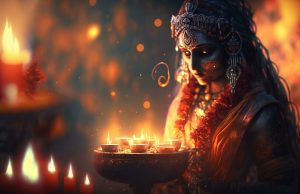
- Deities: Many Hindu deities are female, representing the divine feminine. These deities can serve as role models for women, empowering them to see themselves as capable and worthy.
- Dharma: The concept of dharma, or righteous duty, can be extended to include the duty to promote gender equality. Hindus can work together to create a society where women are treated with respect and dignity.
Conclusion:
The question of whether Hinduism can offer a more equitable future for women is a complex one. While the religion has a long history of both patriarchal influences and feminist movements, the potential for transformation exists. By embracing the equality of women and men as a core principle, Hinduism can continue to evolve into a religion that empowers and supports women in all aspects of life.
Secondary Keywords:
- Women in Hinduism
- Gender equality in Hinduism
- Hindu feminism
- Reform movements in Hinduism
- Balancing tradition and change in Hinduism