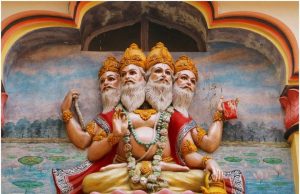

Agni, the God of Fire and Transformation
Agni, one of the most significant deities in the Hindu pantheon, embodies the transformative power of fire. His name originates from the Sanskrit word “ag,” meaning “fire,” and he manifests in various forms, each highlighting different aspects of his divine nature.
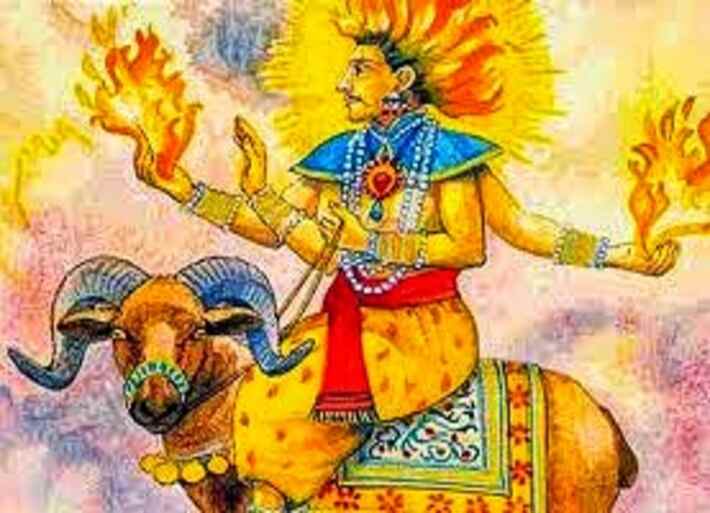
Forms of Agni
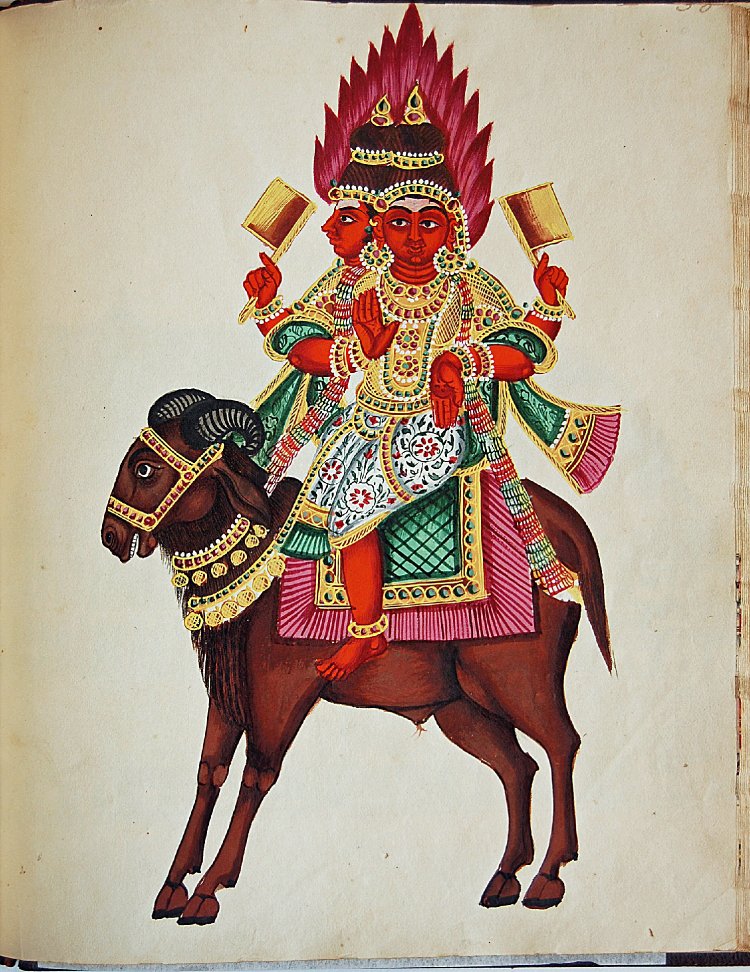
1. Vaishvanara: The all-pervading fire that resides within every living being, representing the life force and the digestive fire.
2. Pavaka: The fire of the sun, the source of all life and energy on Earth.
3. Jatharagni: The fire of the stomach, responsible for digestion and metabolism.
4. Dakshinagni: The sacred fire used in Vedic rituals, representing the transformative power of sacrifice.
5. Havyavahana: The fire that carries offerings to the gods, symbolizing the connection between humans and the divine.
6. Savitra: The golden fire of dawn, representing the beginning of a new cycle and the triumph of light over darkness.
7. Chakshush: The fire of the eye, representing wisdom, knowledge, and insight.
8. Rudra: The fierce fire of destruction, representing the transformative power of chaos and dissolution.
9. Mrityunjaya: The fire that conquers death, symbolizing the cyclical nature of life and the possibility of rebirth.
Symbolism
Fire, the primary element associated with Agni, holds profound symbolic meanings:
- Transformation: Fire has the ability to destroy and create, representing the cycle of death and rebirth and the potential for spiritual evolution.
- Purity: Fire purifies and sanctifies, symbolizing the removal of impurities and the attainment of a higher state of being.
- Knowledge: Fire illuminates and dispels ignorance, representing the power of wisdom and enlightenment.
- Sacrifice: Fire is used in Vedic rituals to offer oblations to the gods, signifying the act of devotion and surrender.
- Protection: Fire keeps away darkness and evil forces, symbolizing safety and security.
Role in Hindu Mythology
Agni plays a pivotal role in Hindu mythology and is associated with several significant events:
- Birth from the Cosmic Ocean: Agni is born from the churning of the cosmic ocean, along with other divine beings.
- Messenger of the Gods: Agni serves as the messenger between the gods and humans, carrying their messages and offerings.
- Sacrificial Fire: Agni is central to Vedic rituals, where he receives offerings and consumes them as a way of connecting with the gods.
- Cosmic Witness: Agni is believed to be present everywhere and witnesses all actions and thoughts, making him a powerful witness and arbiter of justice.
Worship
Agni is venerated in Hindu temples, where fire rituals and offerings are made to honor his divine power. Devotees pray to Agni for protection, purification, and the removal of obstacles. Fire has also been an integral part of traditional Vedic rituals and home ceremonies throughout history.# The Many Forms of the Hindu God Agni: The God of Fire and Transformation
Executive Summary
Agni, the Hindu god of fire and transformation, is a multifaceted deity with a rich and complex mythology. This comprehensive article explores the various forms, attributes, and symbolism associated with Agni, providing insights into his role in Hindu belief and practice.
Introduction
In Hindu mythology, Agni occupies a central position as the god responsible for the essential elements of life and the universe. As the embodiment of fire, he is both a destructive and creative force, capable of consuming and purifying, as well as illuminating and transforming.
FAQs
1. What are the different names of Agni?
- Vahni: The bearer of oblations to the gods
- Jataveda: He who knows all beings
- Pavaka: The purifier
2. What is Agni’s role in the Hindu pantheon?
- Messenger between the gods and mortals
- Protector of the sacred fire ceremony
- Witness to oaths and vows
3. What is the significance of Agni in Hindu rituals?
- Essential component of yajna (fire sacrifice)
- Purifies offerings and conveys them to the gods
- Symbol of transformation and renewal
Subtopics
Agni as the God of Fire
- Divine creator: Creates the world from his own essence, giving birth to the gods and the universe.
- Destructive force: Consumes the old and impure, clearing the path for new life.
- Protects dharma: Destroys evil and injustice, upholding the cosmic order.
Agni as the God of Transformation
- Purifies the soul: Consumes impurities and negative karma, leading to spiritual growth and liberation.
- Transformative power: Bridges the gap between the mortal and divine realms, enabling enlightenment.
- Symbol of knowledge: Illuminates the path to truth and wisdom, dispelling ignorance and darkness.
Agni as the God of Sacrifice
- Cosmic fire: The sacrificial fire through which offerings are made to the gods.
- Witness to oaths: Attests to the truthfulness of vows and covenants.
- Represents surrender: The act of offering oneself or one’s possessions to the divine.
Agni as the God of the Sun
- Solar deity: Associated with the sun and its life-giving properties.
- Symbol of energy and vitality: Provides warmth, nourishment, and sustenance to all beings.
- Represents the celestial order: Upholds the cycles of day and night, seasons, and cosmic events.
Agni as the God of the Hearth
- Guardian of the household: Protects homes and families from harm and evil.
- Provider of warmth and comfort: Offers solace, nourishment, and a sense of belonging.
- Symbol of hospitality: Welcomes guests and provides a sacred space for gatherings.
Conclusion
Agni, the Hindu god of fire and transformation, is a multifaceted deity whose significance extends far beyond his literal manifestation as fire. Through his various forms and attributes, he represents the transformative and illuminating aspects of life, guiding us towards spiritual growth, purification, and enlightenment. Understanding the rich symbolism and mythology surrounding Agni deepens our appreciation of the divine in both its destructive and creative manifestations, ultimately enriching our journey towards a more meaningful and fulfilling existence.
Keyword Tags
- Agni
- Hindu god of fire
- God of transformation
- Fire and purification
- Hindu mythology