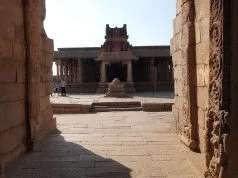
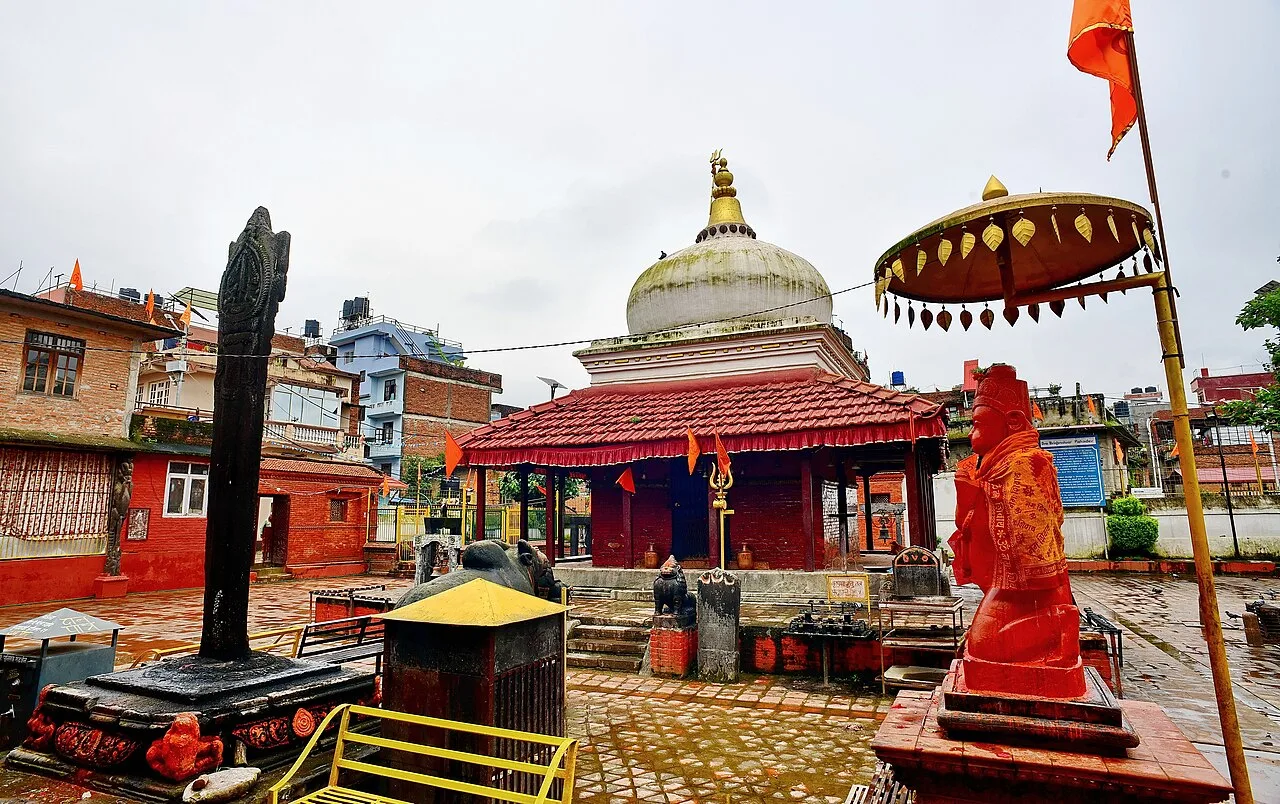
Standing in a crowded shrine in Madurai while temple bells deafen your right ear, the sheer visual noise hits you hard. Granite pillars dripping with ghee, marigold garlands piled three feet deep, and priests chanting chants in a dead dialect to a dozen different stone faces. If you ask a Western tourist how many gods they are looking at, they will mumble something about polytheism and ancient mythology. Not quite. Not even close.
When you audit the actual theology behind the ritual clutter, the narrative flips completely. Hinduism is aggressively, stubbornly monistic. There is one Supreme Reality—Brahman—undifferentiated, infinite, and entirely beyond human comprehension. So why the crowded pantheon? Why are there shrines to elephant-headed bureaucrats, dancing destruction deities, and river goddesses?
Here is the cold math of religious anthropology: abstract infinity does not sell to the human brain. You cannot pray to a philosophical vacuum. The multiplicity of gods is not a lack of theological discipline; it is an insanely sophisticated interface design for a messy species.
- Hinduism operates on monism (one reality) dressed in functional polytheism.
- Deities function as specialized archetypes, psychological mirrors, and cosmic departments.
- Idols (murtis) are spiritual transmitters, not primitive stone fetishes.
The Architecture of the Divine: Brahman vs. Devas
Let us clear up the vocabulary right now. Western education teaches us that ‘God’ is a bearded guy in the sky who judges your weekend behavior. Sanskrit laughs at this. The foundational texts of Hinduism—the Upanishads—talk about Brahman. Brahman is not a guy. Brahman is the raw code of the universe. It is the canvas, the paint, and the painter all at once.
Because the human mind short-circuits when trying to meditate on a featureless, infinite void, the tradition invented the Devas. Think of Devas as executive officers or departmental heads of a massive cosmic corporation. You have Indra running weather logistics, Agni managing combustion, and Lakshmi balancing the financial ledger. They are mortal in the grand scheme of things—they rise and fall with cosmic cycles—but they manage the day-to-day operations of the universe so you don’t have to bother the CEO.
Comparison: Western Monotheism vs. Hindu Monism
| Feature | Abrahamic Monotheism | Hindu Monism / Henotheism |
|---|---|---|
| Ultimate Reality | Personal Creator God (Yahweh, Allah) | Impersonal, Formless Brahman |
| Secondary Entities | Angels, Saints, Demons (Strictly created beings) | Devas, Ishvaras (Facets of the One) |
| Approach to Form | Iconoclastic; strict ban on graven images | Iconographic; infinite visual manifestations |
Big mistake to view these deities as independent gods competing for market share. They are lenses. If you want to study solar radiation, you use a specific filter on your telescope. If you need courage in the middle of a career crisis, you invoke Hanuman. You aren’t praying to a different supreme being; you are tuning your radio to a different frequency of the same broadcast.
The Psychology of Murti Puja: More Than Just Statues
Let’s address the elephant in the room: idol worship. Missionaries spent centuries losing their minds over Hindu temples, calling them dens of paganism. They missed the entire operational logic.
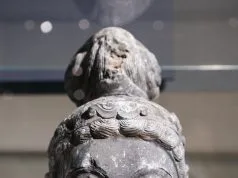
When a practitioner walks into a temple and stands before a stone statue of Shiva, they don’t actually believe that slab of granite cooked up the universe last Tuesday. The statue is a murti—a consecrated focal point. It is an antenna. Human psychology requires an anchor. Try telling a grieving mother to direct her grief toward an unmanifest, omnipresent quantum field of pure consciousness. It doesn’t work. Give her a face, a pair of compassionate eyes, and an altar where she can leave crushed jasmine, and suddenly the grief has somewhere to land.
The ritual of Prana Pratishtha—the breath-infusing ceremony performed before a new statue is installed—is telling. The priest invokes the divine presence *into* the form, and when the temple is abandoned or damaged, they perform a reverse ritual to withdraw that presence. The stone goes back to being stone. It is pragmatic psychology applied on a civilizational scale.
Ishta Devata: The Personalized Deity
Here is where Western critics get completely turned around. In a standard polytheistic system like ancient Greece, you worshipped Athena if you were smart, Ares if you liked fighting, and Poseidon if you were getting on a boat. You appeased them all to avoid a lightning bolt.
Hinduism runs the opposite software via the concept of Ishta Devata—your chosen deity. A devout practitioner might worship Ganesha as the remover of obstacles, ignore three million other gods for forty years, and still remain intensely monistic. Why? Because they view their chosen deity as a customized window looking out at the exact same ultimate reality.
It’s modular religion. You pick the interface that matches your psychological temperament. Analytical types might lean toward the philosophical abstraction of Advaita Vedanta. Emotional, devotional personalities dive headfirst into the ecstatic poetry of Krishna-bhakti. The system doesn’t demand uniformity; it demands functionality.
The 330 Million Gods Myth
You’ve probably heard the stale cocktail party fact: “Hinduism has 330 million gods.” It sounds ridiculous, and frankly, it is. But the number isn’t a census count; it’s a linguistic artifact.
In classical Sanskrit, the word koti meant both ‘ten million’ and ‘supreme’ or ‘type/manifestation’. The original text didn’t mean there are 330,000,000 distinct gods hanging out in the clouds. It meant that the divine manifests in 330 million ways—meaning everywhere, infinitely, in every atom, bug, river, and human heartbeat. It is a poetic way of stating panentheism: the divine is in everything, and everything is in the divine.
When you strip away the colonial baggage and the lazy journalism, Hinduism’s crowded pantheon isn’t a contradiction of monotheism. It is the ultimate democratization of the divine. It admits that humans are messy, distracted, emotional creatures who need a multitude of faces to cope with an incomprehensible universe.
Frequently Asked Questions
Is Hinduism polytheistic or monotheistic?
It is officially monistic or henotheistic. Texts like the Vedas point to one ultimate reality, Brahman, while various deities act as localized faces or functions of that single source.
Why are there millions of Hindu gods?
The traditional figure of 330 million gods is symbolic rather than literal. It signifies the infinite manifestations of the divine present in every aspect of the cosmos and human consciousness.
Do Hindus actually worship idols?
Practitioners use consecrated images called murti not as literal stone gods, but as focal points or antennas to concentrate the mind toward the formless divine.