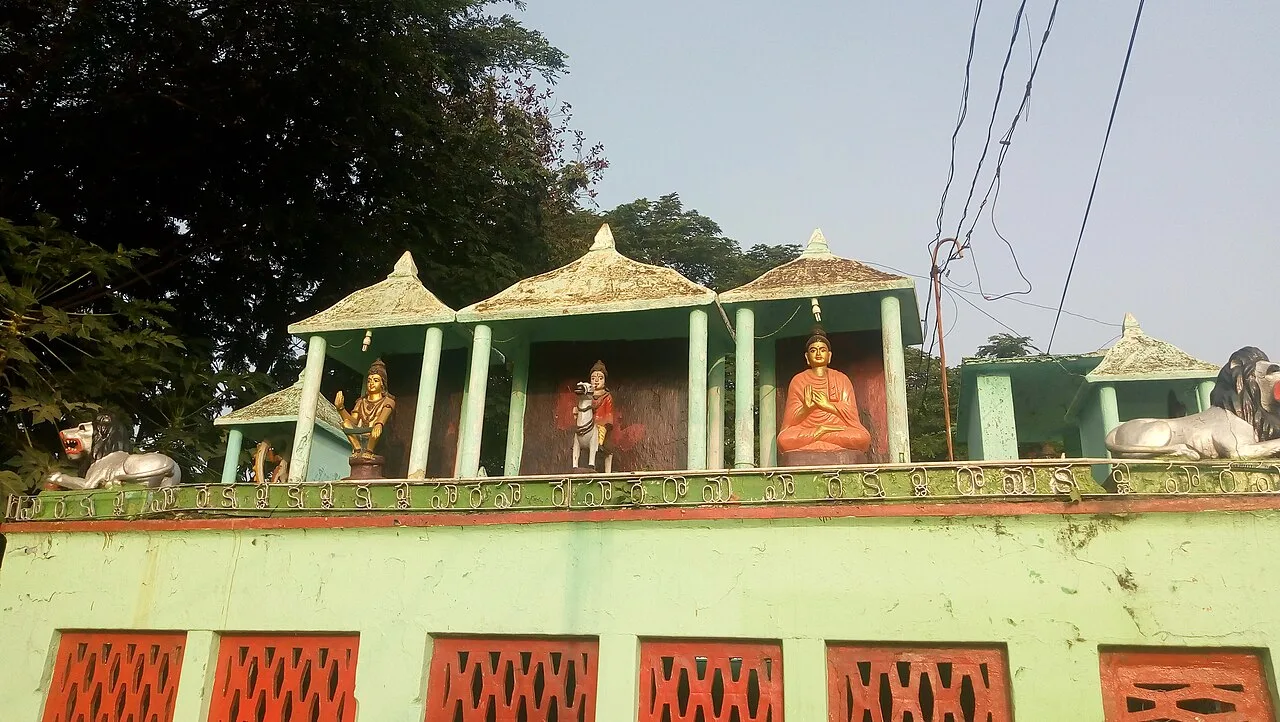
Walk into any traditional Hindu home or temple at sunrise, and you will see someone chanting before a stone or metal statue, offering incense, water, and flowers. To an outsider scanning the room with a Western, monotheistic lens, it looks textbook: idol worship. Paganism. Stone-kneeling.
Not quite. Here is the cold theological and practical reality: Hindus do not worship the rock, the bronze, or the clay. If you ask any practicing priest or knowledgeable adherent whether the statue sitting on that altar *is* God, they will laugh, shake their heads, and tell you no. They are interacting with a consecrated focal point—a murti—designed to bridge the gap between a human brain and an infinite, formless reality.
Let’s clear away the centuries of colonial misinterpretation and look at the actual mechanics of how this works on the ground.
The Core Misconception: Idol vs. Murti
The English word ‘idol’ carries heavy baggage. It implies a primitive superstition where people believe a manufactured object possesses magical powers or *is* the supreme creator. That is explicitly rejected by mainstream Hindu philosophy, specifically the Vedanta schools.
Instead, Hinduism operates on two levels of reality:
- Nirguna Brahman: God without form, attributes, or limits. Pure, unmanifested consciousness that permeates the universe. Try meditating on that for ten minutes without your mind drifting to what you are eating for lunch. It is nearly impossible for the average human mind.
- Saguna Brahman: God with form and attributes. This is where the murti enters the picture. It gives the human mind a handle to grab onto.
- The statue is a focal lens, much like a telescope helps you view a distant star.
- Before a murti becomes active in a temple, a specific ritual called Prana Pratishtha invites the divine presence into the form.
- Once worship concludes, prayers are often said to release that presence back into the infinite. The statue remains just stone or metal.
The Antenna Analogy: How It Actually Works
Think of a smartphone. The phone itself is not the internet. It is a piece of glass, silicon, and lithium. But without the phone, you cannot access the network, stream video, or talk to someone across the planet. The phone acts as a localized receiver and transmitter.
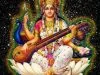
A murti is treated the exact same way in Hindu practice. It is an engineered receiver. Through precise geometry, iconography, and ritual consecration (Prana Pratishtha), the statue is imbued with a specific frequency of divine energy. When a devotee sits before it, they aren’t bowing to the marble; they are tuning their consciousness to the attribute that marble represents—whether that is courage (Hanuman), wisdom (Saraswati), or dissolution of ego (Shiva).
Comparison: Idol Worship vs. Murti Puja
| Metric | Classical ‘Idol Worship’ (Stereotype) | Hindu Murti Puja (Reality) |
|---|---|---|
| View of Object | The object is the literal creator/god. | The object is a temporary vessel or focal lens. |
| Ultimate Target | The material artifact itself. | The formless infinite consciousness (Brahman) behind it. |
| Disposal | Destroying the idol destroys the god. | If a murti breaks, it is ritually submerged in a river (Visarjan) because the divine presence has departed. |
The Reality of Ritual: Treating God Like an Honored Guest
If you watch a traditional home puja, you will notice something intensely practical: the deity in the statue is treated like a visiting dignitary. You wake the statue up in the morning. You offer it water to wash its face. You feed it (or offer food symbolically). You wave lights before it (Aarti) so you can see its face clearly in the dark.
Critics call this childish anthropomorphism. Practitioners call it relational intimacy. Hinduism understands that humans are social creatures who struggle to love an abstraction. By treating the divine as a guest in your home through a physical medium, you train your mind in humility, service (seva), and devotion (bhakti). Once the ritual ends, the devotee walks out the door and is taught to see that exact same divine spark in every living person they meet—friend or stranger.
Frequently Asked Questions
Do Hindus worship the physical statue itself?
No. The physical statue, known as a murti, is not considered God in stone or metal. It is treated as a consecrated focal point or vessel for divine consciousness during worship.
What is a murti in Hinduism?
A murti is a consecrated image or form that embodies an aspect of the divine. Think of it less as an idol and more as a spiritual antenna or lens designed to focus human concentration.
Why do Hindus use statues if God is formless?
Hinduism recognizes both Nirguna Brahman (formless infinite consciousness) and Saguna Brahman (form with attributes). Because human minds struggle to focus on the abstract, the murti provides a practical bridge for meditation and devotion.
Is idol worship in Hinduism the same as polytheism?
Not practically. While multiple deities are worshipped, they are viewed as different functional expressions or departments of one supreme, all-pervading reality called Brahman.