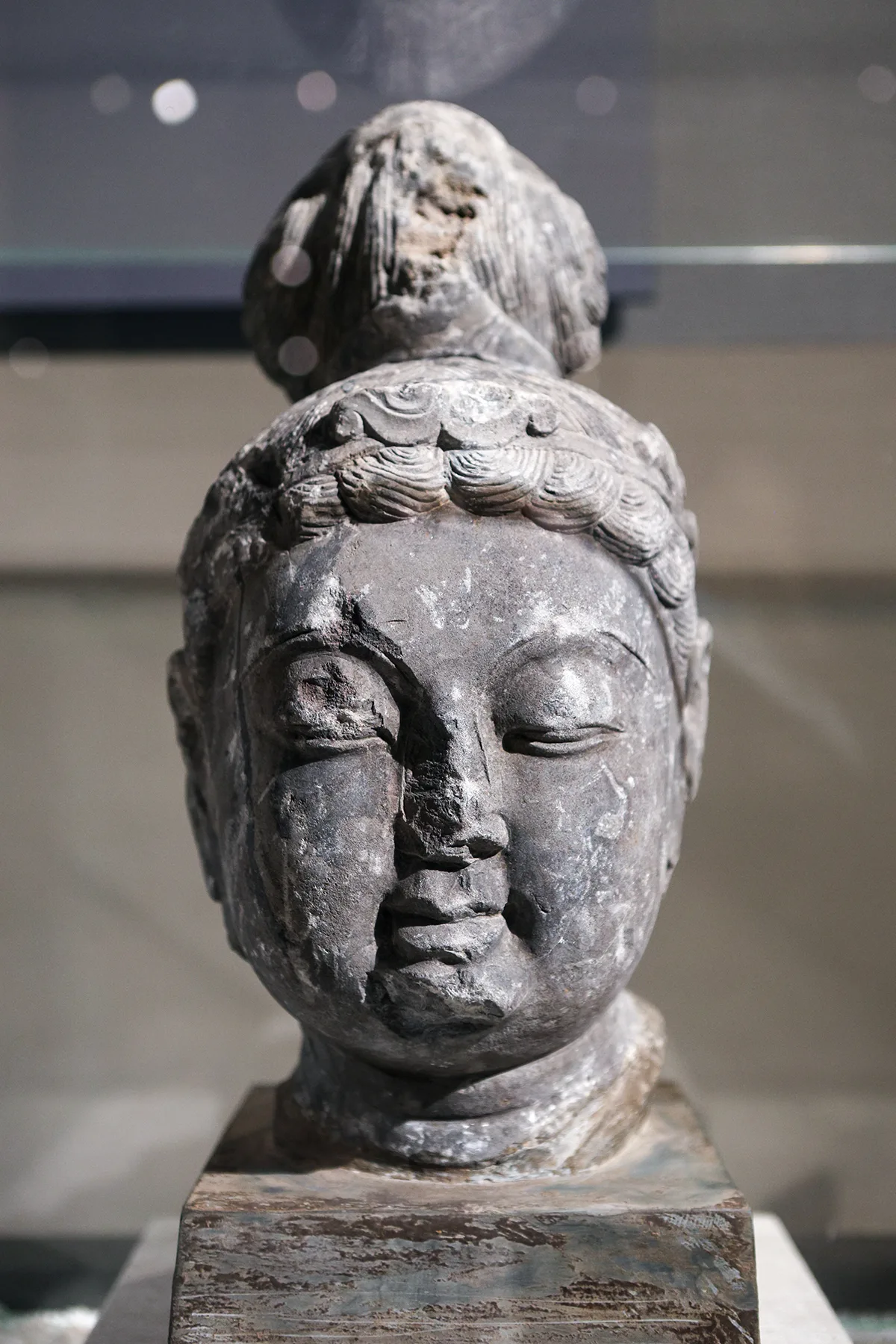
Someone drops a classical Indian text onto my desk at 4:45 PM on a Friday, pointing at a fierce wrathful deity and asking if it is Vishnu or a Bodhisattva. Half the time, the client has spent three hours on Wikipedia and is completely sideways on the terminology. Let us cut straight through the academic hedging. Are Buddhism and Hinduism related? Yes, they are cousins raised in the same brutal ideological neighborhood of ancient northern India, but they ended up utterly estranged.
Forget the academic sugarcoating you get in freshman philosophy textbooks. They do not hold hands around a campfire. They share a vocabulary—karma, samsara, nirvana, moksha—the same way a corporate takeover shares a legal vocabulary with the company it is gutting. The terms sound identical. The execution, the metaphysics, and the final payout are entirely different.
- Shared Roots: Both emerged from the Gangetic plains, inheriting concepts of cosmic cycles, reincarnation, and ascetic liberation.
- The Core Break: Buddhism rejects the Atman (eternal soul) and the supreme authority of the Vedic texts.
- Practical Divergence: Hinduism leans into social order (dharma/varna) and divine union; Buddhism strips away the metaphysics to focus strictly on psychological cessation of suffering.
The Historical Setup: Shared Soil, Different Seeds
To understand the friction between these two traditions, look at the geography. Ancient Magadha in the 5th century BCE was a pressure cooker of urbanization, trade routes, wandering ascetics (shramanas), and entrenched Brahmanical rituals. Siddhartha Gautama did not drop out of the sky with a brand-new dictionary. He inherited the vernacular.
When the Buddha talked about samsara—the relentless, grinding wheel of death and rebirth—he did not need to define it for his audience. Everybody in the Gangetic plain bought that premise. It was the cultural baseline. Just like modern Westerners inherit concepts of sin, guilt, and individual agency whether they go to church or not, ancient Indians inherited karma and rebirth.
Big mistake: assuming sharing a vocabulary means sharing a system. That is like looking at a Marxist and a capitalist both using the word “capital” and declaring them ideological twins. The Buddha took the terminology of the Vedic priests, hollowed it out, and refilled it with an entirely different engine.
The Core Breakup: Atman vs. Anatta
Here is the cold mathematical divider between the two traditions. You can debate rituals, temples, and meditation postures all day long, but this single philosophical line item separates them permanently.
Hinduism, across its diverse orthodox (Astika) schools like Vedanta, asserts that underneath your messy psychological ego, there is an immortal, unchanging core: the Atman. Realize your identity with this divine spark, recognize that Atman is identical to Brahman (the ultimate cosmic reality), and you achieve liberation (moksha).
Buddhism looks at that exact same premise and hits the trash icon. The Buddha’s signature doctrine is Anatta, or non-self. There is no soul. There is no permanent essence. What you call “you” is just a flickering, interdependent bundle of physical and mental aggregates (skandhas) chained together by ignorance and desire. Clinging to the idea of a permanent soul is the exact engine driving your misery.
When an orthodox Hindu philosopher debated a Buddhist monk in the 8th century, this was the anvil. You cannot reconcile a system built on eternal soul-realization with a system built on the radical deconstruction of the soul. They are structurally incompatible.
| Philosophical Axis | Hinduism (Orthodox/Vedanta) | Buddhism (Theravada/Mahayana) |
|---|---|---|
| Ultimate Reality | Brahman (Absolute, eternal ground of being) | Sunyata (Emptiness, lack of inherent existence) |
| The Human Soul | Atman (Permanent, immortal divine spark) | Anatta (Non-self, impermanent flux of aggregates) |
| Authority Source | The Vedas and Upanishads (Shruti) | The Buddha’s Direct Awakening (Dharma/Tripitaka) |
| Final Liberation | Moksha (Union or realization with the divine) | Nirvana (Extinction of greed, hatred, and delusion) |
Authority and the Caste System: Institutional Friction
Let us talk about social engineering. Traditional Hinduism—rooted in the Brahmanical tradition—organized society around the varna (caste) system and ritual purity. Your social duty (dharma) was tied to your birth. Fulfill your caste duties, perform the sacrifices, and you accumulate good karma for the next life.
The Buddha blew up that model. He opened his monastic order (Sangha) to anyone, regardless of birth, cutting across caste lines with zero hesitation. More importantly, he rejected the divine authority of the Vedas. To a traditional Brahmin, the Vedas were apauruṣeya—not of human composition, eternal cosmic truths humming in the ether. To the Buddha, the Vedas were historical artifacts written by ancient sages who had not actually solved the problem of suffering.
This was not a polite academic disagreement. In historical India, philosophical debates often carried high stakes regarding royal patronage and social influence. Buddhists were classified as nastikas (heterodox/non-believers) by the orthodox schools because they rejected Vedic authority. They were theological outsiders.
Historical Coexistence and Mutual Absorption
If they were so fundamentally opposed, why do modern tourists in India often see Buddhist motifs inside Hindu temples, or why did later Hinduism absorb the Buddha as an avatar of Vishnu?
Simple: survival and cultural momentum. As Buddhism expanded across India for over a millennium, it exerted immense pressure on the competing Brahmanical traditions. Hinduism had to adapt or die. Think of it like a legacy software platform completely rewriting its codebase to compete with an agile open-source disruptor.
By the time classical Hinduism solidified in the Gupta period and beyond, it had absorbed many Buddhist critiques. The emphasis on non-violence (ahimsa), devotional surrender (bhakti), and monastic asceticism heavily mirrored Buddhist structures. Meanwhile, as Buddhism waned in India due to shifting political patronage, declining monastic infrastructure, and Islamic invasions, the remaining Buddhist communities were slowly absorbed back into the broader Hindu fold.
In the Puranas, the Buddha gets recast as the ninth avatar of Vishnu—sent specifically to delude demons or to stop bloody animal sacrifices by preaching a non-Vedic path. From a Buddhist perspective, this is the ultimate historical insult: your founder is repackaged by your main competitor as a marketing tool for their own deity.
The Modern Confusion: Western Syncretism
Walk into a suburban yoga studio today, and you will find a statue of the Buddha sitting calmly next to an image of Ganesha while a soundtrack of Sanskrit chants plays in the background. Western spiritual consumers love blending everything into a smooth, frictionless smoothie of “Eastern wisdom.”
Practitioners living inside the traditions do not make this mistake. Ask an orthodox Hindu priest if Buddhism is just a sect of Hinduism, and he will tell you no, pointing out the rejection of the Vedas and Atman. Ask a Theravada monk in Thailand if he is a Hindu, and he will look at you with polite bewilderment.
They are related historically and culturally, the way Christianity is related to Judaism or Islam is related to both. They share a landscape, they argue over the same historical terms, and they bleed into each other at the edges of folk practice. But doctrinally? They are running on completely different operating systems.
Frequently Asked Questions
Did Buddhism originate from Hinduism?
Not quite. Siddhartha Gautama emerged from a shared North Indian Vedic cultural soup in the 5th century BCE, but he rejected core Hindu concepts like the eternal soul (atman) and the ultimate authority of the Vedas.
Do Buddhism and Hinduism share the same gods?
Sort of, but with heavy semantic drift. Buddhism absorbed local deities and even Hindu figures like Brahma and Indra into its cosmology as protector gods, but they are trapped in samsara just like humans and are not supreme creators.
Can you practice both Buddhism and Hinduism at the same time?
Practically speaking, millions of people in Asia blend folk practices, but dogmatically, they contradict each other. You cannot simultaneously affirm an eternal, divine soul (Atman) and absolute non-self (Anatta).
Which came first, Buddhism or Hinduism?
Hinduism is older, but as a unified ‘ism’ it is a modern colonial construct. The early Vedic religion predates Buddhism by over a thousand years, whereas classical Hinduism coalesced centuries after the Buddha’s death.