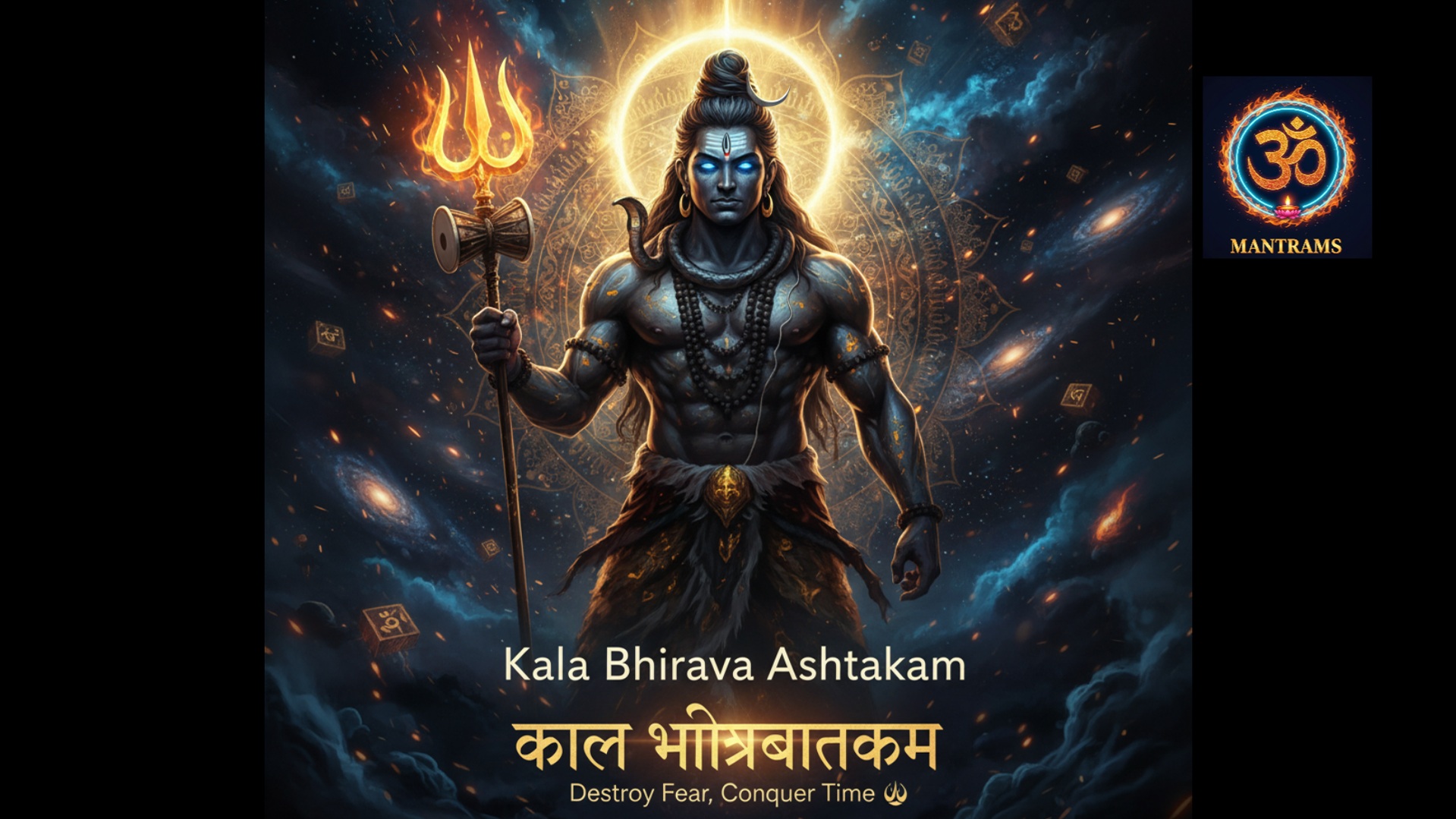
The Fierce Face of Compassion: Who is Kala Bhairava?
In the spiritual journey, we often seek the gentle and loving aspects of the Divine. But sometimes, what we need is a force so fierce that it can cut through our deepest limitations, our biggest fears, and the illusions we cling to. That force is Kala Bhairava, a terrifying yet immensely compassionate manifestation of Lord Shiva.
The name itself holds the key to his power: Kala means Time, and Bhairava is often interpreted as one who is beyond fear (or one who annihilates fear). He is the Lord of Time, the Supreme Gatekeeper, and the ultimate purger of ego.
The definitive praise of this deity comes from the 8th-century philosopher-saint, Adi Shankaracharya, in his masterpiece: the Kala Bhairava Ashtakam. This eight-verse hymn is a philosophical, poetic, and devotional blueprint for anyone seeking to move from bondage to liberation, from fear to courage, and from procrastination to action.
The Lord of Kashi: The Symbolism of the Present Moment
Adi Shankaracharya primarily praises Kala Bhairava as the Kāśikā Purādhinātha—the Supreme Ruler or King of the city of Kashi (Varanasi). This geographical reference holds a profound spiritual meaning.
– Kashi as the Ājñā Chakra: In yogic and Tantric traditions, Kashi is not just a city; it is a symbol for the Ājñā Chakra (the third eye), the seat of supreme awareness. By calling him the Lord of Kashi, Shankaracharya is saying that Kala Bhairava is the master of your awareness in the here and now.
– Time and Awareness: Bhairava is the master of Kala because he is the eternal present. All human suffering comes from either the regret of the past or the anxiety of the future. The Ashtakam is a daily reminder that the only moment you have power over is now. When you align with the “now,” you align with Bhairava and become impervious to the illusion of linear time. His vehicle, the dog (Shvāna), is sometimes seen as symbolizing the one who is neither concerned with shva (tomorrow) nor trapped by na (past).
The Eight Verses: A Roadmap to Fearlessness
The Ashtakam is a powerful distillation of Bhairava’s dual role: the terrifying judge and the merciful liberator. Chanting it focuses on destroying the root causes of human suffering:
1. Destruction of Grief and Attachment: The Stotra specifically prays for the annihilation of Shoka (grief), Moha (attachment and delusion), and Lobha (greed). These are the psychological chains that keep us bound to the cycle of suffering.
2. Transcendence of Karma: A key benefit is being freed from the bonds of Karma. Bhairava is the keeper of Dharma (righteousness) and has the power to oversee the dissolution of Paapa (sin). By offering your deeds to him, you ask for the grace to cut the ties of karmic consequences, moving towards spiritual liberation (Mokṣa).
3. Divine Discipline and Focus: Since he is the Lord of Time, regular recitation naturally instills discipline. It helps overcome procrastination and laziness, bringing clarity and purpose to your actions. Devotees find it much easier to commit to their goals, both material and spiritual.
4. Protection from Malice: The hymn creates a powerful barrier against negative energy, black magic, and ill will. Reciting it is a powerful declaration that you are under the supreme protection of the one who governs all unseen forces.
5. Mastery Over Inner Foes: The fierce form of Bhairava is ultimately meant to empower the devotee with courage and inner strength, eliminating fear of death and failure, and ensuring Vajra-like confidence in any situation.
The Phalaśruti (conclusion) of the Ashtakam promises that those who study this hymn will move towards the proximity of Shiva’s feet, destroying grief, attachment, and even poverty (dainya).
If you are struggling with inner fears, feeling overwhelmed by the passage of time, or seeking ultimate clarity on your path, incorporating the Kala Bhairava Ashtakam into your daily practice is like surrendering your worries to the ultimate guardian. It’s an act of profound courage, trusting that the Lord of Time will ensure your journey is flawless.
Kala Bhairava Ashtakam Sanskirt Mantram
कालभैरवाष्टकम्
देवराज-सेव्यमान-पावनाङ्घ्रि-पङ्कजं
व्यालयज्ञ-सूत्रमिन्दु-शेखरं कृपाकरम् ।
नारदादि-योगिबृन्द-वन्दितं दिगम्बरं
काशिकापुराधिनाथ कालभैरवं भजे ॥ 1 ॥
भानुकोटि-भास्वरं भवब्धितारकं परं
नीलकण्ठ-मीप्सितार्थ-दायकं त्रिलोचनम् ।
कालकाल-मम्बुजाक्ष-मक्षशूल-मक्षरं
काशिकापुराधिनाथ कालभैरवं भजे ॥ 2 ॥
शूलटङ्क-पाशदण्ड-पाणिमादि-कारणं
श्यामकाय-मादिदेव-मक्षरं निरामयम् ।
भीमविक्रमं प्रभुं विचित्र ताण्डव प्रियं
काशिकापुराधिनाथ कालभैरवं भजे ॥ 3 ॥
भुक्ति-मुक्ति-दायकं प्रशस्तचारु-विग्रहं
भक्तवत्सलं स्थिरं समस्तलोक-विग्रहम् । [स्थितं]
निक्वणन्-मनोज्ञ-हेम-किङ्किणी-लसत्कटिं [विनिक्वणन्]
काशिकापुराधिनाथ कालभैरवं भजे ॥ 4 ॥
धर्मसेतु-पालकं त्वधर्ममार्ग नाशकं [नाशनं]
कर्मपाश-मोचकं सुशर्म-दायकं विभुम् ।
स्वर्णवर्ण-केशपाश-शोभिताङ्ग-मण्डलं [शॆषपाश, निर्मलं]
काशिकापुराधिनाथ कालभैरवं भजे ॥ 5 ॥
रत्न-पादुका-प्रभाभिराम-पादयुग्मकं
नित्य-मद्वितीय-मिष्ट-दैवतं निरञ्जनम् ।
मृत्युदर्प-नाशनं करालदंष्ट्र-मोक्षदं [भूषणं]
काशिकापुराधिनाथ कालभैरवं भजे ॥ 6 ॥
अट्टहास-भिन्न-पद्मजाण्डकोश-सन्ततिं
दृष्टिपात-नष्टपाप-जालमुग्र-शासनम् ।
अष्टसिद्धि-दायकं कपालमालिका-धरं
काशिकापुराधिनाथ कालभैरवं भजे ॥ 7 ॥
भूतसङ्घ-नायकं विशालकीर्ति-दायकं
काशिवासि-लोक-पुण्यपाप-शोधकं विभुम् । [कशिवास]
नीतिमार्ग-कोविदं पुरातनं जगत्पतिं
काशिकापुराधिनाथ कालभैरवं भजे ॥ 8 ॥
कालभैरवाष्टकं पठन्ति ये मनोहरं
ज्ञानमुक्ति-साधकं विचित्र-पुण्य-वर्धनम् ।
शोकमोह-लोभदैन्य-कोपताप-नाशनं
ते प्रयान्ति कालभैरवाङ्घ्रि-सन्निधिं ध्रुवम् ॥
इति श्रीमत्परमहंसपरिव्राजकाचर्यस्य
श्रीगोविन्दभगवत्पूज्यपादशिष्यस्य
श्रीमच्छङ्करभगवतः कृतौ
श्री कालभैरवाष्टकं सम्पूर्णम् ।
Kala Bhairava Ashtakam English Mantram
Kalabhairava Ashtakam
dēvarāja-sēvyamāna-pāvanāṅghri-paṅkajaṃ
vyāḻayajña-sūtramindu-śēkharaṃ kṛpākaram ।
nāradādi-yōgibṛnda-vanditaṃ digambaraṃ
kāśikāpurādhinātha kālabhairavaṃ bhajē ॥ 1 ॥
bhānukōṭi-bhāsvaraṃ bhavabdhitārakaṃ paraṃ
nīlakaṇṭha-mīpsitārdha-dāyakaṃ trilōchanam ।
kālakāla-mambujākṣa-makṣaśūla-makṣaraṃ
kāśikāpurādhinātha kālabhairavaṃ bhajē ॥ 2 ॥
śūlaṭaṅka-pāśadaṇḍa-pāṇimādi-kāraṇaṃ
śyāmakāya-mādidēva-makṣaraṃ nirāmayam ।
bhīmavikramaṃ prabhuṃ vichitra tāṇḍava priyaṃ
kāśikāpurādhinātha kālabhairavaṃ bhajē ॥ 3 ॥
bhukti-mukti-dāyakaṃ praśastachāru-vigrahaṃ
bhaktavatsalaṃ sthiraṃ samastalōka-vigraham । [sthitaṃ]
nikvaṇan-manōjña-hēma-kiṅkiṇī-lasatkaṭiṃ [vinikvaṇan]
kāśikāpurādhinātha kālabhairavaṃ bhajē ॥ 4 ॥
dharmasētu-pālakaṃ tvadharmamārga nāśakaṃ [nāśanaṃ]
karmapāśa-mōchakaṃ suśarma-dāyakaṃ vibhum ।
svarṇavarṇa-kēśapāśa-śōbhitāṅga-maṇḍalaṃ [śeṣapāśa, nirmalaṃ]
kāśikāpurādhinātha kālabhairavaṃ bhajē ॥ 5 ॥
ratna-pādukā-prabhābhirāma-pādayugmakaṃ
nitya-madvitīya-miṣṭa-daivataṃ nirañjanam ।
mṛtyudarpa-nāśanaṃ karāḻadaṃṣṭra-mōkṣadaṃ [bhūṣaṇaṃ]
kāśikāpurādhinātha kālabhairavaṃ bhajē ॥ 6 ॥
aṭṭahāsa-bhinna-padmajāṇḍakōśa-santatiṃ
dṛṣṭipāta-naṣṭapāpa-jālamugra-śāsanam ।
aṣṭasiddhi-dāyakaṃ kapālamālikā-dharaṃ
kāśikāpurādhinātha kālabhairavaṃ bhajē ॥ 7 ॥
bhūtasaṅgha-nāyakaṃ viśālakīrti-dāyakaṃ
kāśivāsi-lōka-puṇyapāpa-śōdhakaṃ vibhum । [kaśivāsa]
nītimārga-kōvidaṃ purātanaṃ jagatpatiṃ
kāśikāpurādhinātha kālabhairavaṃ bhajē ॥ 8 ॥
kālabhairavāṣṭakaṃ paṭhanti yē manōharaṃ
jñānamukti-sādhakaṃ vichitra-puṇya-vardhanam ।
śōkamōha-lōbhadainya-kōpatāpa-nāśanaṃ
tē prayānti kālabhairavāṅghri-sannidhiṃ dhruvam ॥
iti śrīmatparamahaṃsaparivrājakācharyasya
śrīgōvindabhagavatpūjyapādaśiṣyasya
śrīmachChaṅkarabhagavataḥ kṛtau
śrī kālabhairavāṣṭakaṃ sampūrṇam ।
Kalabhairava Ashtakam Meaning in English
I sing praise of Kalabhairava, the lord of Kashi, who is adorned by lotus-feet which is revered and served by Indra (Devaraj), Who wears a snake as a sacred thread, who has the moon on his forehead, who is the abode of mercy, whose praises are sung by Narada and other yogis, and who wears the sky as his raiment.
I sing praise of Kalabhairava, the lord of Kashi, who is resplendent like millions of Suns, who absolves the ocean of cycle of rebirth, who is supreme, who has a blue neck, who fulfils one’s desires, who has three-eyes, who is the death of death, who has lotus-like eyes, whose trident supports the world and who is immortal.
I sing praise of Kalabhairava, the lord of Kashi, who has a monodent, a spade, a noose and a club in his hands, who is the cause behind the beginning, who has an ash smeared body, Who is the first God, who is imperishable, who is free from illness and health, who is immensely mighty, and who loves the special Tandava dance.
I sing praise of Kalabhairava, the lord of Kashi, who is the bestower of desires and salvation, who has an enticing appearance, who is loving to his devotees, who is stable, who takes various manifestations and forms the world, and who has a beautiful golden belt with small melodious bells.
I sing praise of Kalabhairava, the lord of Kashi, who is the maintainer of dharma, who is the destroyer of unrighteous paths, who liberates us from the bonds of Karma or deeds, who is splendid, and whose is adorned with golden snakes.
I sing praise of Kalabhairava, the lord of Kashi, who has feet adorned by two golden sandals, who has a resplendent shine, who is eternal, who is inimitable, who bestows our desires to us, who is without desires, who destroys the pride of Yama or the God of death, and whose teeth liberate us.
I sing praise of Kalabhairava, the lord of Kashi, whose loud roar is enough to destroy all the manifestations created by the lotus-born Brahma, whose merciful glance is enough to destroy all sins, who bestows the eight-powers, and who wears a garland of skulls.
I sing praise of Kalabhairava, the lord of Kashi, who is the leader of the ghosts and spirits, who showers immense glory, who absolves people dwelling in Kashi both from their sins and virtues, who is splendor, who has shown us the path of righteousness, who is eternal, and who is the lord of the universe.