Hinduism for Beginners: A Comprehensive Introduction to One of the World’s Oldest Religions
Introduction
Hinduism, with its diverse tapestry of beliefs and practices, stands as one of the oldest religions in the world. Originating in the Indian subcontinent, it has shaped the cultural and spiritual landscape of the region for centuries. This comprehensive guide aims to unravel the intricacies of Hinduism, providing a foundation for understanding its history, beliefs, practices, and significance in the modern world.
Historical Roots
The origins of Hinduism can be traced back to the Indus Valley Civilization (c. 3300-1900 BCE), where archaeological evidence suggests the worship of nature spirits and a mother goddess. Over time, a complex system of beliefs and practices emerged, influenced by the Vedas, ancient scriptures that form the foundation of Hinduism.
Core Beliefs
At its heart, Hinduism embraces a fundamental belief in the following concepts:
- Brahman: An all-pervading, universal consciousness or ultimate reality that underpins all existence.
- Atman: The immortal, individual soul that is a part of Brahman and strives for liberation.
- Dharma: The righteous path or duty that guides individuals and societies towards spiritual growth.
- Karma: The law of action and consequence that determines the experiences and circumstances of one’s life.
- Samsara: The cycle of birth, death, and rebirth that the soul undergoes until it achieves liberation (moksha).
Major Deities
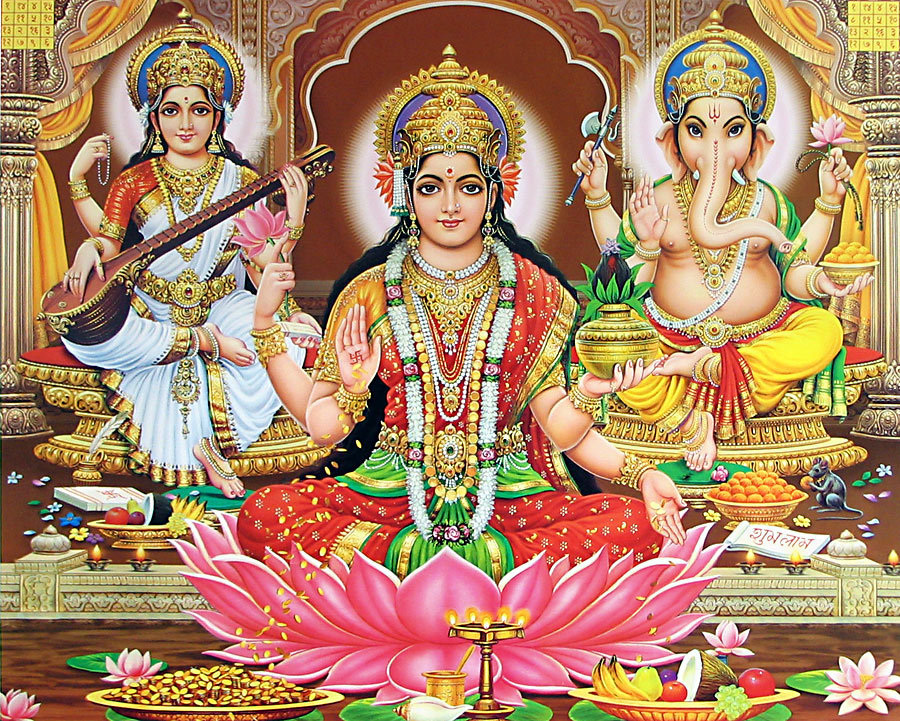
Hinduism recognizes a vast pantheon of deities, each representing different aspects of the divine. The most prominent deities include:
- Brahma: The creator
- Vishnu: The preserver
- Shiva: The destroyer and transformer
- Devi: The divine feminine, often worshipped as Durga, Lakshmi, or Saraswati
Holy Texts
The sacred literature of Hinduism is extensive and varied. Some of the most prominent texts include:
- Vedas: The oldest and most authoritative scriptures, containing hymns, rituals, and philosophical insights.
- Upanishads: Philosophical treatises that explore the nature of Brahman, the Atman, and the path to liberation.
- Bhagavad Gita: An epic poem found in the Mahabharata, which imparts teachings on dharma, karma, and the divine.
Practices and Rituals
Hindu worship involves a variety of practices and rituals, including:
- Puja: Ritualistic offerings and prayers made to deities.
- Yoga: Physical and mental practices aimed at achieving union with the divine.
- Meditation: Techniques for calming the mind and connecting with the inner self.
- Pilgrimage: Journeys to sacred places, such as the Ganges River or the Himalayas.
Social Structure
Hindu society is traditionally divided into a caste system, which categorizes individuals into groups based on their birth. While the caste system has been criticized for its potential for discrimination, it also reflects the historical division of labor and social roles.
Modern Hinduism
Today, Hinduism continues to be a vibrant and evolving religion, with adherents all over the world. It has undergone significant reforms and adaptations over the centuries, reflecting the changing social and cultural landscape. Contemporary Hinduism emphasizes inclusivity, interfaith dialogue, and the pursuit of spiritual growth.
Significance of Hinduism
Hinduism has played a profound role in shaping the cultural, social, and philosophical landscape of India and beyond. Its teachings on dharma, karma, and liberation have influenced countless individuals and societies. Additionally, Hinduism has contributed significantly to the fields of art, music, literature, and spirituality.
Conclusion
Hinduism is a multifaceted and fascinating religion that has stood the test of time. With its complex beliefs, diverse deities, and rich practices, it embodies a comprehensive spiritual tradition that continues to inspire and guide people throughout the world. Understanding Hinduism provides a valuable lens through which to appreciate the depth and diversity of human religious experience.## Hinduism For Beginners: A Comprehensive Introduction To One Of The World’s Oldest Religions
Executive Summary
Hinduism is the world’s third-largest religion, with over 1.2 billion followers worldwide. It originated in the Indian subcontinent and is based on the ancient Vedas, a collection of sacred texts. Unlike other religions, Hinduism is not based on a single founder or a single set of beliefs. Instead, it is a collection of diverse traditions and practices that have evolved over centuries.
Introduction
Hinduism is a complex and multifaceted religion, but it is also a beautiful and fascinating one. It offers a wealth of insights into the human condition and provides a path to spiritual enlightenment. If you are interested in learning more about Hinduism, then this comprehensive introduction is a great place to start.
FAQs
-What is the sacred text of Hinduism?
The Vedas are the most sacred texts of Hinduism. They are a collection of ancient hymns, prayers, and philosophical treatises that were composed over a period of centuries.
-Who is the most important deity in Hinduism?
There is no one most important deity in Hinduism. Hindus worship a pantheon of gods and goddesses, each of whom has their own unique powers and attributes.
-What is the ultimate goal of Hinduism?
The ultimate goal of Hinduism is moksha, which is liberation from the cycle of rebirth and union with the divine.
Major Beliefs
-
Brahman: Brahman is the ultimate reality, the source of all existence. It is unknowable and beyond human comprehension.
-
Atman: Atman is the individual soul. It is a part of Brahman and is immortal.
-
Karma: Karma is the law of cause and effect. The actions you perform in this life will determine your fate in the next.
-
Samsara: Samsara is the cycle of rebirth. The soul is reborn again and again until it achieves moksha.
-
Moksha: Moksha is the ultimate goal of Hinduism. It is liberation from the cycle of rebirth and union with the divine.
Deities
-
Brahma: Brahma is the creator god. He is depicted as a four-headed man with a white beard.
-
Vishnu: Vishnu is the preserver god. He is depicted as a blue-skinned man with four arms.
-
Shiva: Shiva is the destroyer god. He is depicted as a white-skinned man with a third eye on his forehead.
-
Devi: Devi is the mother goddess. She is depicted as a beautiful woman with a red face.
-
Ganesha: Ganesha is the god of wisdom and remover of obstacles. He is depicted as a pot-bellied man with an elephant’s head.
Practices
-
Puja: Puja is the worship of the gods. It involves offering flowers, food, and other items to the deities.
-
Yagna: Yagna is a ritual fire sacrifice. It is performed to express gratitude to the gods and to ask for their blessings.
-
Meditation: Meditation is a practice of quieting the mind and focusing on the divine.
-
Yoga: Yoga is a system of physical and mental exercises designed to achieve physical and spiritual well-being.
-
Pilgrimage: Pilgrimage is a journey to a holy place. It is a way to show devotion to the gods and to seek their blessings.
Conclusion
Hinduism is a rich and diverse religion with a long and complex history. It is a religion that offers a wealth of insights into the human condition and provides a path to spiritual enlightenment. If you are interested in learning more about Hinduism, then this comprehensive introduction is a great place to start.
Keyword Tags
- Hinduism
- Beliefs
- Deities
- Practices
- Moksha