Understanding Contemporary Relevance: A Guide to Tracing Hinduism’s Evolution and Symbolism
In today’s fast-paced world, understanding the contemporary relevance of ancient traditions and beliefs is crucial. Hinduism, with its rich history spanning millennia, holds significant insights for our modern lives. This article delves into the evolution of Hinduism and explores the enduring significance of its symbols, such as Om, Swastika, and Lotus, in the contemporary world.
The Evolution of Hinduism: A Journey Through Time
Hinduism, one of the world’s oldest religions, has undergone a fascinating journey of evolution over the centuries. Its origins can be traced back to the Indus Valley Civilization around 2500 BCE. Over time, Hinduism has absorbed various beliefs, practices, and philosophical ideas, shaping its diverse and multifaceted nature.
Vedic Period (1500-500 BCE): The Vedic period marked the earliest phase of Hinduism, characterized by the composition of sacred texts like the Vedas, Upanishads, and Brahmanas. These texts contain hymns, prayers, and philosophical inquiries that laid the foundation for Hindu beliefs.
Epic Period (500 BCE-300 CE): This period witnessed the rise of epic poems like the Mahabharata and Ramayana, which became influential cultural and religious texts. These epics depicted the struggles, triumphs, and values of Hindu society, shaping religious practices and ethical principles.
Classical Period (300-1000 CE): During this period, Hinduism saw the development of major philosophical schools, such as Advaita Vedanta, Dvaita Vedanta, and Vishishtadvaita Vedanta. These schools debated the nature of reality, the relationship between God and humans, and the path to liberation.
Medieval Period (1000-1500 CE): The medieval period witnessed the emergence of influential figures like Adi Shankara, Ramanuja, and Madhvacharya, who further refined Hindu philosophy and practices. Bhakti movements, emphasizing devotion to personal gods, gained popularity during this time.
Modern Period (1500-Present): The modern period saw significant changes in Hinduism under the influence of Western ideas and colonialism. Hindu reformers like Swami Vivekananda and Mahatma Gandhi played crucial roles in revitalizing Hinduism and promoting its global recognition.
The Significance of Hindu Symbols: Om, Swastika, and Lotus
Hinduism is rich in symbolism, with various symbols representing profound concepts and beliefs. Let’s explore the contemporary relevance of three key symbols:
Om: The sacred syllable “Om” represents the divine, the universe, and the ultimate reality. It symbolizes the unity of all existence and is often used in meditation and spiritual practices. In contemporary times, Om has become a popular symbol of yoga, mindfulness, and spiritual well-being.
Swastika: The swastika is an ancient symbol that represents good fortune, prosperity, and protection. It is often associated with the sun’s movement and is considered a symbol of life, growth, and abundance. Despite its historical misuse, the swastika continues to hold positive meanings in Hinduism and other Asian cultures.
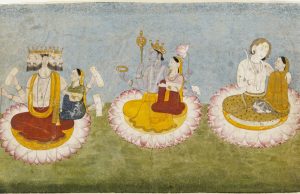
Lotus: The lotus flower symbolizes purity, enlightenment, and rebirth. Its ability to rise from muddy waters and bloom into a beautiful flower represents the journey of the soul towards spiritual awakening. In contemporary society, the lotus is often associated with yoga, meditation, and personal growth.
Conclusion
Hinduism, with its vast history and enduring symbolism, offers valuable insights for our contemporary world. Understanding the evolution of Hinduism and the significance of its symbols provides a deeper appreciation of one of the world’s oldest and most vibrant religions.
Secondary Keywords:
- Contemporary Hinduism
- Evolution of Hinduism
- Hindu Symbols
- Om Symbolism
- Swastika Symbolism
- Lotus Symbolism
- Hindu Philosophy
- Yoga and Hinduism
- Meditation and Hinduism