Pull an average Western theology textbook off the shelf, and you will get a neat, sanitized list of Hindu scriptures that looks suspiciously like a Bible or a Quran. One single book, spine-bound, golden-lettered, sitting neatly on a pedestal. Not quite. When you actually audit the textual landscape of Hinduism in the field, you find an overwhelming, sprawling library of poetry, philosophy, ritual instructions, and epic storytelling accumulated over four thousand years.
There is no single book. There is no singular Vatican dictating a canon. Instead, you have a massive, tiered hierarchy of texts split into two fundamental categories: Shruti (that which is heard, eternal, and divine) and Smriti (that which is remembered, human-authored, and contextual). If you want to understand how a billion people frame their worldview, you have to look past the academic generalizations and inspect the actual mechanics of these primary texts.
- The Vedas: The foundational bedrock (Shruti) consisting of hymns and liturgical manuals.
- The Upanishads: The philosophical peak of the Vedas, focusing on ultimate reality (Brahman) and the self (Atman).
- The Itihasas: The massive epics (Mahabharata and Ramayana) that codify cultural ethics and narrative theology.
- The Bhagavad Gita: The ultimate pragmatic manual extracted from the Mahabharata, read and quoted universally.
1. The Bedrock: The Four Vedas
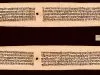
Let’s clear up a massive misconception right out of the gate. When people ask for the holy book of Hinduism, they usually mean the Vedas. But calling the Vedas a “book” misses the point entirely. For millennia, these texts weren’t written down at all. They were acoustically engineered, memorized syllable-by-syllable, and chanted with hyper-precise vocal intonations across generations.
The corpus is split into four distinct collections:
- Rigveda: The oldest layer, containing over a thousand hymns dedicated to cosmic forces and deities like Agni and Indra.
- Samaveda: Essentially a musical rearrangement of the Rigveda, designed specifically for chanting during fire sacrifices.
- Yajurveda: The ritual handbook containing prose formulas used by priests performing sacrifices.
- Atharvaveda: A later collection of domestic rituals, healing charms, prayers, and philosophical speculations.
Here is the cold math of everyday practice: Almost no one reads the Vedas today. They are archaic, linguistic monuments written in a dead form of Sanskrit. They occupy the highest tier of doctrinal authority, but practically speaking, they sit in university libraries and specialized archives, maintained by a shrinking guild of traditional ritual specialists.
2. The Philosophical Core: The Upanishads
If the early Vedas are about external rituals—pouring ghee into fire to appease the gods—the Upanishads represent an internal hostile takeover of Hindu thought. Sitting at the tail end of the Vedic literature (hence called Vedanta), these texts shift the focus from the altar to the human consciousness.
This is where the heavy-hitting metaphysical concepts get established. The Upanishads introduce the radical equation that individual consciousness (Atman) is identical to universal absolute reality (Brahman). They deal in rigorous philosophical dialogue between teachers and seekers sitting down in forest hermitages.
Big mistake to treat these as light reading. Texts like the Chandogya or Brihadaranyaka Upanishads require patient, multi-layered deconstruction. They don’t give you commandments; they give you paradoxes and meditative meditations designed to shatter your ordinary sense of ego.
3. The Cultural Operating System: The Epics (Itihasas)
While the Vedas and Upanishads were locked away among elite intellectuals and ascetics, the Itihasas—the epic histories—became the lived reality of the masses. These are massive storytelling engines that shaped the moral, political, and domestic architecture of South Asia.
| Epic Text | Attributed Author | Core Narrative | Primary Cultural Impact |
|---|---|---|---|
| Ramayana | Sage Valmiki | Prince Rama’s exile, abduction of Sita, and war with Ravana. | Defines righteous duty (dharma), ideal leadership, and family loyalty. |
| Mahabharata | Sage Vyasa | Dynastic civil war between the Kauravas and Pandavas. | Explores the brutal gray areas of ethics, politics, and fate. |
The Ramayana is straightforward: good triumphs over evil, righteousness wins, and Rama serves as the eternal blueprint for the ideal king and human being. The Mahabharata, on the other hand, is a messy, blood-soaked disaster of family politics, moral failures, and existential dread. At 100,000 shlokas (verses), it is roughly ten times the length of the Iliad and Odyssey combined. It forces the reader to confront the reality that doing the right thing often involves doing terrible, heartbreaking things.
4. The Practical Masterpiece: The Bhagavad Gita
Tucked right inside the sixth book of the Mahabharata is a 700-verse dialogue that functions as the absolute psychological anchor of modern Hinduism: the Bhagavad Gita.
The setup is high-drama: Prince Arjuna is standing in his chariot right in the middle of a massive battlefield, looking across the plains at his own cousins, uncles, and teachers whom he is about to slaughter in a civil war. He drops his bow, has a nervous breakdown, and tells his charioteer—who happens to be Lord Krishna in human form—that he simply won’t fight.
What follows is Krishna’s masterclass on action, detachment, and duty. Krishna doesn’t tell him to check out of society or meditate in a cave. He tells him to stand up and do his job as a warrior, but to do it without clinging to the results of his actions.
If you walk into a Hindu household anywhere in the world today, this is the book most likely sitting on the bedside table. It is portable, pragmatic, and directly addresses the paralysis of everyday human decision-making.
5. The Support Structure: Puranas and Agamas
Beyond the philosophical texts and epics, Hinduism maintains an enormous back-office of sectarian literature:
- The Puranas: Meaning “ancient tales,” these are encyclopedic texts covering cosmology, genealogies of kings, mythologies of gods (particularly Shiva, Vishnu, and Devi), pilgrimage sites, and temple rituals. The Bhagavata Purana is particularly influential, fueling the intense emotional devotion (Bhakti) movements across India.
- The Agamas and Tantras: These are manual-heavy technical texts detailing how to build temples, carve deity statues, perform daily worship (puja), and execute complex esoteric rituals. If you want to know why a temple is consecrated the way it is, you look here.
The Bottom Line
There is no tidy reading list that unlocks Hinduism in a weekend. The tradition is a living, breathing library that grew organically by accretion, absorbing local deities, philosophical breakthroughs, and folk traditions over millennia. You don’t study the primary holy books of Hinduism to check a box; you step into an ongoing, four-thousand-year argument about the nature of reality, duty, and liberation.
Frequently Asked Questions
What are the most important holy books in Hinduism?
Hindu texts are divided into Shruti (heard) and Smriti (remembered). The primary foundational texts include the four Vedas, the Upanishads, the Bhagavad Gita, and the epic Mahabharata and Ramayana.
Are the Vedas read by everyday Hindus?
Not usually. While the Vedas are the supreme authority, they are complex ritual manuals and hymns written in archaic Vedic Sanskrit, preserved mostly by specialized priests rather than casual readers.
Why is the Bhagavad Gita the most popular Hindu book?
The Bhagavad Gita offers direct, practical philosophical guidance on duty, ethics, and devotion. It bridges complex metaphysical concepts into everyday life scenarios.