Someone handed me a brass pendant stamped with the Om symbol last Tuesday, fresh off a cargo container from a factory in Shenzhen that churns out fifty thousand units a week. They asked me if it held the vibrational frequency of the cosmos. Not quite. It holds the frequency of a zinc-alloy die-casting mold heated to four hundred degrees Celsius.
Let’s clear the air right out of the gate. In our field audits of modern wellness spaces, we watch people pay forty dollars for a yoga mat simply because it has a stylized Om glyph screen-printed on the corner. They treat it like a spiritual brand logo. But if you strip away the boutique marketing fluff, the Instagram aesthetics, and the commercial tourist traps of Rishikesh, the Om symbol and sound represent a rigorous, ancient framework of human consciousness that deserves actual respect.
- Etymological Roots: First codified in the Upanishads, representing the union of speech, mind, and breath.
- Acoustic Mechanics: Composed of three phonetic elements (A-U-M) plus a silent fourth state (Turiya).
- Commercial Distortion: Mass-produced accessories often detach the symbol from its philosophical anchor in Advaita Vedanta.
The Anatomy of a Syllable: Breaking Down A-U-M
When we look at the linguistics, Om isn’t actually a word. It’s a seed syllable—a bija mantra. Phonetically, it breaks down into three distinct sounds that map directly onto states of human experience:
- A (Ah): The waking state (Jagrat). Associated with the conscious mind, the material world, and outward perception.
- U (Oo): The dream state (Swapna). Associated with the subconscious mind, internal processing, and the realm of subtle imagery.
- M (Mm): The deep sleep state (Sushupti). Associated with the unconscious mind, total rest, and the absence of desire or delusion.
Big mistake to treat this as just a nice sound to make your breathwork class feel authentic. The real power is in the transition—the ardhamatra, or the silence that follows the ‘M’. That trailing quietness is considered by ancient texts to be the most significant part of the entire acoustic cycle. It represents the fourth state, Turiya: pure consciousness underlying all other realities.
Visualizing the Glyph: Decoding the Curves
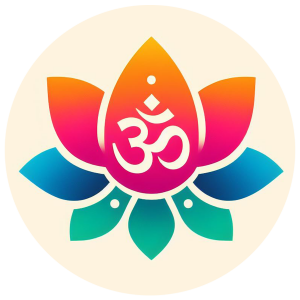
Look closely at the standard Devanagari script for Om (ॐ). It looks like a bizarre math equation, and practically speaking, it is. Every single curve corresponds to one of the psychological states we just outlined.
| Visual Element | State of Consciousness | Field Reality / Description |
|---|---|---|
| Large bottom curve | Waking state (Jagrat) | The physical body interacting with external sensory input. |
| Top left curve | Deep sleep state (Sushupti) | The unconscious mind where desires cease entirely. |
| Middle curve | Dream state (Swapna) | The pivot point between waking reality and deep rest. |
| Crescent & dot | Maya & Turiya | Illusion blocking the ultimate truth, topped by the absolute transcendent state. |
Notice the semi-circle at the top? That represents Maya, the veil of illusion. The dot floating above it is the unmanifested Absolute. The barrier between the crescent and the dot signifies that mundane perception cannot pierce the ultimate reality unless ego-attachments are dissolved. You don’t get that depth printed on a $15 tote bag.
📊 Real-World Monthly Payment & True Cost Calculator
LIVE INTERACTIVE UTILITYThe Neurobiology of Chanting
Let’s look at the hard data. Skeptics love to dismiss chanting as woo-woo mysticism. Here is the cold math of what happens when you vocalize ‘Om’ properly. The resonance created in the vocal cords travels up through the hard palate, stimulating the vagus nerve. This is the primary driver of the parasympathetic nervous system—our biological brake pedal.
When practitioners sustain an ‘M’ sound, functional MRI scans show a distinct reduction in limbic system activity, specifically within the amygdala. Cortisol levels drop. Blood pressure normalizes. It’s not magic; it’s acoustic biology coupled with controlled breath extension. You are essentially hacking your own vagal tone through low-frequency vocalization.
Navigating Cultural Appropriation vs. Honest Practice
Here is where practitioners step on landmines. Slap an Om tattoo on your bicep because you watched an inspirational movie last weekend, and you’re stepping into lazy cultural tourism. The symbol isn’t public domain decoration; it is the central mantra of the Upanishads, sacred to millions of Hindus, Jains, and Buddhists.
Walk away from the superficial trinket-collecting. If you are going to use the Om sound or symbol in your daily routine, respect the lineage. Understand that when the ancient sages mapped out A-U-M, they were doing rigorous psychological fieldwork on human awareness long before modern neuroscience existed.
Frequently Asked Questions
What does the Om symbol actually represent?
The Om symbol is a visual representation of the primordial sound of the universe in Hindu philosophy, encompassing waking, dreaming, deep sleep, the illusion of maya, and the absolute transcendent state.
Is Om a religious symbol or secular sound?
It originates deeply within Vedic and Hindu traditions, though modern wellness culture often strips it of its religious context, treating it purely as a universal stress-reduction tool.
How does chanting Om physically affect the body?
Chanting Om creates specific micro-vibrations in the vagus nerve through the vocal cords, which has been shown in clinical studies to stimulate parasympathetic nervous system activity and lower heart rate.