Hinduism, a religion with a rich tapestry woven over millennia, stands as the world’s oldest living tradition. Its essence lies not in a rigid set of doctrines, but in a dynamic exploration of the divine, the self, and the universe. This article delves into the fascinating evolution of Hinduism, tracing its roots from ancient practices to the vibrant expressions witnessed in the modern world.
Vedic Foundations: Laying the Cornerstone
The earliest whispers of Hinduism can be heard in the Vedic period (1750-500 BCE). The Vedas, a collection of hymns, rituals, and philosophies, formed the bedrock of this nascent religion. Vedic priests performed elaborate fire sacrifices to appease various deities like Indra (rain god) and Agni (fire god). The concept of Rita, the cosmic order, and Karma, the law of cause and effect, were also introduced during this time.
The Upanishadic Revolution: Unveiling the Inner Self
The later Vedic period saw the rise of the Upanishads (800-300 BCE), introspective texts that marked a shift in focus. These profound works delved into the nature of reality, questioning the external world and emphasizing the Atman (soul), the eternal essence within each individual. The concept of Brahman, the ultimate reality, began to take shape, paving the way for a more philosophical and inward-looking Hinduism.
Read More:
- The Role of Women in Hindu Society and Spirituality: A Complex Tapestry
- Hinduism and Environmental Stewardship: Lessons for a Sustainable Future
- Hinduism and Nature Worship: A Profound Connection
- The Hindu Concept of Trimurti: The Three of Divine Creation
- The Diversity of Hindu Beliefs and Practices Across India: A Journey Through a Land of Rich Traditions
Epic Tales and the Rise of Dharma
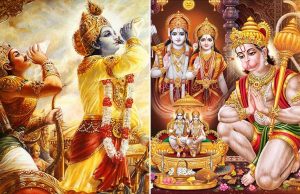
The following centuries witnessed the composition of two epic poems, the Mahabharata and the Ramayana. These timeless narratives, interwoven with religious teachings, shaped the concept of Dharma, righteous conduct. The Mahabharata, with its philosophical treatise Bhagavad Gita, explored themes of duty, free will, and the nature of the divine. The Ramayana, a tale of love, loyalty, and perseverance, continues to be a cornerstone of Hindu faith and culture.
The Golden Age: Blossoming of Diverse Traditions
The Gupta Empire (320-650 CE) ushered in a golden age for Hinduism. Art, literature, and philosophy flourished, with diverse schools of thought emerging. Six Darshanas, or systems of Hindu philosophy, were established, offering distinct perspectives on reality, knowledge, and liberation. These included Samkhya, emphasizing the dualistic nature of reality (Purusha – consciousness, Prakriti – matter), and Vedanta, exploring the relationship between Atman and Brahman.
Bhakti Movement: Devotion Takes Center Stage
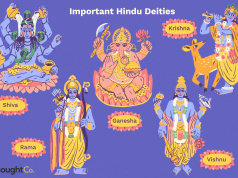
From the 6th to the 17th centuries, the Bhakti movement swept across India. This devotional movement emphasized the path of love and devotion as the means to reach the divine. Bhakti saints like Mirabai and Kabir composed soulful hymns in vernacular languages, making religion accessible to the masses. This period also saw the rise of prominent Shaiva (worshippers of Shiva) and Vaishnava (worshippers of Vishnu) traditions, enriching the Hindu pantheon with a multitude of gods and goddesses.
Encountering Islam and the Redefining of Hinduism
The arrival of Islam in the 7th century CE marked a new chapter. As Muslim sultanates rose to power, Hinduism underwent a period of adaptation and redefinition. Temple architecture incorporated Islamic elements, while philosophical debates fostered cross-pollination of ideas. This interaction also led to a renewed focus on Hindu identity and the consolidation of different sects under the umbrella of Hinduism.
The Colonial Era: Reform and Resistance
The arrival of the British Raj in the 18th century ushered in a period of social and religious upheaval. Colonization challenged traditional practices like Sati (widow burning) and the caste system, sparking reform movements. Social reformers like Ram Mohan Roy and Swami Vivekananda advocated for social justice and a more rational interpretation of Hinduism. This era also saw the rise of Hindu nationalism, a response to colonial rule and the growing influence of Christianity.
Independent India and the Resurgence of Hinduism
With India’s independence in 1947, Hinduism emerged as the religion of the majority. The nascent nation grappled with issues of religious identity and social integration. Concepts like Hindutva, emphasizing a strong Hindu nation, gained prominence. Simultaneously, modern Hindu thinkers like Sarvepalli Radhakrishnan reinterpreted Hindu scriptures to address contemporary concerns.
Hinduism Today: A Religion in Flux
Today, Hinduism is a vibrant and multifaceted religion practiced by over 1.2 billion people worldwide. It has adapted to the modern world, with its core principles finding expression through diverse practices. Yoga and meditation have gained global popularity, while technological advancements have facilitated online worship and virtual pilgrimages. Hinduism continues to grapple with issues of social reform, including the caste system and women’s rights.
Conclusion
The evolution of Hinduism is a testament to its remarkable adaptability. From its ancient Vedic roots to its contemporary expressions, it has constantly evolved to accommodate new ideas, social changes, and encounters with other cultures. Looking ahead, Hinduism faces the challenge of balancing its rich tradition with the demands of a rapidly changing world. Will it embrace social reforms while holding onto its core values? Can it navigate the complexities of globalization while retaining its unique identity? The future of Hinduism lies in its ability to continue this dynamic journey, offering spiritual solace and a meaningful worldview to generations to come.