The Interconnectedness of Karma and Reincarnation in Hinduism
Introduction
Karma and reincarnation are central concepts in Hinduism, deeply influencing the lives and spiritual practices of its followers. These two beliefs are intertwined and mutually reinforce each other, forming a fundamental framework for understanding the human experience.

Karma: The Law of Cause and Effect
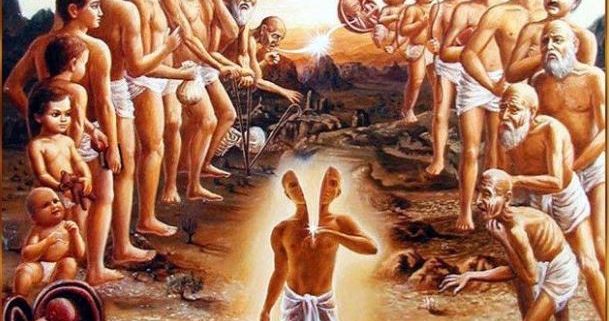
Karma refers to the universal law of cause and effect, stating that every action, thought, and word has its corresponding reaction. Good deeds accumulate positive karma, while harmful actions lead to negative karma. This karma follows individuals through their lives and beyond, shaping their experiences and determining their future.
Reincarnation: The Cycle of Rebirth
Reincarnation is the belief that after death, the soul is reborn into a new body. The type of body and circumstances the soul is reborn into are determined by the karma accumulated in previous lives. Good karma can lead to a more favorable rebirth, while negative karma can result in a less fortunate one.
The Interplay of Karma and Reincarnation
Karma and reincarnation are closely interconnected. Karma dictates the nature of the rebirth, while reincarnation provides the opportunity for individuals to balance their karma and strive for spiritual evolution.
-
Past Karma Influences Present Life: The actions and experiences in previous lives create the circumstances and challenges an individual faces in their current life.
-
Present Actions Shape Future Rebirth: The choices and Handlungen of individuals in this life accumulate karma that will determine the quality of their future rebirth.
Spiritual Implications
The interconnectedness of karma and reincarnation has profound spiritual implications:
-
Accountability: Karma holds individuals accountable for their actions, encouraging them to live righteously to avoid future suffering.
-
Spiritual Evolution: Reincarnation provides multiple lifetimes for individuals to learn from their mistakes, improve their karma, and progress spiritually.
-
Break the Cycle: The ultimate goal of Hinduism is to break the cycle of reincarnation and achieve moksha (liberation), a state of eternal bliss beyond karma and rebirth.
Practical Applications
The belief in karma and reincarnation influences all aspects of Hindu life:
-
Dharma (Duty): Individuals are expected to fulfill their duties and obligations in life to accumulate positive karma.
-
Rituals and Worship: Religious practices such as yajnas (fire rituals) and pujas (offerings) are believed to generate positive karma and purify the soul.
-
Meditation and Yoga: Spiritual practices aim to cultivate good thoughts and actions, thereby shaping positive karma and enhancing the quality of life and future rebirths.
Conclusion
The interconnectedness of karma and reincarnation in Hinduism provides a comprehensive framework for understanding the human experience. It emphasizes the importance of ethical conduct, spiritual development, and accountability for one’s actions. By recognizing the consequences of our deeds and the potential for spiritual evolution through multiple lifetimes, Hinduism offers a path towards personal growth, liberation, and ultimate union with the divine.## The Interconnectedness Of Karma And Reincarnation In Hinduism
Executive Summary
Karma and reincarnation are two fundamental concepts in Hinduism that are deeply interconnected. Karma refers to the actions, both good and bad, that an individual performs during their lifetime, while reincarnation is the belief that the soul is reborn after death into a new body, either human or animal. These two concepts together shape the Hindu view of life and death, and provide a framework for understanding the consequences of one’s actions and the possibilities for spiritual growth.
Introduction
Hinduism is one of the oldest and most complex religions in the world, and its beliefs and practices have evolved over thousands of years. Karma and reincarnation are two of the most important concepts in Hinduism, and they play a central role in shaping the way Hindus live their lives.
FAQ
- What is karma? Karma is the sum of a person’s actions, both good and bad, that determine their fate in this life and in future lives.
- What is reincarnation? Reincarnation is the belief that the soul is reborn after death into a new body, either human or animal.
- How are karma and reincarnation connected? Karma determines the circumstances of a person’s reincarnation. Good karma leads to a favorable rebirth, while bad karma leads to an unfavorable rebirth.
Subtopics
1. The Law of Karma
- Karma is an impersonal law of cause and effect that governs the universe.
- Every action, whether good or bad, has a corresponding reaction.
- The consequences of our actions may not always be immediate, but they will eventually come to fruition.
2. The Cycle of Reincarnation
- The soul is immortal and passes through a cycle of death and rebirth.
- The circumstances of our reincarnation are determined by our karma.
- We can improve our karma by performing good deeds and living a virtuous life.
3. The Goal of Moksha
- The ultimate goal of Hinduism is to achieve moksha, or liberation from the cycle of reincarnation.
- Moksha can be attained through a combination of good karma, devotion, and self-realization.
- When we achieve moksha, we are no longer subject to the laws of karma and reincarnation.
4. The Role of Dharma
- Dharma is the ethical and moral code of Hinduism.
- Dharma guides our actions and helps us to accumulate good karma.
- By following dharma, we can improve our lives and create a more favorable future for ourselves.
5. The Importance of Karma in Daily Life
- Karma is not just a concept for the afterlife. It also has a profound impact on our lives in the present moment.
- By understanding the law of karma, we can make choices that will lead to positive outcomes.
- We can also use karma to forgive others and ourselves, and to create a more peaceful and harmonious world.
Conclusion
Karma and reincarnation are two of the most important concepts in Hinduism, and they have a profound impact on the way Hindus live their lives. By understanding these concepts, we can gain a deeper understanding of the world around us and our place in it. We can also learn to make choices that will lead to a more positive and fulfilling life.
Keyword Tags
- Karma
- Reincarnation
- Hinduism
- Moksha
- Dharma