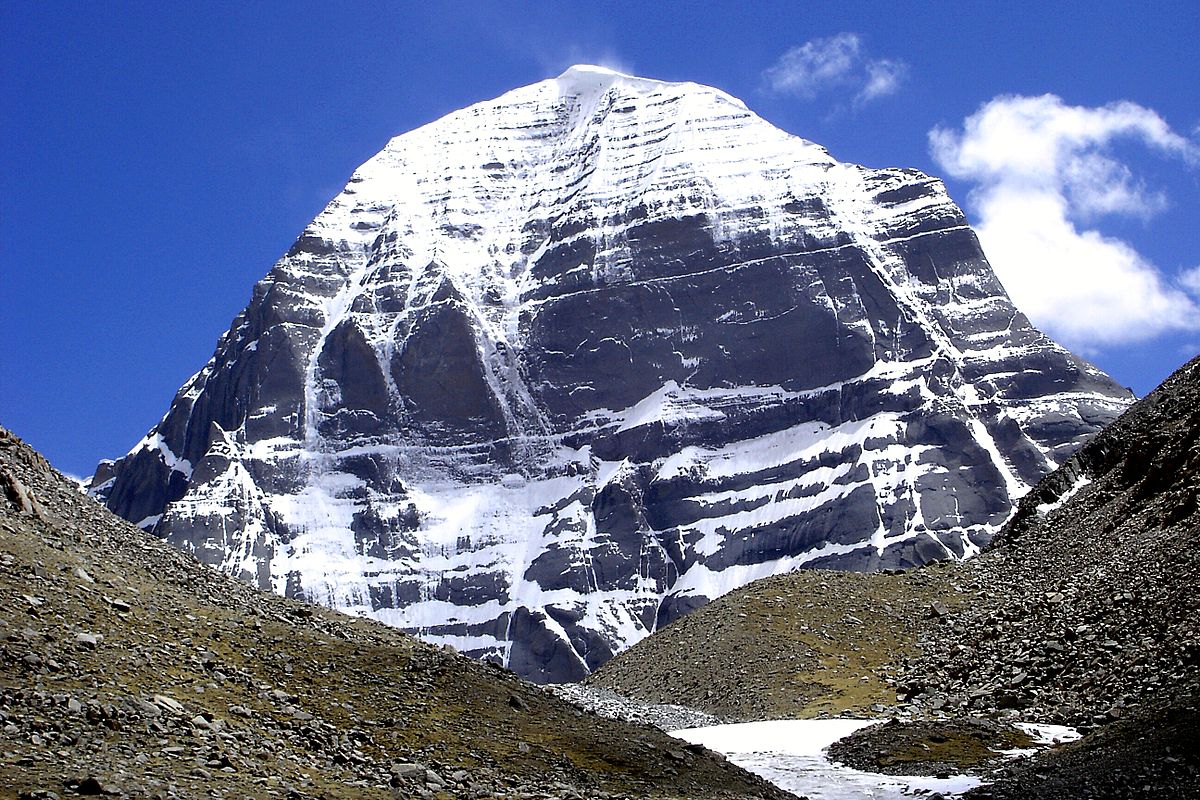
ising majestically from the desolate expanse of the Tibetan Plateau, Mount Kailash stands as a beacon of spiritual power, its snow-capped peak piercing the sky like a celestial spear. Revered as a sacred site by millions across diverse faiths, Mount Kailash draws pilgrims and adventurers from across the globe, each seeking their own unique connection with the mountain’s mystical aura.
I recall my first glimpse of Mount Kailash, a moment etched in my memory like a photograph. The sun was setting, casting long shadows across the barren landscape. As I gazed upon the mountain’s majestic form, bathed in the golden light of dusk, a profound sense of awe washed over me. It felt like I was witnessing something truly extraordinary, a place where the earthly and the divine converged.
For centuries, Mount Kailash has held a special place in the hearts and minds of people from various cultures. It’s a place where the boundaries between physical reality and spiritual realms seem to blur, where the air crackles with unseen energy, and the silence speaks volumes.
A Sacred Mountain: Revered by Four Faiths
Mount Kailash is unique in its status as a sacred site for four major religions: Hinduism, Buddhism, Jainism, and Bon, the indigenous pre-Buddhist religion of Tibet. Each faith holds its own beliefs and legends about the mountain, adding layers of richness and complexity to its spiritual tapestry.
In Hinduism, Mount Kailash is believed to be the abode of Lord Shiva, the destroyer and transformer, one of the principal deities in the Hindu pantheon. It’s said that Shiva resides at the summit with his consort, Parvati, meditating for the well-being of the universe.
For Buddhists, Mount Kailash represents Mount Meru, the mythical center of the universe and the abode of Demchog, a wrathful deity who represents supreme bliss.
Jains revere Mount Kailash as the place where their first Tirthankara, Rishabhadeva, attained liberation.
Followers of the Bon religion consider Mount Kailash to be the seat of the sky goddess Sipaimen.
This convergence of faiths adds a unique dimension to the spiritual significance of Mount Kailash, making it a place of profound reverence for millions across the globe.
The Kailash Kora: A Pilgrimage of a Lifetime
The most common pilgrimage route around Mount Kailash is the Kailash Kora, a 52-kilometer (32-mile) trek that circumnavigates the sacred peak. The Kora, which typically takes three days to complete, is a physically and mentally challenging journey, traversing high-altitude passes, rugged terrain, and breathtaking landscapes.
Imagine walking along ancient trails, prayer flags fluttering in the wind, the air thin and crisp. The vastness of the Tibetan Plateau stretches before you, a panorama of snow-capped peaks, shimmering lakes, and rolling grasslands. The silence is broken only by the sound of your footsteps and the rhythmic chanting of fellow pilgrims.
The Kora is not just a physical journey; it’s a spiritual odyssey, a process of purification and transformation. Pilgrims often perform prostrations, walking full-body lengths along the path, chanting mantras, and offering prayers. It’s a journey of self-discovery, a test of endurance, and an opportunity to connect with the divine.
Beyond the Trek: Spiritual Significance and Symbolism
The spiritual significance of Mount Kailash extends beyond the physical act of pilgrimage. The mountain itself is seen as a powerful symbol, representing different aspects of the human experience and the journey towards enlightenment.
The four faces of Mount Kailash, each facing a different direction, are said to symbolize the four cardinal directions, the four elements (earth, water, fire, air), and the four stages of life (childhood, youth, adulthood, old age).
The ascent of Mount Kailash is considered taboo in all the religions that revere it. The mountain’s summit is seen as the realm of the divine, a place too sacred for human intrusion. This prohibition reflects a profound respect for the sacred and an understanding that true enlightenment is not achieved through physical conquest but through inner transformation.
Legends and Mysteries: Unveiling the Enigmas of Kailash
Mount Kailash is shrouded in mystery and intrigue. Numerous legends and beliefs have been woven around the mountain, adding to its mystical allure.
One legend claims that Mount Kailash is a giant lingam, the phallic symbol of Lord Shiva. Another story suggests that the mountain is the axis mundi, the center of the universe, connecting heaven and earth.
There are tales of mystical beings residing on the mountain, including yogis who have achieved immortality through meditation and spiritual practices. Some believe that the mountain is a portal to other dimensions or a source of powerful energy vortices.
While these stories may be difficult to verify scientifically, they add to the mystique and spiritual aura of Mount Kailash, drawing pilgrims and adventurers seeking to unravel its secrets.
Practical Information: Planning Your Journey
For those seeking to embark on a pilgrimage to Mount Kailash, careful planning and preparation are essential. The journey is not for the faint of heart, requiring physical endurance, mental fortitude, and a deep respect for the cultural and spiritual significance of the site.
Here are some practical considerations:
- Permits and Visas: Obtaining the necessary permits and visas is crucial. You’ll need a Chinese visa, a Tibet Travel Permit, and an Alien’s Travel Permit.
- Travel Season: The best time to visit Mount Kailash is from May to September, when the weather is relatively mild and the trekking conditions are favorable.
- Accommodation and Transportation: Accommodation options range from guesthouses to camping. Transportation is typically by jeep or bus.
- Altitude Sickness: The high altitude of the Tibetan Plateau can cause altitude sickness. It’s essential to acclimatize properly and consult with a doctor before your trip.
- Respecting Local Customs: It’s crucial to be respectful of Tibetan culture and religious beliefs. Dress modestly, avoid taking photos of people without their permission, and refrain from loud or disruptive behavior.
Conclusion: Embracing the Sacred Journey
A pilgrimage to Mount Kailash is more than just a physical trek; it’s a spiritual odyssey, a journey of self-discovery, and a chance to connect with something greater than oneself.
The challenges of the journey, the breathtaking landscapes, and the profound spiritual aura of the mountain combine to create an unforgettable experience.
Whether you seek spiritual enlightenment, a physical challenge, or a deeper connection with nature, Mount Kailash offers a unique and transformative journey that can stay with you long after you return home.