The Many Forms of the Hindu God Krishna
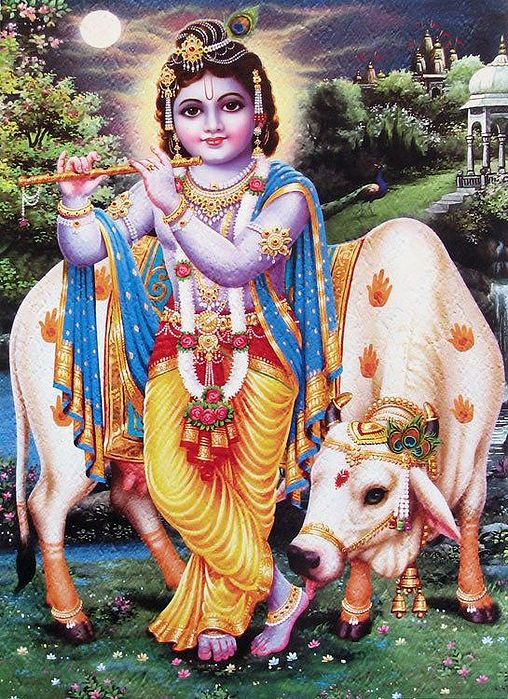
Krishna is one of the most popular and widely revered deities in the Hindu pantheon. He is known by many names and is associated with a wide range of stories and legends. Krishna is often depicted as a young cowherd playing a flute, and he is also known for his amorous exploits with the gopis, or cowherdesses. However, Krishna is also a powerful warrior and a wise teacher, and he has played a central role in many of the major events in Hindu mythology.
The Divine Flute Player
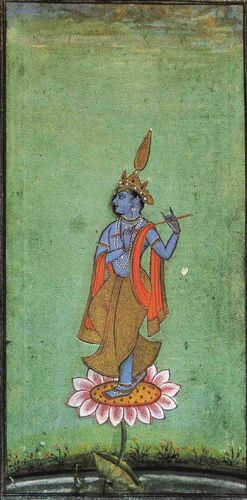
Krishna is often depicted as a young cowherd playing a flute. The flute is a symbol of his divine power, and its music is said to be irresistible to all who hear it. Krishna’s flute playing is also associated with his amorous exploits, as he uses it to attract the gopis.
The Cowherd
Krishna is also known as Gopala, which means “cowherd.” He is said to have been born in a cow shed, and he spent his childhood tending to cows. Krishna’s love for cows is said to be a symbol of his compassion for all creatures.
The Warrior
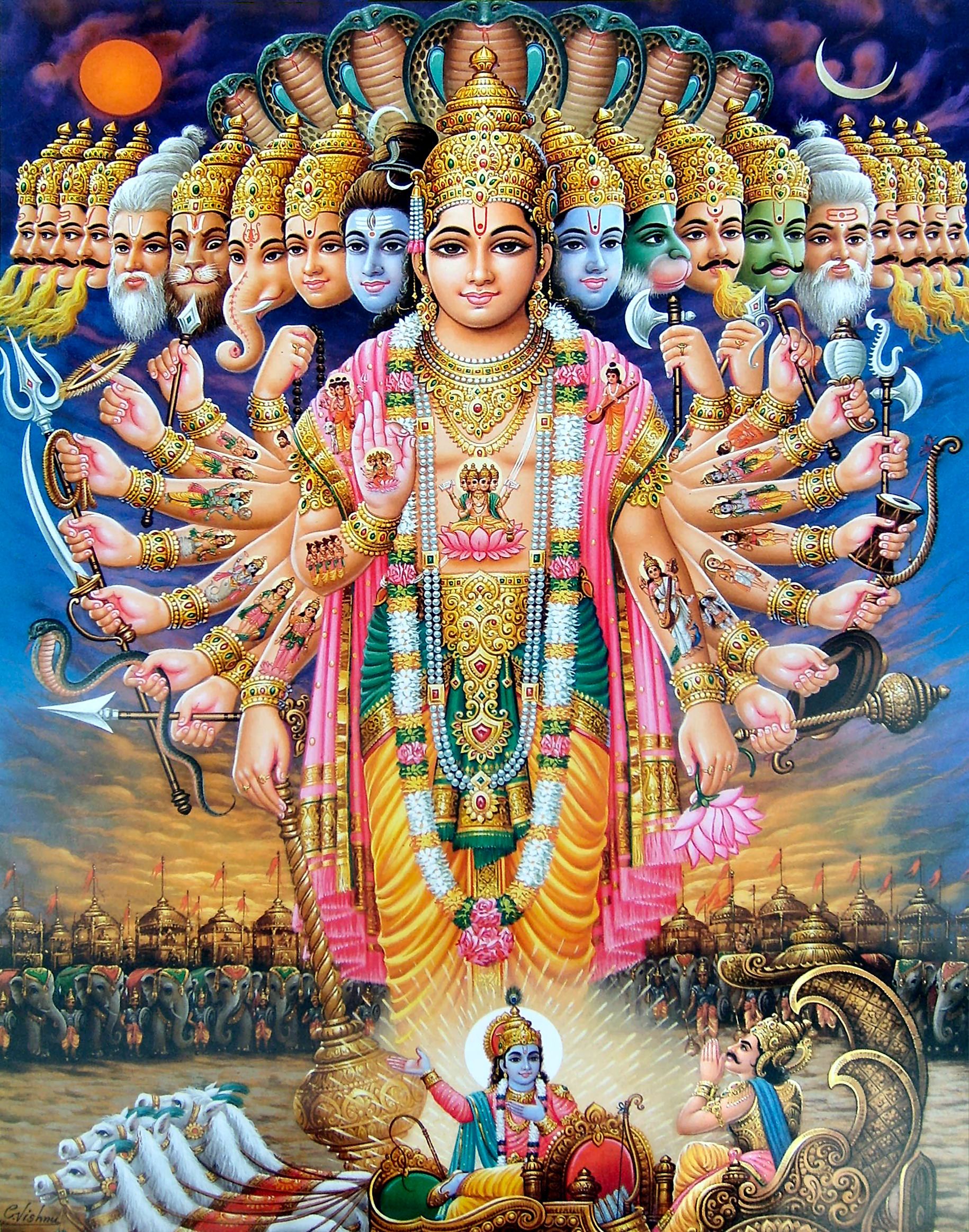
Krishna is also a powerful warrior, and he played a key role in the Mahabharata, one of the two major epics of Hindu mythology. In the Mahabharata, Krishna is the charioteer of Arjuna, one of the Pandava brothers, and he helps him to defeat the Kauravas in the Battle of Kurukshetra.
The Wise Teacher
Krishna is also a wise teacher, and he is often depicted as giving advice to his disciples. The Bhagavad Gita, one of the most important religious texts in Hinduism, is said to be a record of Krishna’s teachings to his disciple Arjuna.
The Many Forms of Krishna
Krishna is known by many different names and is associated with a wide range of stories and legends. Some of the most popular forms of Krishna include:
- Vasudeva: Krishna’s father was Vasudeva, and this is one of the most common names for Krishna.
- Balarama: Krishna’s older brother was Balarama, and he is often depicted as a strong and powerful warrior.
- Subhadra: Krishna’s sister was Subhadra, and she is often depicted as a beautiful and virtuous woman.
- Radha: Krishna’s consort was Radha, and she is often depicted as a beautiful and devoted woman.
- Gopala: Krishna is often depicted as a cowherd, and this is one of his most popular forms.
- Govinda: Krishna is also known as Govinda, which means “cowherd.”
- Madhava: Krishna is also known as Madhava, which means “honey.”
- Keshava: Krishna is also known as Keshava, which means “long-haired.”
- Narayana: Krishna is also known as Narayana, which means “the one who abides in the waters.”
- Vishnu: Krishna is often identified with Vishnu, one of the three main deities in the Hindu pantheon.
Krishna is a complex and multifaceted deity, and his many forms reflect the different aspects of his character. He is a loving and compassionate god, but he is also a powerful warrior and a wise teacher. Krishna is a god of joy and love, but he is also a god of sorrow and pain. He is a god of all contradictions, and he is the embodiment of the divine mystery.## The Many Forms Of The Hindu God Krishna: The Divine Flute Player And Cowherd
Executive Summary
Krishna, the enigmatic and beloved deity of the Hindu pantheon, holds a place of prime significance in the hearts and minds of millions around the world. He is the Divine Flute Player, the mischievous Cowherd, and the embodiment of love, compassion, and wisdom. This article delves into the myriad forms of Krishna, exploring the rich tapestry of his divine attributes and the diverse roles he plays in the Hindu tradition.
Introduction
Krishna, the eighth avatar of the Supreme God Vishnu, is a multifaceted deity whose stories and teachings have captivated devotees for centuries. Depicted as a captivating and charming youth, he is a beloved figure in Hindu mythology, renowned for his divine pastimes and profound teachings.
FAQs
- Who is Krishna? Krishna is the eighth avatar of Lord Vishnu, worshipped as a Supreme God in Hinduism. He is renowned for his divine pastimes, his teachings, and his role as the preserver and protector of the universe.
- Why is Krishna called the Divine Flute Player? One of Krishna’s most iconic attributes is his divine flute, which he plays to mesmerize the world. His flute represents the sweetness of his divine love and the power of his cosmic play.
- What is the significance of Krishna’s cowherd form? Krishna’s cowherd form reflects his childhood pastimes as a humble cowherd, emphasizing his simplicity, innocence, and love for nature. It also symbolizes his role as the protector and guardian of all creatures.
Subtopics
The Divine Flute Player
- Krishna’s flute is a symbol of his divine love and the power of his cosmic play.
- His flute’s enchanting melodies attract devotees and inspire spiritual longing.
- The flute represents Krishna’s ability to captivate the hearts and minds of all beings.
The Cowherd
- Krishna’s cowherd form embodies simplicity, innocence, and love for nature.
- He protects and cares for the cows, symbolizing his role as the guardian of all creatures.
- His cowherd pastimes highlight the importance of humility and service.
The Divine Lover
- Krishna is renowned for his divine love and charm, attracting devotees with his captivating presence.
- His love is boundless, embracing all beings without discrimination.
- He is the embodiment of pure love, transcending all worldly attachments.
The Teacher
- Krishna’s teachings, known as the Bhagavad Gita, provide profound wisdom on life, love, and spirituality.
- He guides his devotees towards spiritual liberation and self-realization.
- His teachings emphasize the importance of selfless action, devotion, and surrender.
The Cosmic Form
- In his cosmic form, Krishna reveals his true divine nature as the Supreme Lord of the universe.
- The cosmic form is a manifestation of Krishna’s infinite power, knowledge, and compassion.
- It inspires awe and devotion, reminding us of our connection to the divine.
Conclusion
Krishna, the divine flute player and cowherd, is a multifaceted deity whose stories and teachings continue to inspire and captivate devotees around the world. His divine pastimes, his profound teachings, and his embodiment of love and wisdom have made him one of the most beloved and revered figures in the Hindu pantheon. Through his many forms, Krishna reminds us of the boundless power, love, and compassion that resides within us all.
Keyword Tags
- Krishna
- Hindu mythology
- Avatar
- Divine flute
- Cowherd
- Divine lover
- Teacher
- Cosmic form