
The Four Yugas: The Ages of Hinduism
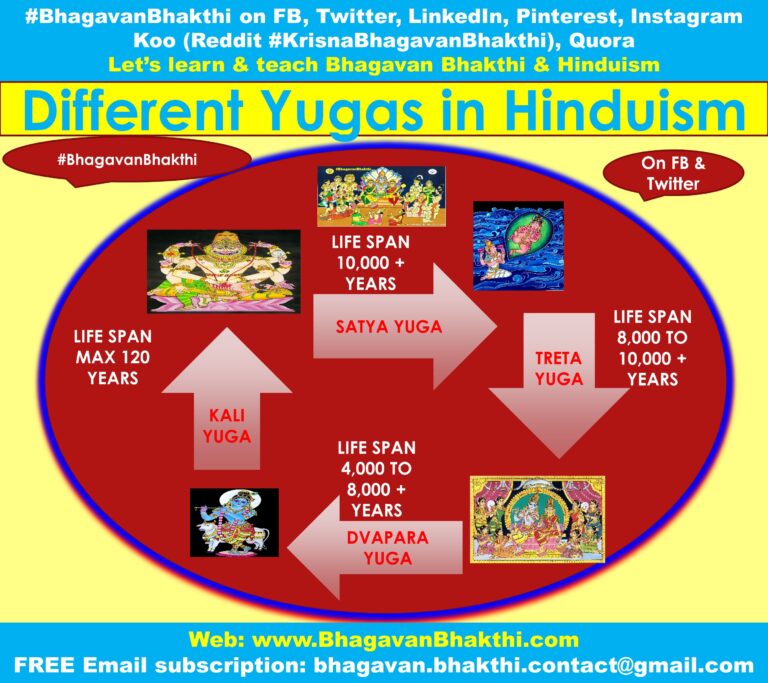
In Hindu cosmology, time is divided into four distinct ages, known as yugas. Each yuga is characterized by its own unique set of qualities and a specific duration.
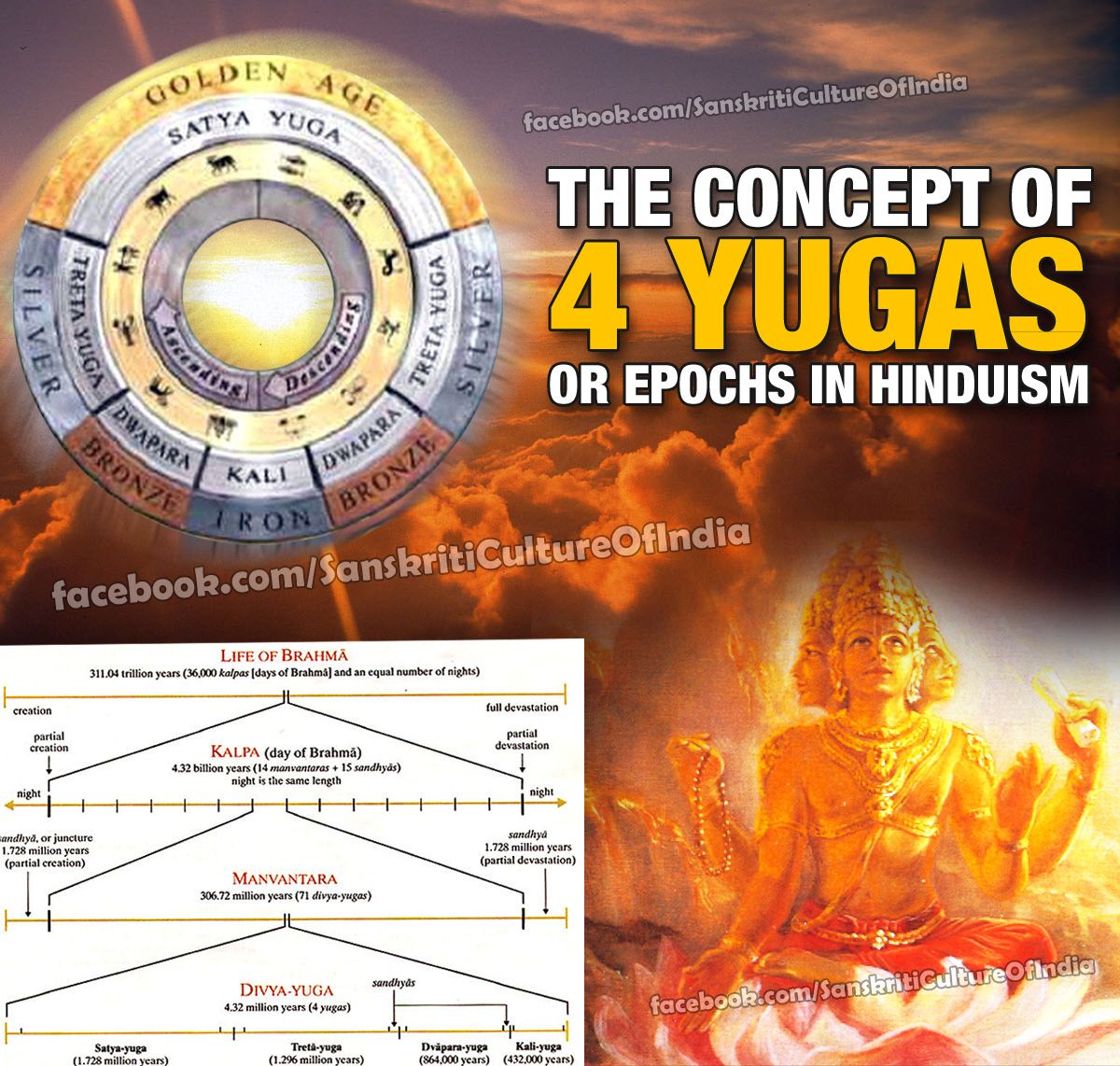
1. Satya Yuga (The Golden Age)
- Duration: 1,728,000 years
- Characteristics:
- Truth, righteousness, and wisdom prevail.
- People are highly virtuous and have long lifespans.
- Nature is bountiful and harmonious.
2. Treta Yuga (The Silver Age)
- Duration: 1,296,000 years
- Characteristics:
- Righteousness and spiritual practices begin to decline.
- Truth and honesty diminish, and selfish desires increase.
- The first seeds of conflict and suffering are sown.
3. Dwapara Yuga (The Bronze Age)
- Duration: 864,000 years
- Characteristics:
- Further decline in righteousness and spirituality.
- Materialism and selfishness become more prevalent.
- Warfare and conflict escalate.
4. Kali Yuga (The Iron Age)
- Duration: 432,000 years
- Characteristics:
- Lowest point of the cycle, where darkness and ignorance prevail.
- Extreme materialism, greed, and violence.
- The loss of spiritual knowledge and the rise of materialism.
Cyclic Nature:
The yugas are believed to follow a cyclic pattern. After the Kali Yuga ends, the cycle resets, and the Satya Yuga begins again.
Current Era:
According to Hindu tradition, we are currently in the Kali Yuga, which began in 3102 BCE and is expected to last for another 427,000 years.
Significance:
The concept of the yugas serves as a framework for understanding the cyclical nature of time and the evolution of human consciousness. It teaches the following lessons:
- Impermanence: Nothing lasts forever, and even the most prosperous ages will eventually give way to decline.
- Moral Decay: Righteousness and spirituality decline over time, highlighting the importance of constant effort to maintain them.
- Spiritual Awakening: The Kali Yuga represents a time of darkness and ignorance, but it also provides an opportunity for individuals to awaken spiritually and ascend to higher realms of consciousness.
- Hope and Renewal: The cycle of yugas assures that even in the darkest of times, there is always the potential for renewal and a return to truth and righteousness.## Exploring The Four Yugas: The Ages Of Hinduism
Executive Summary
The concept of Yugas is central to the Hindu understanding of time and the cyclical nature of the universe. Hinduism divides time into four distinct ages or Yugas, each characterized by specific qualities and developments. This article explores the four Yugas, their characteristics, and their significance in Hindu philosophy and mythology.
Introduction
In Hindu cosmology, time is not linear but cyclical, with the universe undergoing a continuous cycle of creation, preservation, and destruction. Yugas represent these cycles, marking different phases of the universe’s evolution. Each Yuga is believed to have its own unique characteristics, duration, and impact on human civilization.
FAQs
- What are Yugas?
- Yugas are the four ages or cycles of time in Hinduism, each with specific characteristics and duration.
- How long is each Yuga?
- The duration of each Yuga varies significantly, with the Satya Yuga being the longest and the Kali Yuga being the shortest.
- What is the significance of Yugas?
- Yugas provide a framework for understanding the cyclical nature of time, human history, and the evolution of consciousness.
Satya Yuga (The Golden Age)
- Characteristics: Purity, righteousness, truth, and harmony.
- Duration: 1,728,000 years.
- Important Aspects:
- Dharma (righteousness) prevails effortlessly.
- People live long, healthy, and virtuous lives.
- Knowledge and wisdom flourish.
- Nature is bountiful and harmonious.
Treta Yuga (The Silver Age)
- Characteristics: Diminishing purity and righteousness, increased materialism.
- Duration: 1,296,000 years.
- Important Aspects:
- Dharma becomes somewhat obscured, but is still upheld.
- People’s lifespan and virtues decrease.
- Materialism and desire begin to emerge.
- The first signs of conflict and violence appear.
Dwapara Yuga (The Copper Age)
- Characteristics: Further decline in righteousness, rise of ambition and competition.
- Duration: 864,000 years.
- Important Aspects:
- Dharma is challenged and often ignored.
- Materialism becomes more prevalent.
- Ambition, rivalry, and warfare increase.
- The influence of priests and religious figures declines.
Kali Yuga (The Dark Age)
- Characteristics: Impurity, darkness, ignorance, and chaos.
- Duration: 432,000 years.
- Important Aspects:
- Dharma is at its lowest point.
- Evil, greed, and injustice prevail.
- Knowledge and wisdom are suppressed.
- The environment deteriorates.
- The cycle of creation and destruction culminates.
Conclusion
The four Yugas represent the cyclical nature of time and the evolution of human consciousness. Satya Yuga, the Golden Age, embodies the purest and most harmonious state of existence, while Kali Yuga, the Dark Age, represents the decline in righteousness and the prevalence of darkness. Through these Yugas, Hinduism provides a framework for understanding the ebb and flow of time, the struggles of human existence, and the ultimate goal of spiritual liberation.
Keyword Tags
- Hinduism
- Yugas
- Time Cycles
- Satya Yuga
- Kali Yuga