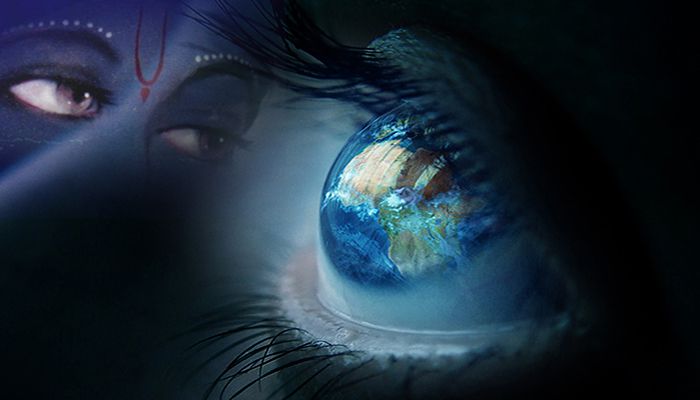
Maya is a central concept in Hindu philosophy that refers to the illusory nature of the world we perceive. It is a Sanskrit word that means “appearance” or “illusion.” According to Hindu scriptures, Maya is the veil of ignorance that conceals the true reality of Brahman, the ultimate and eternal truth.
The Illusion of the World:
Maya creates the illusion of a separate, independent world that we experience through our senses. This world appears to be real and tangible, with its own laws, objects, and beings. However, Hindu philosophy asserts that the world we perceive is not ultimately real but rather a projection of our limited consciousness.
The Nature of Maya:
Maya is not considered to be an evil or malicious force. It is simply a product of our limited perception and attachment to the physical world. Maya operates on many levels, from the individual to the cosmic. It includes:
- Individual Maya: This refers to the illusion created by our personal desires, attachments, and prejudices.
- Cosmic Maya: This refers to the larger illusion that conceals the true nature of reality. It is the veil that separates us from Brahman.
Breaking the Illusion of Maya:
The goal of spiritual practice in Hinduism is to break free from the illusion of Maya and attain enlightenment. This can be achieved through:
- Self-Inquiry: Examining one’s own thoughts, beliefs, and desires to identify the ways in which Maya operates.
- Meditation: Practicing techniques to calm the mind and still the senses, allowing for clearer perception.
- Renunciation: Detaching from material possessions, desires, and ego attachments.
- Surrender: Submitting to the will of Brahman and accepting the illusory nature of the world.
Brahman and Maya:
Maya is not independent of Brahman, the ultimate reality. It is said to be a “power” or “play” of Brahman. Brahman is both the creator and the substance of Maya. It is the unity that underlies all the diversity and multiplicity of the world.
Conclusion:
The Hindu concept of Maya highlights the illusory nature of our perceived reality. It encourages us to seek the true nature of existence beyond the limitations of our senses and attachments. Through spiritual practice, we can break free from the veil of Maya and experience the ultimate reality of Brahman.## The Hindu Concept Of Maya: Understanding The Illusory Nature Of The World
Executive Summary
The Hindu concept of Maya is a profound philosophical concept that explores the illusory nature of the world we perceive. Maya is not simply an illusion, but rather a veil that obscures the true nature of reality. Understanding Maya is essential for spiritual liberation and the attainment of enlightenment. This article provides a comprehensive exploration of the Hindu concept of Maya, its characteristics, and its implications for our understanding of the world.
Introduction
The world we perceive is often described as a realm of constant change, filled with objects and experiences that seem solid and real. Yet, the Hindu tradition teaches us that this perceived reality is not the ultimate truth. Instead, it is a mere reflection of a deeper, underlying reality that is beyond our ordinary senses. This deeper reality is known as Brahman, the absolute and eternal truth. The veil that separates us from the true nature of Brahman is known as Maya.
FAQs
1. What is Maya?
Maya is the illusory power that creates the appearance of a separate and independent world. It is the force that makes us believe that the world we perceive is real and separate from our true selves. Maya is not an illusion in the sense that it is not real, but rather that it is a distorted and incomplete representation of reality.
2. What is the purpose of Maya?
Maya serves a purpose in the spiritual journey. It provides us with the opportunity to experience the world and learn from our experiences. Through our interactions with the world, we can develop our consciousness and evolve spiritually. Maya is also a reminder that the world we perceive is not permanent and that we should not become attached to it.
3. How can we overcome Maya?
Overcoming Maya is a gradual process that requires self-awareness, meditation, and spiritual practices. By understanding the nature of Maya, we can begin to see through its illusions and experience the true nature of reality. Meditation helps us to quiet the mind and connect with our inner selves, where we can find the peace and clarity that is beyond Maya.
1. Characteristics of Maya
- Impermanence: Maya is constantly changing and impermanent. Nothing in the world we perceive is truly permanent, and all things are subject to change and decay.
- Suffering: Maya is the root of all suffering. When we believe that the world we perceive is real and separate from our true selves, we experience pain and suffering.
- Delusion: Maya deludes us into believing that the world is real and that we are separate from everything else. This delusion leads to attachment, suffering, and ultimately spiritual ignorance.
- Veiling: Maya veils the true nature of reality from us. It makes us believe that the world we perceive is the only reality, and that there is nothing beyond it.
- Subtlety: Maya is subtle and often difficult to detect. It can take many forms, and it can deceive even the most experienced spiritual seekers.
2. The Role of Maya in Spiritual Evolution
- Experience: Maya provides us with the opportunity to experience the world and learn from our experiences. Through our interactions with the world, we can develop our consciousness and evolve spiritually.
- Detachment: Maya can help us to detach ourselves from the world and its illusions. By understanding the nature of Maya, we can begin to see through its illusions and experience the true nature of reality.
- Discrimination: Maya can help us to develop our discrimination between what is real and what is illusory. By learning to see through Maya, we can make wiser choices and live more fulfilling lives.
- Liberation: Ultimately, Maya can lead us to liberation from the cycle of birth and death. By overcoming Maya, we can experience the true nature of reality and attain spiritual liberation.
3. Maya and the Nature of Reality
- Brahman: Maya is the veil that separates us from the true nature of Brahman, the absolute and eternal truth. Brahman is the ultimate reality, and it is beyond our ordinary senses.
- Illusion: Maya is not an illusion in the sense that it is not real, but rather that it is a distorted and incomplete representation of reality. Maya creates the appearance of a separate and independent world, but this world is ultimately an illusion.
- Oneness: Maya obscures the essential oneness of all things. In reality, all things are connected and interdependent, but Maya makes us believe that we are separate from everything else.
4. Overcoming Maya
- Self-Awareness: The first step to overcoming Maya is to become aware of its presence in our lives. We need to recognize the ways in which Maya deludes us and keeps us from experiencing the true nature of reality.
- Meditation: Meditation helps us to quiet the mind and connect with our inner selves, where we can find the peace and clarity that is beyond Maya. Meditation can help us to see through Maya’s illusions and experience the true nature of reality.
- Spiritual Practices: ** Spiritual practices such as yoga, chanting, and selfless service can help us to overcome Maya. These practices help us to purify our minds and hearts, and they create a foundation for spiritual growth and liberation.
5. Maya in Hindu Scriptures
- Vedas: The Vedas are the oldest Hindu scriptures, and they contain many references to Maya. The Vedas teach that Maya is the power that creates the illusion of a separate and independent world.
- Upanishads: The Upanishads are philosophical texts that expound on the teachings of the Vedas. The Upanishads teach that Maya is a veil that obscures the true nature of Brahman.
- Bhagavad Gita: The Bhagavad Gita is a sacred Hindu text that contains a dialogue between Krishna and Arjuna. In the Bhagavad Gita, Krishna teaches Arjuna about the nature of Maya and how to overcome it.
Conclusion
The Hindu concept of Maya is a profound and multifaceted concept that has implications for our understanding of the world and our place in it. Maya is the illusory power that creates the appearance of a separate and independent world. It is the veil that separates us from the true nature of Brahman, the absolute and eternal truth. Understanding Maya is essential for spiritual liberation and the attainment of enlightenment. Through self-awareness, meditation, and spiritual practices, we can overcome Maya and experience the true nature of reality.