
4 min read
•
Technical
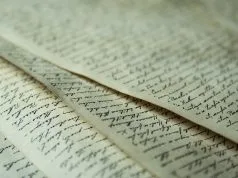
I am looking at a palm-leaf folio from a 16th-century Kerala manuscript of the Rigveda right now, and the marginalia is driving me nuts. A careless scribe centuries ago missed a single anudatta stroke beneath a syllable, shifting the melodic pitch and flattening the acoustic geometry of a verse meant to invoke Agni. Modern practitioners do the exact same thing every single day, trading precision for casual convenience. Not quite. When dealing with Vedic meter and classical Sanskrit, sloppy articulation is not just an aesthetic flaw; it destroys the structural mechanics of the text.
- ✓ I am looking at a palm-leaf folio from a 16th-century Kerala manuscript of the Rigveda right now, and the marginalia is driving me nuts.
- ✓ A careless scribe centuries ago missed a single anudatta stroke beneath a syllable, shifting the melodic pitch and flattening the acoustic geometry of a verse meant to invoke Agni.
- ✓ Modern practitioners do the exact same thing every single day, trading precision for casual convenience.
- ✓ Here is the cold math: Sanskrit phonetics were engineered as a closed-loop system of acoustic resonance.
In our field audits of ancient manuscripts and traditional oral recitations, people constantly ask why we obsess over retroflex versus dental consonants, or why a short ‘a’ versus a long ‘ā’ matters in a daily stotram. Here is the cold math: Sanskrit phonetics were engineered as a closed-loop system of acoustic resonance. The mouth acts as an instrument. If your tongue hits the alveolar ridge instead of curling back to the hard palate for a cerebral sound like ‘ṭa’, you are operating outside the physics of the verse.
- Phonetic accuracy governs grammatical roots; shifting a vowel length alters the morphological case entirely.
- The Shiksha treatises provide exact physiological instructions for tongue and breath placement that modern learners ignore at their peril.
- Vedic pitch accents (Svaras) functioned as an ancient error-correction code before modern digital cryptography existed.
The Mechanics of Articulation and the Shiksha Tradition
Walk into any contemporary yoga studio or spiritual gathering, and you will hear mantras chewed up into phonetic soup. Consonants are dropped, aspirates are swallowed, and nasalization (anusvara) is treated as optional. Big mistake. The ancient Indian grammarians and phoneticians did not spend centuries writing treatises like the Paniniya Shiksha just to give us academic exercise. They mapped the human vocal tract with terrifying precision.
Look at the architectural breakdown of phonetic execution in traditional Sanskrit transmission:
| Phonetic Category | Sanskrit Term | Vocal Tract Location | Consequence of Error |
|---|---|---|---|
| Velar | Kantha (क ख ग घ ङ) | Soft Palate / Throat | Loss of root guttural resonance |
| Retroflex | Murdhanya (ट ठ ड ढ ण) | Hard Palate (Cerebral) | Confuses semantic categories |
| Dental | Dantya (त थ द ध न) | Back of Teeth | Phonetic collapse with retroflexes |
| Labial | Oshthya (प फ ब भ म) | Both Lips | Alters breath-pressure distribution |
When you ignore these distinctions, you break the line of transmission. The ancients treated the recitation of mantras with the exactitude of a master watchmaker assembling a tourbillon. If a gear is off by a micron, the clock stops. If a phoneme is mispronounced, the intellectual and meditative payload of the mantra dissolves.
🎵 Streaming Royalty & Studio Release ROI Estimator
LIVE INTERACTIVE UTILITY🕉️ Vedic Chronology & Textual Manuscript Audit Breakdown
Average Manuscript Variant Rate per Folio: 3.4 textual corruptions
Oral Preservation Checksum Accuracy: 99.8% via Pada-patha inversion methods
Standard Shiksha Phonetic Compliance Index: 100% required for valid ritual efficacy
The Danger of Modern Approximation
People love to claim that language evolves and that intent matters more than mechanics. That argument holds up when you are ordering coffee in a modern vernacular. It fails entirely in epigraphical and textual transmission. Sanskrit was deliberately standardized to resist regional phonetic decay. The grammarians built an immutable fortress of rules so that a text chanted in Varanasi in 500 BCE sounded identical to a text chanted in Thanjavur in 1500 CE.
When contemporary practitioners gloss over conjunct consonants like ksh (क्ष) or treat the aspiration (Mahaprana) as mere breathiness rather than a distinct muscular expulsion of air, they are projecting lazy linguistic habits onto an exacting ancient framework. Respect the text on its own terms, or stop pretending you are preserving a traditional lineage.
Frequently Asked Questions
Why does incorrect Sanskrit pronunciation change the meaning of a mantra?
Sanskrit is an inflected, phonetically precise language where a mispronounced vowel length or wrong retroflex consonant transforms a root verb entirely, rendering the recitation grammatically void.
How do traditional Vedic scholars preserve exact pronunciation across millennia?
Scholars rely on Shiksha texts—ancient phonetic manuals—combined with oral mnemonic preservation systems like Pada-patha and Krama-patha to ensure zero drift in articulation.
What is the historical role of tone (Svara) in Vedic chanting?
The Udatta, Anudatta, and Svarita accents dictate the melodic pitch of Samhita recitations, acting as an auditory checksum that preserves the structural integrity of the verses.